New Canary Islands Science Law Aims to Boost Innovation and Economic Growth
Santa Cruz de Tenerife, 6 July – The Canary Islands’ parliamentary groups—Canarian Nationalist (CC), Popular (PP), Agrupación Socialista Gomera (ASG), and Mixto (AHI)—have unveiled key amendments to the new Canary Islands Science Law. This legislation aims to position knowledge, research, and innovation as the driving force behind the economic, social, and territorial development of the archipelago.
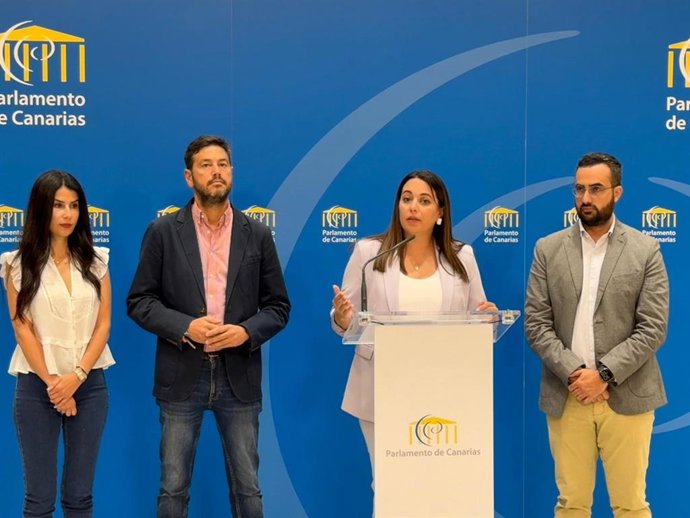
During a press conference, the four groups emphasised that these changes reflect a collaborative effort aimed at creating a “bold, modern, and ethically sound” law that meets the real needs of the islands.
Cristina Calero, a Nationalist group representative, highlighted that the law will recognise knowledge as essential for sovereignty, progress, and freedom, adapting the scientific system to the specific needs of the Canary Islands.
Among its significant provisions, the law acknowledges the University of La Laguna and the University of Las Palmas de Gran Canaria as crucial components of the Canary Islands’ Science, Technology, and Innovation System. They will be designated as Singular Knowledge Generation Agents, enhancing their roles in fundamental and applied research and the training of researchers through doctoral programmes.
The legislation also proposes the establishment of future ‘University Hubs’ to facilitate research and training access across all islands, promoting territorial cohesion in the scientific community.
Focus on Retaining Research Talent
The management of research talent is a core feature of the law, with measures designed to attract and retain Canarian researchers. A notable initiative is the ‘Canarian Scientific Passport’, a digital platform that simplifies administrative processes for scientists.
Calero stated, “We want researchers to spend their time on research, not paperwork.”
The new law advocates for ethical, reliable artificial intelligence, aligned with European regulations, implementing principles such as human oversight and transparency in public sector use.
Greater Funding and Territorial Cohesion
Further amendments allow public universities to utilize their financial reserves for scientific infrastructure and research projects, provided they do not incur structural debt. The law also acknowledges excellence in research structures to better guide competitive grants and encourages industrial doctorates to strengthen links between academia and business. Additionally, it integrates key organisations into the Canary Scientific Advisory Council to enhance territorial coherence.
Measures to address the additional costs associated with island living and fragmented territories will provide support for research activity across the archipelago.
Shaping the Future of the Canary Islands
The parliamentary groups agreed that this new law will help establish a competitive scientific model aligned with the islands’ needs. According to Calero, it will enable the Canary Islands to thrive on a global scale through talent and innovation while protecting science as a public good.
The governing coalition believes the law will reinforce crucial areas like sustainability, the primary sector, cultural heritage, and technology.
With an eye on diversifying the economy, Jacob Qadri from the Popular Group described the law as a decisive commitment to talent, innovation, and collaboration across public and private sectors.
ASG group leader Melodie Mendoza added that the law transcends mere scientific implications, promoting a knowledge-based development model tailored to the unique realities of the Canary Islands.
Raúl Acosta from AHI asserted that this legislation breaks down barriers of insularity, ensuring that innovation and talent retention are not confined by geographic constraints, providing essential tools for economic diversification across all islands.