The University Hospital Nuestra Señora de Candelaria has celebrated the 30th anniversary of its Liver Transplant Unit, a service that has performed 936 liver transplants for patients across the Canary Islands since 1996.
This centre, affiliated with the Health Department of the Government of the Canary Islands, has established itself over three decades as the reference hospital in the Islands for this complex intervention. The first liver transplant was carried out in 1996 on a 44-year-old man. Since then, the programme has grown to achieve an average of 31 transplants per year.
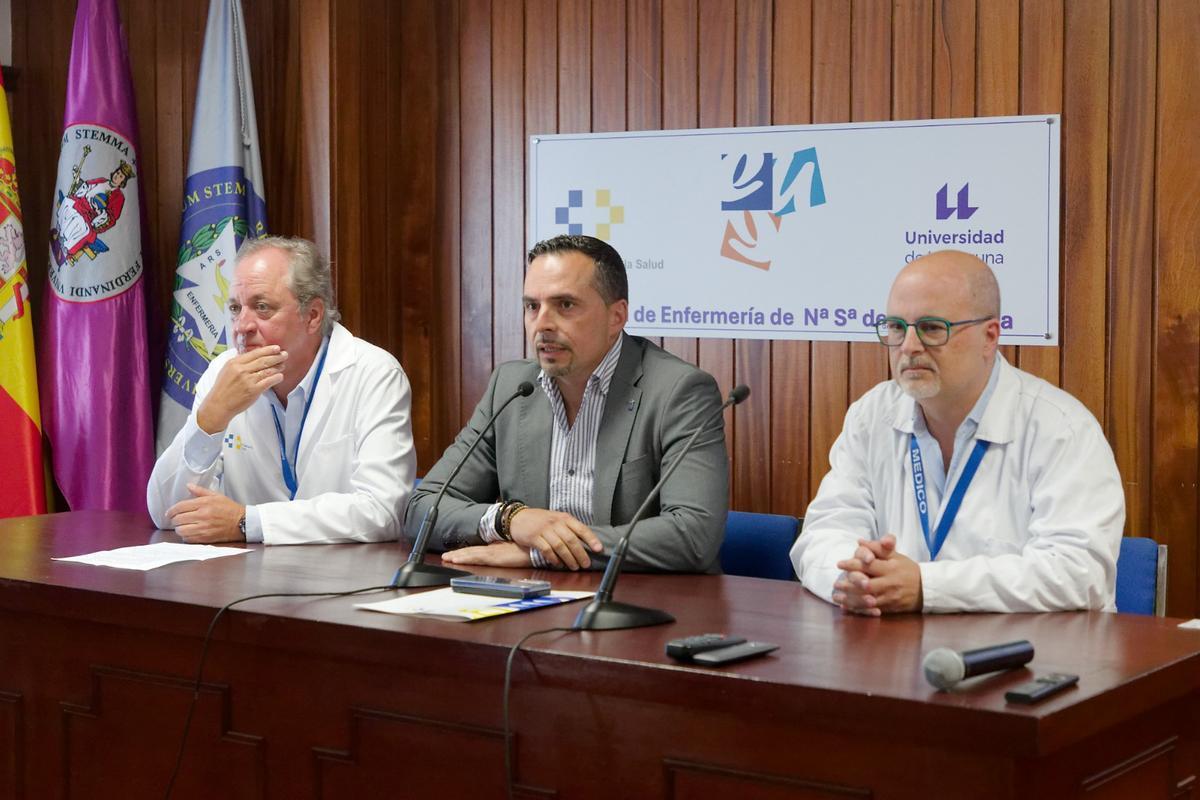
The anniversary event took place on Thursday, 4 June, with the participation of the Director of the Canarian Health Service, Adasat Goya; the manager of the hospital complex, Óscar Díez; and the head of the General and Digestive Surgery and Liver Transplant Service, José Gregorio Díaz.
936 Patients Transplanted Since 1996
During the meeting, Adasat Goya highlighted the work of the professionals who have made the development of the programme possible over these 30 years. He also noted that the most active year was 2016, when 51 liver transplants were performed.
The SCS director also expressed gratitude for the solidarity of donors and their families. Organ donation is crucial for patients with severe liver diseases to receive a transplant, improving their survival rates and quality of life.
The hospital manager, Óscar Díez, joined in the recognition of the teams involved and thanked Dr. Arturo Soriano, now retired, for his role in the creation and consolidation of the programme.
Patients Aged Between 14 and 72
The Liver Transplant Unit at La Candelaria has attended to patients with diverse profiles over these three decades. The ages of the transplanted individuals range from 14 to 72 years.
The conditions that may necessitate a liver transplant are varied. The most common include liver cirrhosis, autoimmune liver diseases, hepatocellular carcinoma, viral hepatitis, and other metabolic or hereditary disorders.
According to the data, 51% of transplanted patients are men and 49% are women, showing a nearly balanced distribution. The unit also reminds that without transplantation, the survival rate for candidates usually ranges between one and three years, depending on the progression of their diseases.
Improvements That Have Enhanced Outcomes
The head of the General and Digestive Surgery and Liver Transplant Service, José Gregorio Díaz, explained that the programme has evolved significantly over the past 30 years. Among the key advances, he highlighted the reduction in surgical times, decreased need for transfusions, and the introduction of new immunosuppressive treatments with fewer side effects and reduced risk of rejection.
Improvements such as direct-acting antivirals for hepatitis C, extracorporeal perfusion devices, and donation after circulatory death have also been incorporated. All these advances have contributed to improved outcomes and increased transplant options.
A Team of Over One Hundred Professionals
Liver transplantation requires the coordination of multiple teams. The programme involves over one hundred professionals, both clinical and non-clinical, who participate in the process of donation, preparation, surgery, post-operative care, and patient follow-up.
During the anniversary event, the history of the unit was reviewed with contributions from professionals such as Adriá Rosat, head of the Transplant Programme Section; Antonio González, head of the Hepatology Section; Paula Ventura, Transplant Coordinator; nurse Germán García; and Arturo Soriano, a driving force behind the unit. Benigno Martínez, president of the Association of Liver Disease and Transplant Patients of the Canary Islands (AETHECA), also spoke, offering the patients’ perspective and sharing his personal experience.
Recognition, Education, and Research
The Liver Transplant Unit at La Candelaria received the Civil Order Decoration from the Ministry of Health in 2003. In 2018, it became the second centre in Spain to obtain the UNE 179008 certification from AENOR, specific for liver transplantation, which is renewed annually.
This accreditation verifies the quality of the programme for one of the most complex surgical interventions. The unit’s work extends beyond patient care. Its specialists also participate in the training of residents and in publishing international scientific papers related to liver transplantation.
GEMA, A Tool to Prioritise the Waiting List
The hospital has also been the first in Spain to use the GEMA —Gender-based Evaluation and Model for Allocation— model, an advanced statistical tool to assist in prioritising patients on the waiting list for liver transplantation.
This system develops from international patient groups and is compared with other models used in clinical practice, such as the MELD score. The tool was presented at a consensus conference of the Spanish Society of Liver Transplantation and La Candelaria began using it in February 2025 as part of its standard evaluation protocol.