Concerns Over Access to Volcanic Monitoring Data in Tenerife
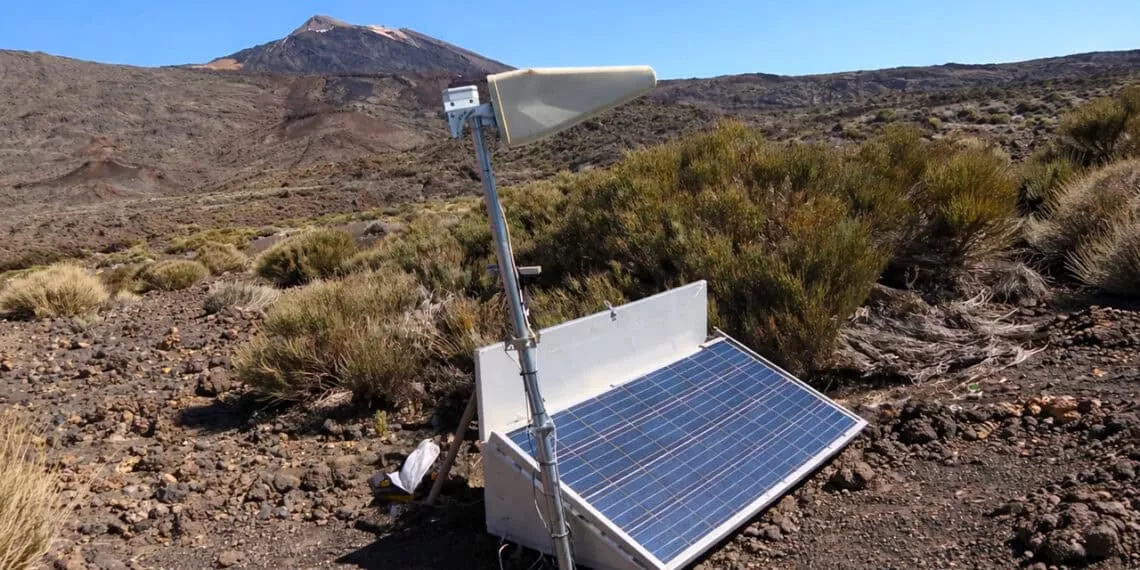
The Tierra Bonita Association, comprising individuals affected by the eruption of the La Palma volcano, has lodged a complaint with the Commissioner for Transparency and Access to Public Information in the Canary Islands against the Cabildo of Tenerife. This action follows the Cabildo’s refusal to “publish in real-time” data on seismicity, ground deformation, and gas emissions collected by the volcanic monitoring network managed by the Canary Island Volcanological Institute (Involcan).
Background of the Complaint
The group from La Palma reached out to this body after the Department of Research, Innovation and Development of the Cabildo of Tenerife dismissed a request for reconsideration on 11 June, which had been submitted following an initial denial in April.
The association demands access to current data as well as records from Involcan’s seismic, geodetic, and geochemical networks prior to the La Palma eruption, spanning from 2017 to 2021.
Cabildo’s Position
The island institution asserts that there is “no legal obligation” to publicly release raw data from Involcan, attributing official volcanic risk monitoring responsibilities to the National Geographic Institute (IGN).
Tierra Bonita highlights that on 27 March 2026, the Cabildo of Tenerife’s plenary session, supported by CC, PP, PSOE, and Vox, approved an institutional agreement that included recommendations from eight Palmeran collectives. Among these was the commitment to “prioritise transparency and real-time access to data for the public as a means of strengthening institutional trust.”
Statements from Tierra Bonita
Francisco Rodríguez Pulido, president of the association, argues, “It is contradictory to acknowledge the legitimacy of civic associations advocating for preventive measures against volcanic risks during the plenary session, while simultaneously denying them access to the information that would allow for auditing and understanding the risks faced by the population.”
In the letter addressed to Transparency Commissioner Noelia García, Tierra Bonita claims that the Cabildo “violates the right to access public information by denying the request without sufficient motivation.” The association asserts that the raw data from volcanic monitoring “should be accessible as they were obtained through public funds and cannot be protected under intellectual property rights.”
Criticism of the Cabildo’s Response
The group further criticises the Cabildo’s resolution for merely “cutting and pasting” from Involcan’s report without recognising that the decision contradicts the previously approved agreement by the plenary of the island corporation. They contend that one of the justifications for rejecting the request is that “the publication of raw measurements could cause unjustified public alarm.” The Cabildo also maintains that “these data are part of scientific research projects, and their dissemination could affect subsequent publication in specialised journals.”
Legal Justifications by the Cabildo
In the resolution issued on 11 June by the island’s Councillor for Research, Innovation and Development, the Cabildo of Tenerife reaffirms its earlier decision and rejects the request for public access and publication of raw data generated by Involcan’s volcanic, seismic, and geochemical monitoring networks. The document argues there is no legal requirement to publish the data as requested and that there are limits associated with the legal framework governing research data.
It also states that Involcan’s monitoring network “does not constitute an official volcanic monitoring network nor does it possess competencies in risk assessment or communication,” which are functions assigned to the IGN as part of the National Civil Protection System.
The resolution further argues that the data comes from a scientific infrastructure “subject to validation processes, exploitation commitments, management plans, and potential editorial or contractual restrictions.” It rejects claims of violating the principle of open data, the plenary mandate, or the association’s legitimacy. This resolution concludes the administrative process, and a contentious-administrative appeal can be lodged within two months.