
– UNIVERSITY OF LA LAGUNA
SANTA CRUZ DE TENERIFE, 4 Jun. (EUROPA PRESS) –
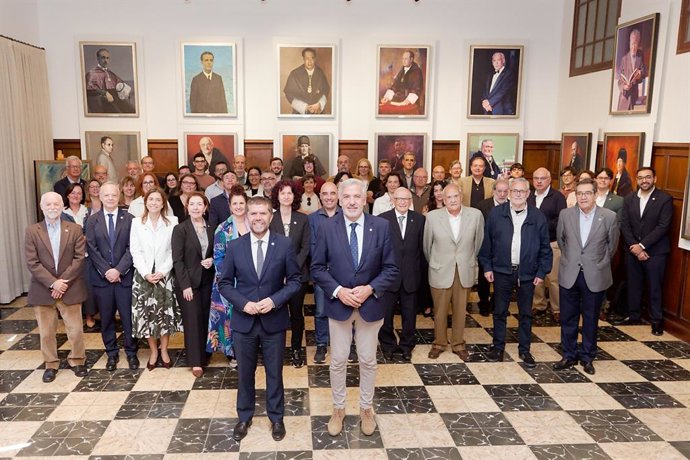
The rectors of the University of La Laguna and the University of Las Palmas have announced the creation of the Association of Public Universities of the Canary Islands (UPCAN) this Thursday. This entity aims to foster university cooperation, promote internationalisation, and enhance social commitment.
“This entity comes at a time when public universities have never been more necessary or as threatened,” emphasised Francisco García, rector of ULL, at the event, accompanied by his counterpart at ULPGC, Lluís Serra, according to a statement from the academic institution.
Both rectors stated that the association is a tool that “is not against anyone,” but rather in defence of the “greatest social elevator in the Canary Islands.” They clarified that they will request “clarity of criteria and standards of quality” within the Canary Islands university system, which also encompasses other institutions.
TO BE PRESENTED TO THE GOVERNMENT
Serra reminded attendees that the establishment of this structure, which will soon be presented to the regional government and other bodies, is the result of a long history of joint collaboration.
“We have demonstrated that the unity of universities is a tangible reality. We have defended a fair budget for our institutions, initiated national and international collaborative initiatives, and supported the recent manifesto in defence of the public universities in the Canary Islands,” Serra indicated.
The rectors asserted that “great challenges require shared responses” and that the public university system in the Canary Islands “is the main ecosystem of talent and innovation” in the archipelago. They highlighted its potential as an economic driver and a catalyst for social transformation in the region.
Francisco García, the first president of the association, which will have a rotating presidency, stressed the significance of this initiative, which aims to provide public universities with “greater strength and social utility,” featuring a catalogue of over a hundred degree programmes between the two institutions.
UNIVERSITY COOPERATION
The association will also engage in dialogue with other institutions in the field, such as the Andalusian universities, with whom they have already held two coordination meetings and are currently working on the third edition. “We will work to expand our social projection,” the rectors affirmed.
Additionally, they noted that this mechanism will once again advocate for achieving 1% of the regional GDP by 2030, which would equate to a budget nearing €500 million for the two institutions, compared to the under €300 million currently available. “We represent a university community of over 45,000 people, and we are one of the most important assets of the archipelago,” García and Serra stated.