Canary Islands Call for Protecting EU’s Outermost Regions
SANTA CRUZ DE TENERIFE, 4 July – The Canary Islands’ Coalition Canaria (CC) and the European Democratic Party (PDE) have united to push for a specific treatment for outermost regions (RUP) in the upcoming negotiations of the European Union’s Multiannual Financial Framework.
During the meeting titled “The Future of Outermost Regions in the Next Multiannual Financial Framework,” they highlighted the importance of maintaining the tools that have long catered to the unique needs of these regions, which are essential to the EU’s overall strategy.
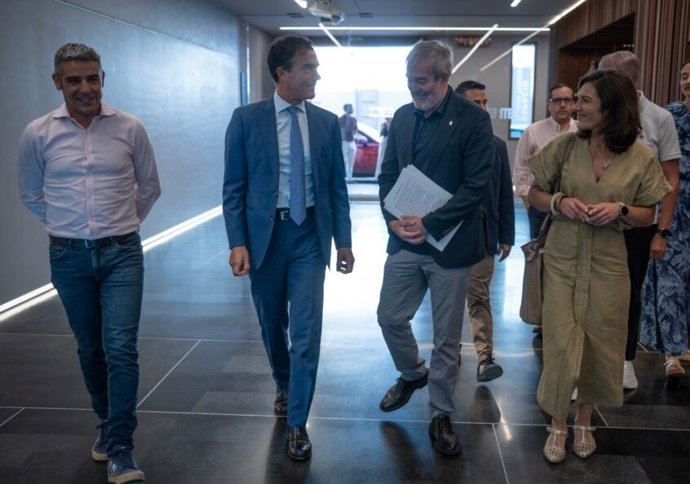
Fernando Clavijo, CC’s national secretary and PDE vice president, emphasised that “Canarias is part of Europe, embracing its uniqueness.” He raised concerns about proposed reforms to the EU budget, warning that they may dilute vital support mechanisms and risk the status built over decades to tailor EU policies to areas like the Canary Islands, Madeira, and the French overseas regions.
He asserted that their discussions extend beyond funding, calling for political recognition of a reality that the EU has safeguarded for years.
PDE Secretary-General Sandro Gozi stressed that the debate about the upcoming budget goes beyond mere resource allocation; it shapes the kind of Europe envisioned for the next decade. He cautioned against excessive centralisation, advocating for the preservation of differentiated policies that meet the specific needs of the outermost regions.
Gozi noted that the current geopolitical landscape necessitates a fresh perspective on these territories. Rather than merely being seen as remote areas, they serve as strategic platforms for the EU’s international presence, given their significance in maritime security, biodiversity, and relations with Africa and America.
He concluded by asserting that the PDE will continue striving for the Multiannual Financial Framework to uphold the special recognition of outermost regions enshrined in EU Treaties.
The meeting featured a round table discussion with key figures, including Narvay Quintero, Canary Islands’ Agriculture and Fisheries Counsellor, and scholars from various backgrounds, who all echoed concerns that the new framework might complicate primary sector issues, emissions management, and transportation—critical for the development of these regions.
Oihane Agirregoitia, a MEP from the Basque Nationalist Party, closed the meeting with strong opposition to the European financial framework. She pledged to advocate for the stability of funds crucial to regions like the Canary Islands while raising concerns over a migration pact she believes infringes on human rights. She also highlighted collaboration between the Basque and Canary governments in addressing the unique challenges faced by border territories.