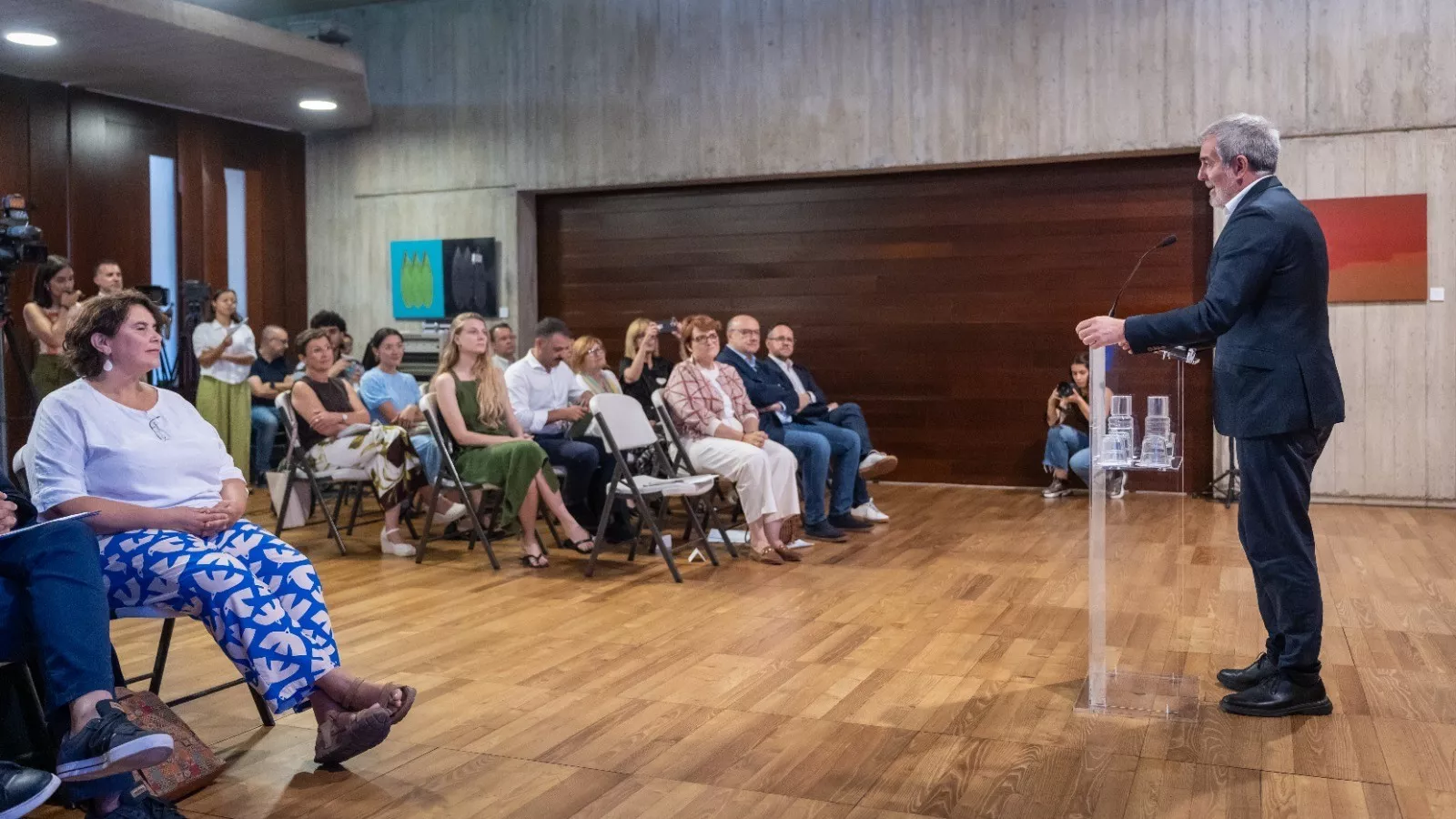
Public policy in the Canary Islands is set for significant change, aimed at addressing the complex needs of its population. The regional government is working to establish a model for improving citizen engagement through strategic partnerships with local social organisations. President Fernando Clavijo presented the findings of the “Social Innovation Diagnosis in the Canary Islands,” which reviews the current landscape of social organisations across the islands. The study, conducted by Islas Responsables Lab (IRLab), involved 88 Third Sector entities.
Clavijo noted the sector’s commitment to enhancing the lives of vulnerable communities. However, organisations raised concerns about structural issues, including a lack of specific funding, a need for training, and limited time to develop new strategies. The report indicated that organisations often rely heavily on short-term grants, creating instability within their projects. Technical staff reported being overwhelmed, having to focus on immediate problems rather than long-term planning.
Despite these challenges, there is widespread agreement on the need for innovation, with 80% of organisations asserting its importance in meeting modern demands. Nearly all (97.7%) expressed a willingness to collaborate. The analysis also highlighted a concentration of social work primarily in Tenerife (46.6%) and Gran Canaria (34%), with an emphasis on assisting those facing social exclusion, poverty, and disability.
To tackle these issues, the Department of Social Welfare, led by Candelaria Delgado, is working to simplify administrative processes. Plans include creating a groundbreaking European service data hub that will incorporate artificial intelligence and robotics. Juan Doreste, the Deputy Minister for Equality and Diversity, announced the launch of a Social Innovation Hub to foster co-creation of policies and promote the care economy throughout the islands.
Meanwhile, the alternative economic sector is calling for greater institutional recognition. Eduardo Calderón, vice president of the Anagos Network, advocated for the inclusion of the Social and Solidarity Economy (ESS) in the Economic and Social Council of the Canary Islands. This sector comprises 3,500 entities and employs 18,000 people, with 57% of the workforce being women—70% of whom occupy leadership roles.
This new diagnosis serves as a launching point to move beyond isolated pilot projects and work to embed innovative solutions into public policy, ensuring social and territorial cohesion across the Canary Islands.