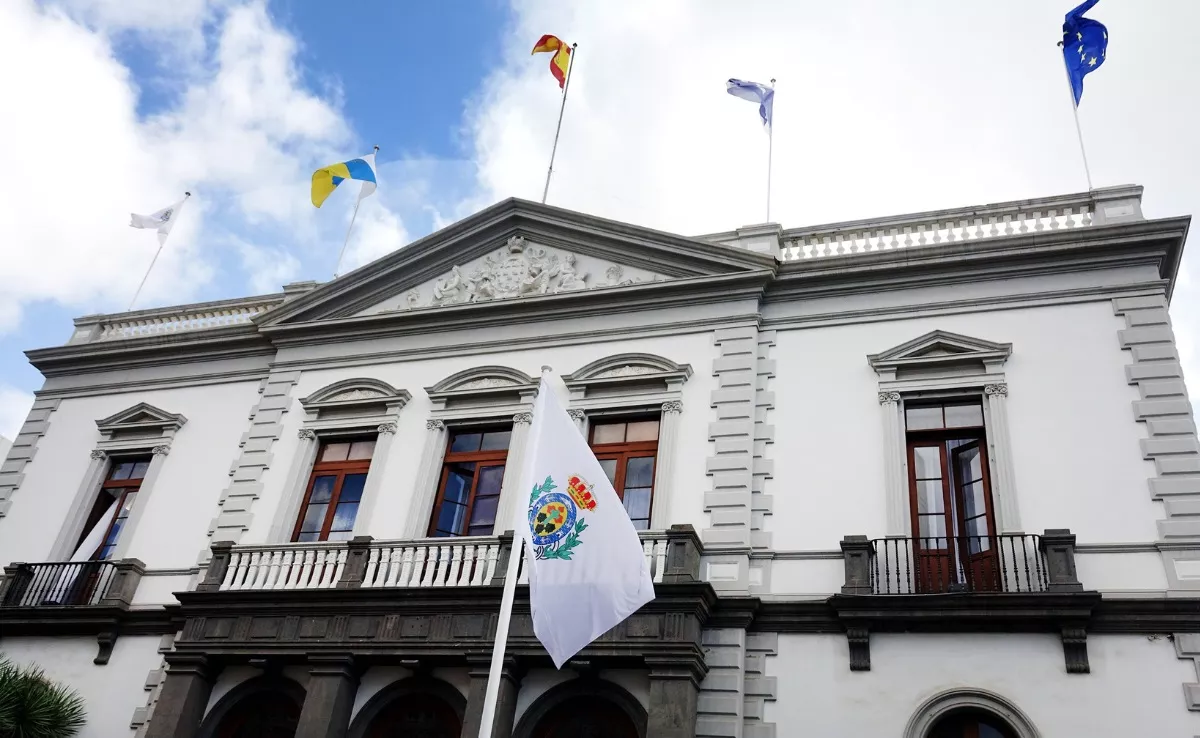
The Santa Cruz de Tenerife City Council has approved changes to the salary structure for its civil servants. The reform will shift a portion of the fixed productivity payments they received into their specific job allowances. While this may seem like a technical matter for HR experts, it reflects the reality that these payments had ceased to function as performance incentives and had become fixed amounts.
To comprehend the reform, it’s essential to understand civil servants’ salaries. Besides their base pay, they receive various allowances, one of which is the specific allowance that compensates for the responsibilities and challenges of their roles. In contrast, the productivity allowance is intended to reward exceptional performance and initiative, making it variable rather than a guaranteed amount.
The agreement reached in the negotiations on 22 December 2025 will see productivity amounts from parts one and two of Article 8 incorporated into the specific allowance through a new “factor L.” This factor will be defined later by a technical committee involving administration and union representatives. Essentially, part of what was previously paid as productivity will become a fixed element of the salary.
Importantly, this does not amount to an overall salary increase; rather, it is a reorganisation of existing payments. The council will adjust the job classification relations to increase the specific allowance scores based on professional groups. For instance, upper group A1 will see a 132-point increase, while other groups will receive varying point increases, with monthly monetary references ranging from €259 for group A1 to €212 for professional groups.
The reform also retains a form of productivity payment. While portions of the productivity will now be part of the specific allowance, sections three and four will shift to a single productivity payment aimed at rewarding exceptional performance. To receive this, staff will need to complete a self-assessment questionnaire about their job performance. A technical committee will further define this process, which will be overseen by a parity commission.
From 1 July 2025 to 30 June 2026, employees will receive €1,465 annually, to be paid in August 2026. Additionally, productivity payments from section five of the agreement will cease, and amounts previously received will instead be included in a non-absorbable transitional personal allowance, suspending the specific productivity scheme for that section.
This modification also requires an update to the Job Valuation Manual, as the specific allowance cannot increase without prior job evaluations. The new factor L will contribute to the criteria for determining the scores and amounts of the specific allowances assigned to each position. The reform has received a favourable report from the General Intervention, confirming that it meets necessary regulations, respects salary limits for civil servants, and has adequate budgetary provisions for 2026, although it cautions that future costs will need to be included in annual budgets.