Astrid Pérez Highlights Increased Engagement in Canary Islands Parliament
SANTA CRUZ DE TENERIFE, 2 Jul — Astrid Pérez, President of the Canary Islands Parliament, has reported a significant increase in civic engagement during the first three years of the XI Legislature. Over this period, the Parliament has hosted 2,074 activities, marking a 31% rise since the previous legislature and a notable 44% increase from the one before that.
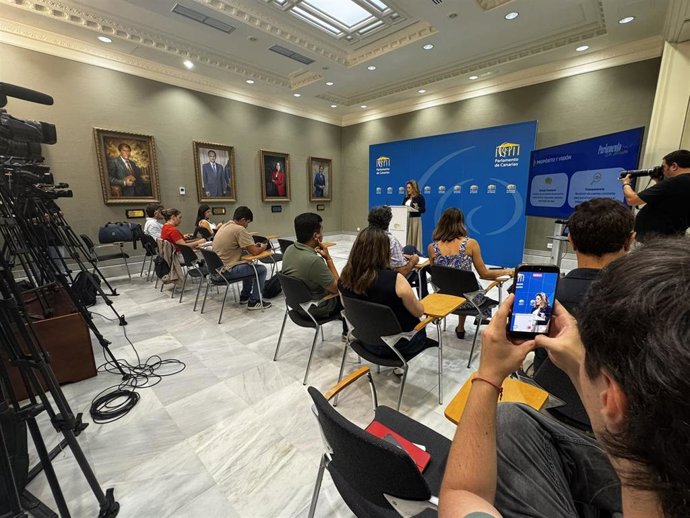
At a press conference on Thursday, Pérez praised the positive political atmosphere in the regional Assembly, emphasising ongoing dialogue and respect for diverse political opinions, despite occasional heated debates.
She stressed the importance of transparency, aiming to ensure that citizens have clear access to information about the legislative process, which is often confused with the actions of the Canary Islands Government. Efforts to enhance awareness include increased social media followership, the launch of a virtual tour of the Parliament, and heightened public interaction; for instance, a recent housing bill garnered 990 comments, compared to a historical average of just 26.
Pérez noted that over 103,000 visitors have toured the Parliament since the start of the current legislature, a significant rise from 47,781 in the previous term. Initiatives like the ‘Escuchar para avanzar’ project have been introduced to collect citizens’ proposals.
The President also highlighted efforts towards a ‘zero paper’ policy, ensuring full accessibility for individuals with dual sensory impairments, and the acquisition of a historic property in La Laguna for 1.6 million euros to expand the headquarters of the Advisory Council.
Plans are underway for the restoration of a painting by Manuel González Méndez, which has remained hidden since 1906, along with the installation of sculptures honouring Clara Campoamor and La Graciosa, following its recognition as the eighth Canary Island in the Statute of Autonomy. A study is being commissioned to assess the conservation needs of the hemicycle’s roof.
Additionally, Pérez welcomed the approval of a second equality plan, the ‘Conecta Europa’ conferences, and the presidency of CALRE, which has released a manifesto advocating for Outermost Regions in the upcoming EU financial framework.
Looking ahead, Pérez is open to a regulatory reform aimed at making legislative processes more streamlined. However, she acknowledged that changes can be challenging due to established traditions within the Parliament.
She noted that the duration of presentations has been reduced from 50 to 45 minutes, and many groups are adopting shorter, 20-minute interpellations. The impact of social media on political dialogue was also acknowledged, with Pérez supporting the Parliament’s ‘videopodcast’ initiative as a more accessible way for citizens to engage with parliamentary discussions.
As the legislature progresses, Pérez outlined key priorities, including the enactment of a law on teacher authority, necessary structural reforms proposed by the Government, and continued efforts to enhance the Parliament’s heritage.