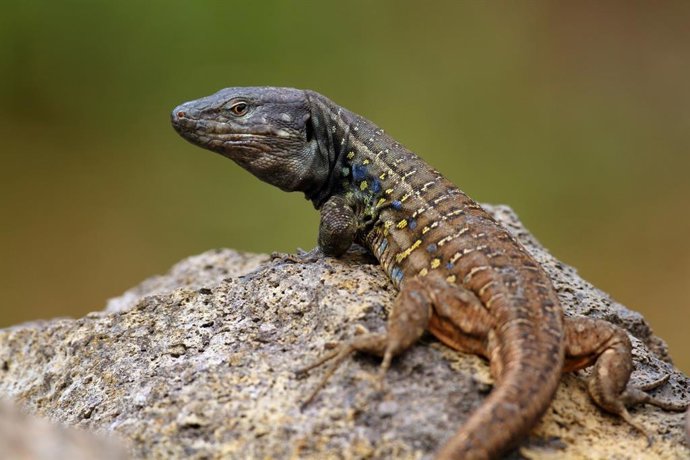
Tenerife’s Feline Colonies Impact Local Lizard Populations
SANTA CRUZ DE TENERIFE, 1 Jul. A recent study has found that cat colonies on Tenerife are reducing both the populations and body size of the endemic galloti lizard. This research, published in Biology Letters, analysed over 200 lizards near 22 cat colonies.
Conducted by researchers from the National Museum of Natural Sciences (MNCN-CSIC), the University of La Laguna (ULL), and the Canary Islands Ornithology and Natural History Group (GOHNIC), the study compared lizard populations in areas around cat colonies with those in similar habitats further away.
The findings highlight the significant ecological impact of these feline colonies. They alter the dynamics of local lizards, rodents, and birds due to the presence of feeding stations. The researchers noted that cats are not just direct predators; their presence also affects lizard population structures and sizes.
“One colony had the remains of up to 14 lizards in its feeding sites,” explained MNCN researcher Airam Rodríguez. However, the research showed that lizards near cat colonies were not only less abundant but also smaller than those elsewhere. Surprisingly, even though they were smaller, they had a greater relative weight, suggesting better access to food, potentially from cat feeders.
The study indicates that artificial feeding points attract not just cats and lizards, but also invasive species like rats and hedgehogs, further disrupting local ecosystems. The Canary Islands boast a unique array of endemic species, which are already under threat from non-native species like domestic cats.
Juan Carlos Rando, a co-author from ULL, emphasised the need for integrated management policies to protect native wildlife near these cat colonies. “Our data show that we must consider the ecological effects of cat populations beyond just animal welfare,” he concluded.