Artificial intelligence is starting to make headway in healthcare training in Tenerife. The Nuestra Señora de Candelaria University Nursing School has teamed up with CIFP Los Gladiolos for a hospital simulation experience aimed at nursing students and those in the Technical Degree in Nursing Care (TCAE).
This initiative is part of SimIA, an innovation project by the Department of Education, Vocational Training, Physical Activity and Sports of the Canary Islands government. Its objective is to incorporate simulation with artificial intelligence as a learning tool to train technical and professional skills in realistic care environments.
The project allows students to face scenarios similar to those they may encounter in a hospital, but within a controlled educational setting. This way, future professionals can practice procedures, enhance coordination, and make decisions without risk to real patients.
A Clinical Scenario for Learning to Work in an ICU
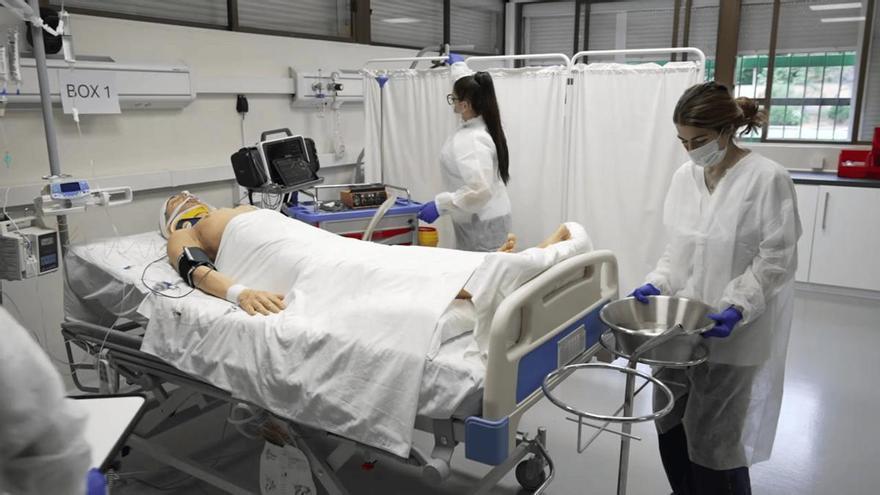
The experience unfolded through a high-tech clinical simulation scenario, jointly designed by the La Candelaria Nursing School and CIFP Los Gladiolos. The aim was to replicate a typical hospital setting and encourage collaboration among students from different educational levels.
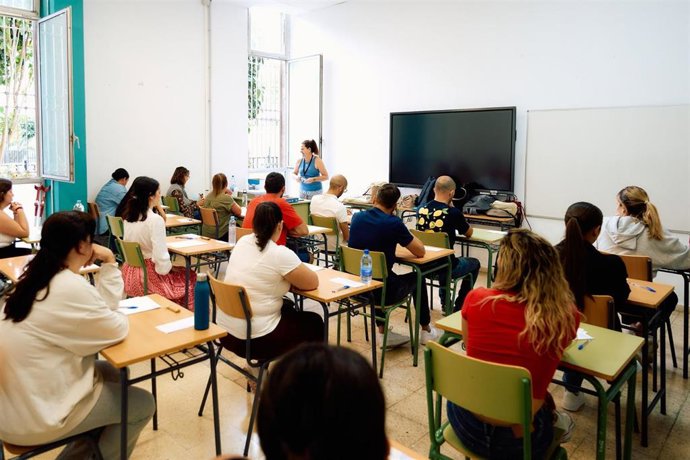
The activity was led by three fourth-year nursing students, who conducted a workshop for 17 TCAE students. The session focused on the care of a patient admitted to an Intensive Care Unit (ICU).
Following the theoretical component, students put into practice what they had learned through clinical simulation in a realistic and technologically advanced environment. This type of training allows them to practice actions typical of high-complexity units, where coordination between professionals is crucial.
Coordination, Communication, and Decision-Making
The exercise enabled students to grasp the functioning of a service that demands effective communication, clinical anticipation, task distribution, and teamwork.
In an ICU, healthcare professionals work under high pressure, with patients requiring constant monitoring and swift responses. Therefore, training encompasses not only technical knowledge but also transversal skills such as organisation, collaboration, and shared decision-making.
Simulation facilitates students’ practice of these aspects before fully entering the healthcare environment. Moreover, it encourages nursing students and future TCAE professionals to learn to coordinate from their formative stage, which is particularly relevant since both profiles will share workspaces throughout their careers.
Joint Training Between Nursing and Healthcare Vocational Training
A key feature of the project is the collaboration between university students and those in healthcare vocational training. The activity allowed fourth-year nursing students to take an active role in teaching, while TCAE students could familiarise themselves with the procedures and dynamics of a critical unit.
This model early on replicates the reality of healthcare teams, where different professional profiles work together in patient care.
Collaboration between institutions also strengthens the link between academic training and practical care. In this instance, a university school linked to the public healthcare system and an integrated vocational training centre specialising in healthcare education took part.
Los Gladiolos, A Reference Centre in Healthcare Vocational Training
The activity took place at the clinical simulation facilities of CIFP Los Gladiolos, located in Santa Cruz de Tenerife. This centre is recognised as a National Centre of Excellence for Vocational Training in Healthcare and features advanced spaces for training, innovation, and educational research.
These facilities enable the recreation of healthcare environments and utilisation of active learning methodologies. In the healthcare professional sector, such resources are particularly beneficial for students to practice before joining real healthcare centres.
The use of clinical simulation has become an increasingly important tool in healthcare education in recent years, as it aids in training techniques, protocols, and responses to complex situations.
The La Candelaria Nursing School
The Nuestra Señora de Candelaria University Nursing School is part of the Canary Islands Health Service and affiliated with the University of La Laguna. It is the oldest nursing training centre in the Canary Islands, with its origins dating back to 1967.
In 1979, it became integrated into the university system, consolidating a direct relationship between academic training and the practical care carried out at the Nuestra Señora de Candelaria University Hospital.
Over nearly six decades, the school has trained thousands of nursing professionals who now work in the Canary Islands’ healthcare system, other parts of Spain, and even internationally.