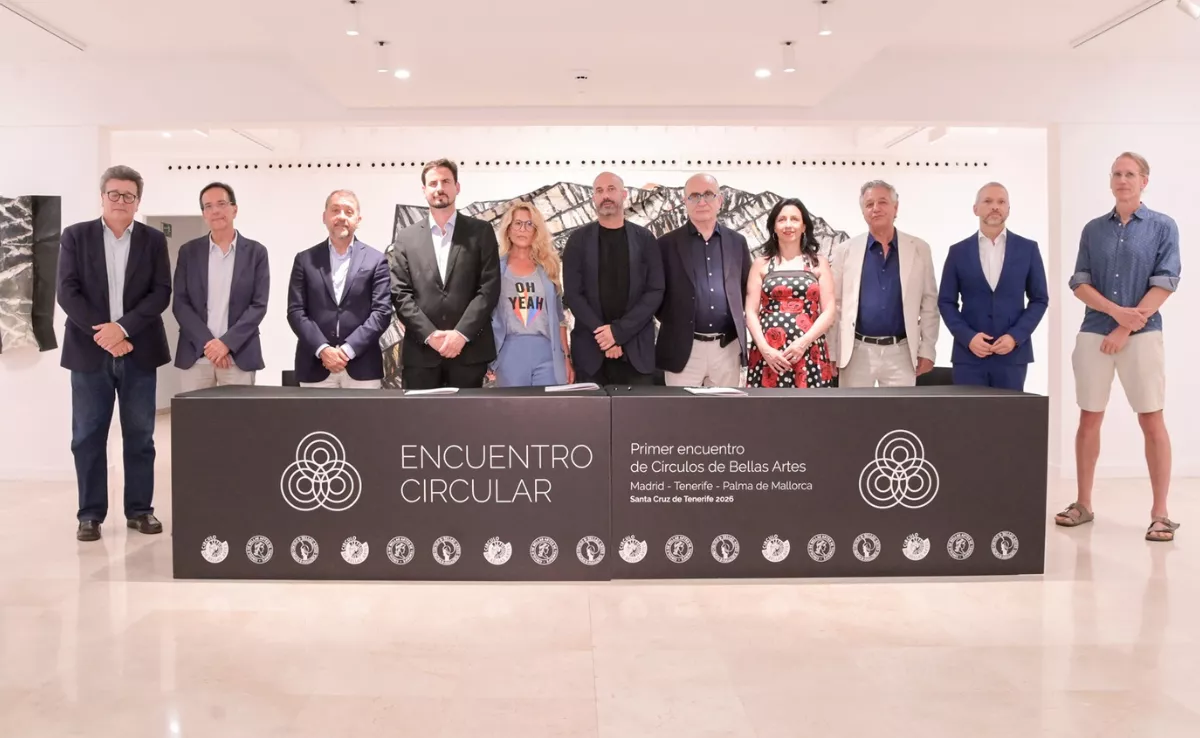
The Círculo de Bellas Artes in Tenerife hosted the inaugural meeting of the I Encuentro de Círculos de Bellas Artes de España on Tuesday. This event gathered representatives from Spain’s three existing Circles: Tenerife, Madrid, and Palma de Mallorca, in Santa Cruz de Tenerife. The aim is to establish a stable network for artistic and cultural collaboration among these historic institutions, facilitating the exchange of cultural programming and enhancing their roles within Spain’s cultural landscape.
The first official meeting took place at the Tenerife Circle and resulted in a collaborative agreement between the three entities. Attendees included members of the Tenerife Circle’s board, with Ana Lorca and Samuel Cabrera as vice-presidents, alongside Valerio Rocco from the Madrid Circle, and Pedro Jesús Lorente and Judit Vega from Palma.
The meeting was supported by representatives from Fundación CajaCanarias, including general director Francisco Óliver González and culture head Raquel Luis. Local officials also attended, including Santa Cruz mayor José Manuel Bermúdez and José Carlos Acha, the insular councillor for culture.
The event served as a platform for dialogue and coordination, with plans for follow-up meetings in Palma in October 2026 and Madrid in February 2027. This initiative coincides with the centenary celebrations of the Círculo de Bellas Artes de Tenerife, running from 1925 to 2025.
Samuel Cabrera described the agreement as a “significant milestone” and expressed gratitude for the support from Madrid and Palma, highlighting the Tenerife Circle’s strategy to broaden its reach. Valerio Rocco emphasised the shared interests between the Circles, advocating for increased public engagement in cultural activities. Pedro Jesús Lorente stated that the collaboration would enhance cultural programming across the Circles, increasing the impact of their activities.
Mayor José Manuel Bermúdez remarked on the historical ties between the city and the Círculo de Bellas Artes, noting its positive contributions to the local community. He asserted that the partnership would benefit residents, as “people want culture.”
The initiative, dubbed Encuentro Circular, aims to treat culture as a dynamic force circulating between regions and institutions. The goal is to create a stable framework for coordination, fostering project exchanges and cultural knowledge. Tenerife will serve as a hub for cultural innovation, while Madrid will act as a historic anchor and Palma as a connector for insular and Mediterranean exchanges.
The three entities hope to establish a decentralized national cultural network, enabling them to share programming, develop new projects, and strengthen their presence as contemporary cultural agents.