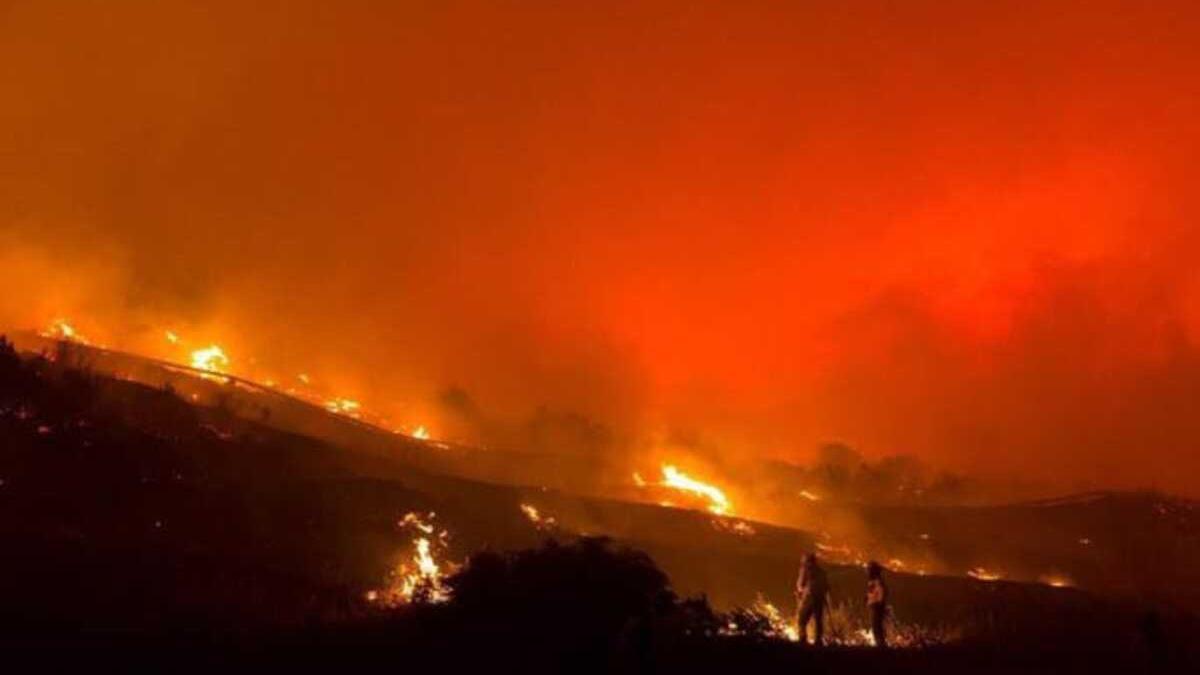
The Tenerife Cabildo, through the Natural Environment, Sustainability, Safety and Emergencies department, is actively enhancing training and qualification in helicopter operations for the Forest Brigades (Brifor) during the forest fire fighting campaign. Continuous exercises and training sessions are conducted to keep professionals prepared and ready for any situation requiring their services.
This special group comprises 180 members of the High Mobility Brigade (Brivam) and a team of technical agents from Brifor. To stay up-to-date, they regularly undertake training that, as a form of continuous evaluation, includes flight certifications which must be renewed monthly to operate helicopters during forest fire extinguishment. Their role is crucial when addressing emergencies in hard-to-reach areas of Tenerife’s mountains.
Training is structured into two blocks. On one hand, there is flight certification, enabling personnel to board helicopters, which is continually renewed through scheduled exercises in strategic locations. This training addresses aspects related to air safety, action protocols during flight, and responses to potential incidents or accidents. On the other hand, focus is placed on the physical condition of members of the High Mobility Brigade (Brivam), as it relates to conducting specific embarkation and disembarkation practices in coordinated simulated operational scenarios. These training manoeuvres are conducted both on the ground with the aircraft stationed and through real flights simulating regular working conditions during fire interventions.
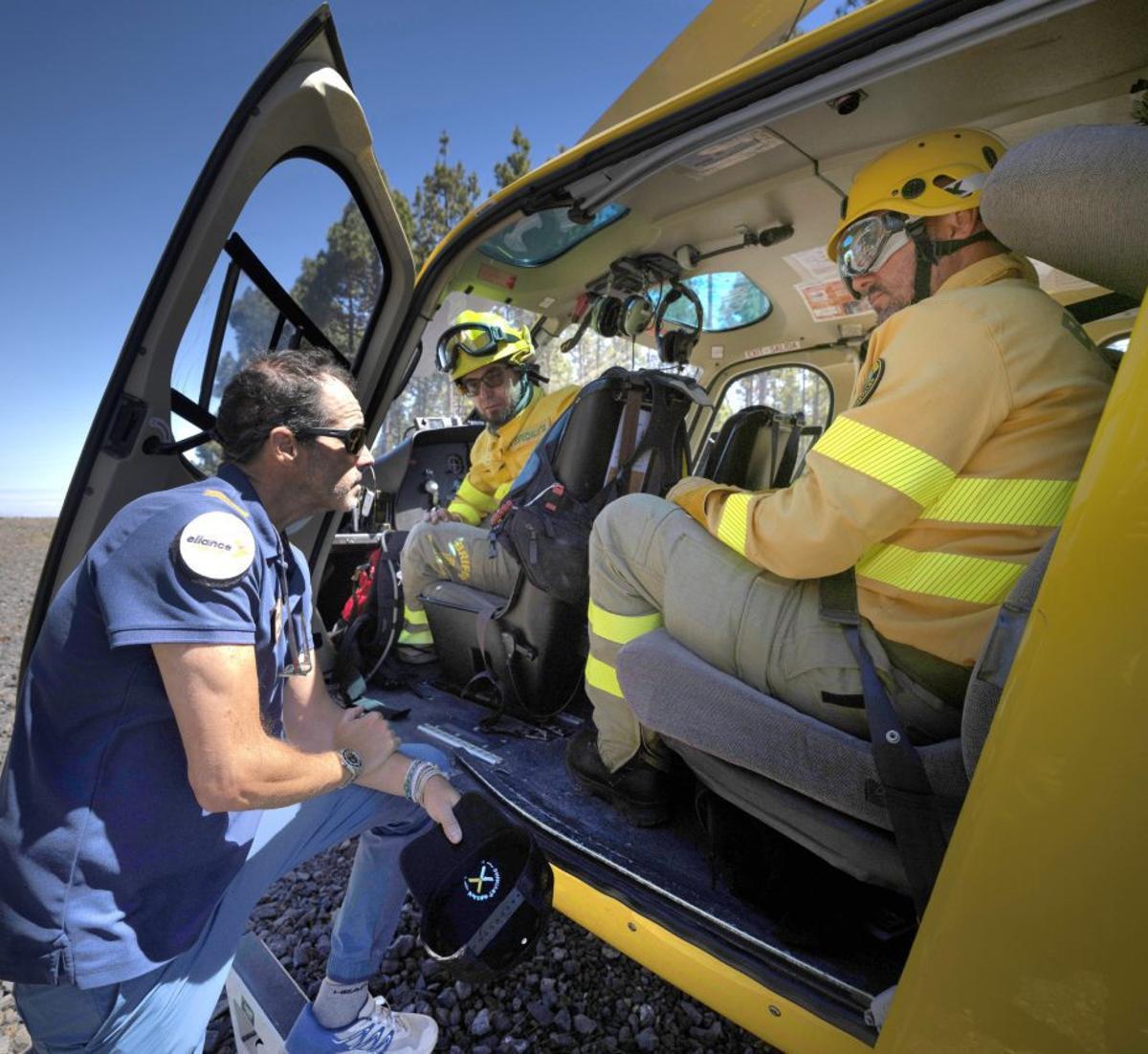
Members prepared for take-off. | A. R.
The Councillor for Natural Environment, Sustainability, Safety and Emergencies, Blanca Pérez, is convinced that “in Tenerife we have strength and a robust ground response from all Brifor professionals that enables us to swiftly address most forest emergencies. However, we continue to maintain the training and certification of our Brivam for helicopter operations because there are situations where aerial resources are essential.” This is part of the commitment to “have a strong and rapid response team always available to minimise or contain risks in a forest fire,” she emphasises.
On 9th September, the Cabildo presented “the largest human and technological operation” it has ever deployed to prevent and respond to forest fires: 760 personnel, drones, a network of surveillance towers, thermal imaging cameras, various types of extinguishing equipment vehicles, and aerial resources “that allow us to attack a fire from the ground. But we also have the option to do this from the air with the versatility provided by having two helicopters, a lesser-known but essential division in certain cases.” Thus, the island Councillor for Natural Environment asserts that “we have the muscle” to carry out this work, but warns that “we need to promote a culture of prevention among the public to avoid problems.”
A Less Frequent Use
According to the Head of Fire Extinguishing Services at the Cabildo, Pedro Martínez, “the terrestrial resources at our disposal are extremely powerful and, with the accessibility we have on the island, both via roads and tracks, we typically reach emergencies much faster through these communication routes.” This situation means that “we are using embarkation and disembarkation or helicopter transport less frequently,” something that only occurs when responding to a fire in inaccessible areas. For this purpose, “it is essential to maintain flight certifications for personnel to ensure they can be airlifted to these areas at any moment.”
Martínez explains that “in many areas of the mainland, helicopter transport is much more frequent because the distances and, at times, accessibility to certain mountainous regions do not allow the communication routes.” In the case of Tenerife, generally, “it is used on a very occasional basis, but we do need trained personnel with updated certifications to use it whenever necessary.”
What are the problematic areas? In general, the less accessible zones “are located bordering the Teide National Park, where no tracks reach, although they were used in recent fires in areas like La Fortaleza de Los Realejos or the heights of Arico and Granadilla de Abona.” He clarifies that helicopter transport was more common on the island “20 years ago, but today it is still very necessary,” he emphasises.
The decline in these operations is primarily attributable to the robust deployment capacity demonstrated during recent campaigns, the extensive terrestrial deployment capabilities existing on the island, and the good accessibility of roads and forest tracks that connect Tenerife in areas where incidents may occur. In most cases, terrestrial resources can reach the fire location more swiftly than through aerial transport.
However, helicopter transport remains “a strategic tool” for accessing those remote or hard-to-reach areas, especially “in high mountain areas and locations where no adequate communication routes exist.” For this reason, the Forest Service in the area of Natural Environment, Sustainability, Safety, and Emergencies considers it essential to keep personnel in the High Mobility Brigade (Brivam) trained and with updated certifications to ensure an effective response to any emergency.