Future of Franco Monument in Canary Islands Uncertain
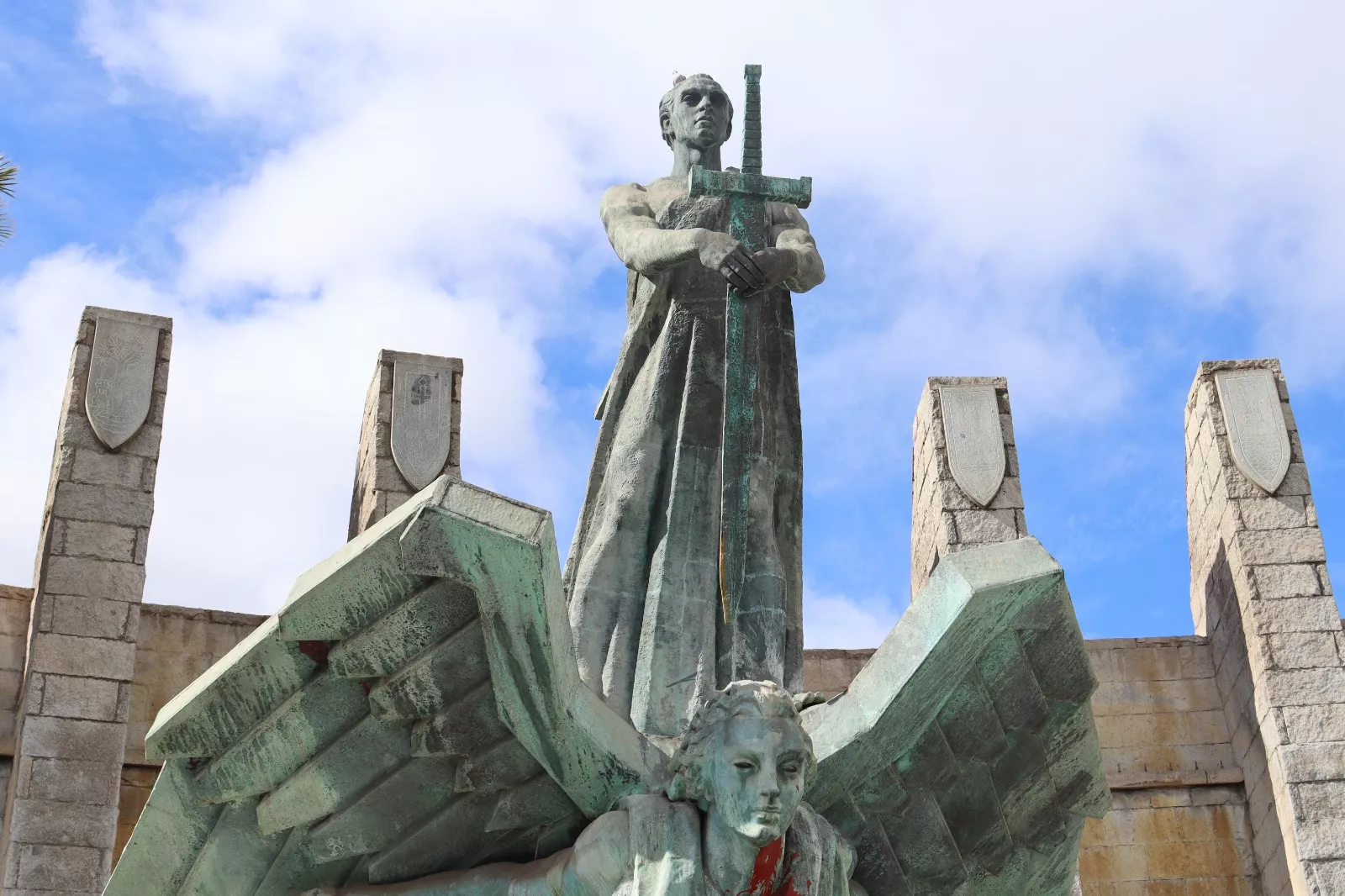
Government Decision on Juan de Ávalos Sculpture
The Canary Islands Government recently concluded that the sculpture by Juan de Ávalos, commonly referred to as the Franco Monument, does not meet the criteria to be designated as a Cultural Asset of Heritage Interest (BIC). The lack of sufficient artistic value to warrant such protection has ended a lengthy controversy surrounding the conservation of this work. The current debate now revolves around the future of the sculpture. However, until the Catalogue of Francoist Relics in the Canary Islands is definitively approved, the Santa Cruz de Tenerife City Council cannot make a decision regarding it.
Legal Certainty Pending
Not only is the capital’s council affected; other municipalities hosting any of the over 400 identified Francoist relics within the Archipelago are also unable to act. Their removal or reinterpretation could occur without adequate legal guarantees. This is the position of the Deputy Minister of Culture and Cultural Heritage, Horacio Umpiérrez, who explains that although local authorities have the competence to act on these symbols, it is advisable to await the approval and publication of the catalogue. Nevertheless, its implementation is not anticipated in the near future. The document, which comprises over 9,300 pages, was definitively submitted to the Canary Islands Government in April 2025. More than a year later, Umpiérrez indicates that the documentation is still being analysed to ensure it meets the criteria established in the agreement with the University of La Laguna, which was responsible for its creation.
Approval Timeline
“We are in that process and hope it can be resolved by mid-November at the latest,” explains the Deputy Minister. If approval is delayed until November, the catalogue’s entry into force before the current legislative term ends will become quite tight regarding the expected timelines. Once the technical analysis conducted by the Department of Culture is completed, the document will be submitted to the Technical Commission for Democratic Memory, which is responsible for issuing the preliminary report prior to its approval. Once this step is cleared, the catalogue will initially be published in the Official Bulletin of the Canary Islands.
Public Information and Objections
This first publication will open a public information period during which citizens, entities, and administrations can submit objections. Once these have been examined and responded to, the catalogue must be republished, this time definitively. It will be at this point that local administrations will have a robust legal framework to determine the future of sculptures, monuments, streets, plaques, fountains, and other references linked to Francoism.
Options under Democratic Memory Legislation
The legislation concerning democratic memory generally offers two options: removal or reinterpretation, adapting them to current democratic values. The Catalogue of Francoist Relics in the Canary Islands represents the most comprehensive inventory to date of symbols associated with the dictatorship in the Archipelago. Compiled by a team of researchers from the University of La Laguna, the work identifies 428 Francoist relics distributed across the eight islands. Among the catalogued items are monuments, sculptures, commemorative plaques, crosses, shields, street names, honours, and other references deemed contrary to democratic memory legislation. Of the total, 225 relics are located in the province of Santa Cruz de Tenerife while 203 are in Las Palmas. The research was conducted over several years and is documented in materials exceeding 9,300 pages, analysing each element, its historical context, and the potential measures to be adopted. The catalogue does not automatically mandate the removal of all included symbols; however, it does establish a technical and legal basis for administrations to evaluate, on a case-by-case basis, whether their removal or reinterpretation is warranted.