Since June 19, anyone caught smoking in the Teide National Park and causing a forest fire could face imprisonment. The resolution approved by the Cabildo of Tenerife includes fines of up to €100,000 for civil liability, and imprisonment for offenders ranging from one to six years for criminal liability. If agents monitoring smoking detect an individual smoking or a cigarette stub that does not cause a fire, the administrative penalty will be between €100 and €1,000.
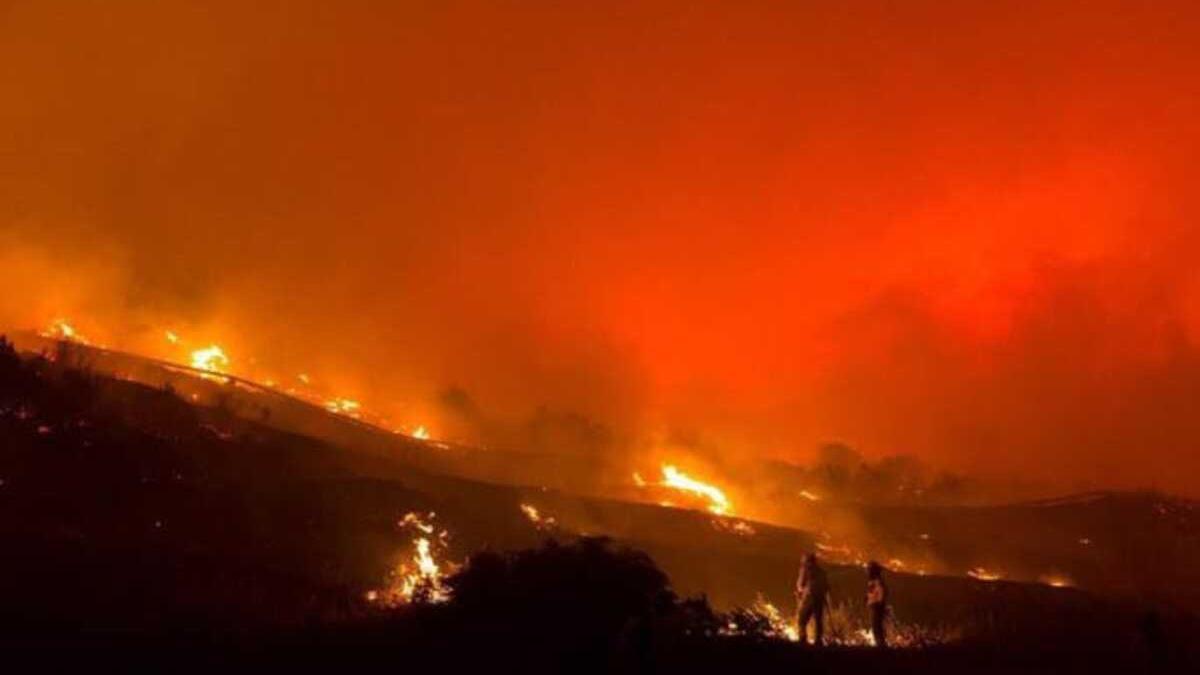
Incendio de 2023 que afectó a 12 municipios de Tenerife / ED
This was confirmed by the island president, Rosa Dávila, who hopes this “drastic decision” will deter smokers, as their habit is one of the main causes of forest fires in the vicinity of the national park, whether through the discarding of cigarette butts, throwing them from vehicles, or improper handling.
“Since the last fire in 2023, we have been adopting preventive and coercive measures, maintaining a line of work with the Nature Protection Service (Seprona) of the Civil Guard and other security forces, which has allowed us to have up to five arsonists currently in prison,” she recalls. Among them are those from Icod el Alto in Los Realejos – who “had over 100 fires on his record” – as well as San Miguel Alto and La Esperanza.
Retama: A Dangerous Fuel
The president of the Cabildo stresses that “we had to be so strict in the national park because the retama, which was previously used as firewood in homes, has a high calorific value and a very rapid capacity for the flames to spread.” Consequently, the smoking ban will continue sine die, especially following the last three fires caused by discarded cigarette butts. In other protected natural spaces on the island, this prohibition has been limited to summer months and during alerts for extreme heat and fire danger since last year.
From 2025, restrictive measures in other natural spaces will only be applied in summer and during alerts for extreme heat.
To enhance monitoring efforts, the Cabildo has 14 environmental agents – up from just two on May 7 when the island corporation took full responsibility for managing the National Park – and 13 rural guards, amounting to a total of 27 personnel.
Continuous Increase in Sanctions
The reinforcement coincides with a rise in environmental penalties in the national park: 81 in 2023, 224 in 2024, and 371 in 2025, marking a 358% increase over two years. In total, fines across protected natural spaces in Tenerife have risen by 110%.
In the other protected natural areas on the island, the smoking ban – already in place since last year – applies during summer months and particularly during periods of extreme heat and fire alerts.
Entire National Park Territory
The island resolution establishes a total ban on smoking in open spaces throughout the Teide National Park. This ban affects trails, paths, viewpoints, recreational areas, car parks, rest areas, public facilities, and any other space within its boundaries. The only exceptions are enclosed buildings where smoking is expressly permitted.
The top official of the island corporation hopes this “drastic decision” will deter smokers.
The Cabildo justifies this measure based on the exceptional value of Teide, which is integrated into the National Parks Network and designated a World Heritage site by UNESCO, but also due to the influx of visitors, summit conditions, and the ease with which vegetation can ignite. The obligation applies to visitors, users, workers, and individuals engaged in authorised activities.
As the president confirms, since the Cabildo took full control, the aim has been to reduce human pressure on the environment by 50% and implement new measures such as the ecotax and access control.
Other Restrictions
With the Management and Usage Plan (PRUG) for Teide National Park, approved by the Government of the Canary Islands on December 1, 2025, at the proposal of the Department of Ecological Transition and Energy, certain activities now require prior authorisation or registration, such as access to the Telesforo Bravo trail, which is subject to permits and limited spots. Private vehicles are restricted during peak hours, and prior booking for parking or shuttle buses is required. Scientific research and professional film or series shoots also need specific authorisations.
Additionally, wild camping, bonfires, the use of cooking equipment with fire, recreational vehicles, mass events or sports trials, and walking outside the official network of trails are prohibited, where cycling is also not allowed.