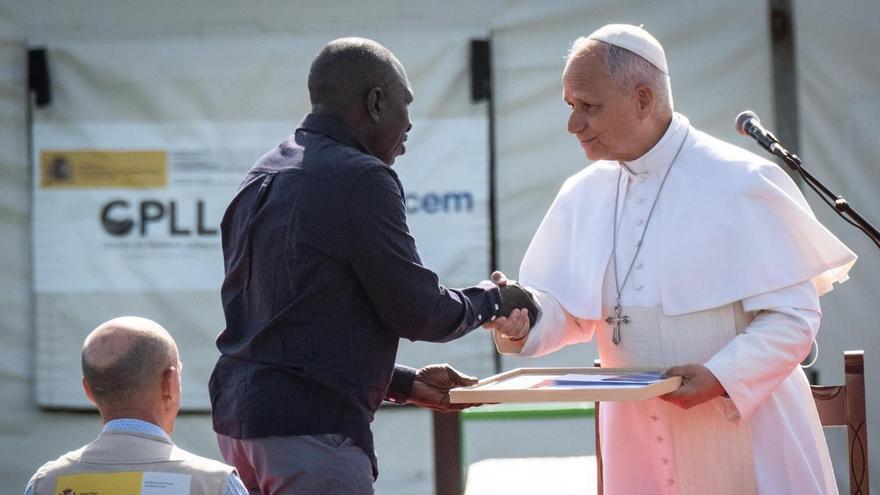
Archives of the Diocesan Headquarters, La Laguna.
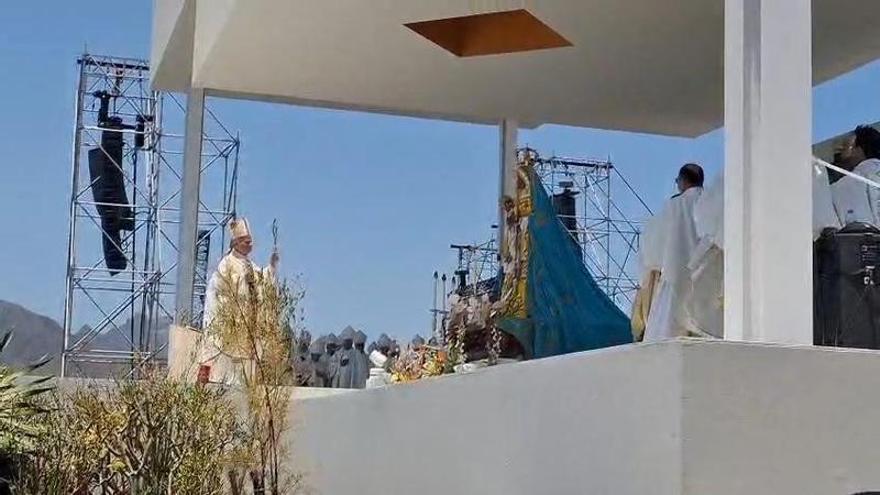
During Pope Leo XIV’s visit to the Canary Islands, a scene unfolded that likely would have gone unnoticed were it not for its deeply human resonance. In both Gran Canaria and Tenerife, documents from our historical archives were presented, indicating the existence of ancestors linked to the islands. Beyond the genealogical accuracy of the data, the interest this news generated was remarkable. It seemed that everyone was eager to ascertain whether the Pope had any Canarian roots.
The Significance of Ancestry
The question is simple: why does this matter to us so much? After all, a Pope’s mission does not depend on his birthplace or the origin of his ancestors. His service to the Church is universal. However, when we uncover a bloodline connection, however distant, a special joy arises. It feels as though a part of our own history has subtly intersected with the story of someone we admire.
Perhaps this is because we, as humans, do not survive solely on ideas. We also thrive on connections. We need to know where we come from, who our kin are, and what stories we share. Surnames, old photographs, family trees, or tales from our past are not mere curiosities. They are attempts to answer a fundamental question that accompanies every person: whom do I belong to?
Common Bonds with Public Figures
When someone achieves extraordinary prominence, we tend to seek what connects us to them. This is true for artists, athletes, scientists, or social leaders. We enjoy discovering that they studied in our city, lived near our homes, or shared experiences similar to ours. This is not an act of appropriation, but a way to draw close to greatness. We wish to feel that what is admirable is not entirely foreign to us.
The True Nature of Connection
However, this search also contains an important lesson. Biological kinship, while valuable, is never the deepest bond between individuals. Family roots explain many things, but they do not convey what is essential. What truly matters is sharing the same human condition, dignity, and vocation for goodness.
The Christian tradition goes even further. It asserts that we are all children of the same Father and that in Christ, we are called to recognise each other as siblings. From this perspective, the question regarding the Pope’s possible Canarian ancestors takes on a different dimension. We do not need him to be from our family to feel a sense of closeness. We do not need to prove a blood fraternity because we already partake in a broader and deeper fraternity. The Gospels indicate that Jesus also had to help his contemporaries understand the difference between blood ties and spiritual bonds. When informed that his mother and relatives were looking for him, he responded by pointing to those who heard God’s word and acted upon it. He did not reject his family; he expanded the very concept of family. The disciples experienced this as well. James and John, the sons of Zebedee, shared a blood bond, but Jesus’ call introduced them to a larger fraternity of those who walk together in pursuit of a shared ideal. The Gospel does not eliminate familial ties; it broadens them to encompass all humanity as a community of siblings called to recognise each other as children of the same Father.
The Humanity Behind the News
Perhaps this is why the news has garnered such sympathy. Not because we feel the need to claim anyone as our own, but because it reveals a very human desire: the desire to feel close to those we hold in esteem. We take joy in discovering that someone might, in some sense, be “one of us.” Yet true maturity lies in understanding that, even before any archival document, they already were. Just as we are for one another.