The Pope’s Visit to the Canary Islands: Spotlight on Migration
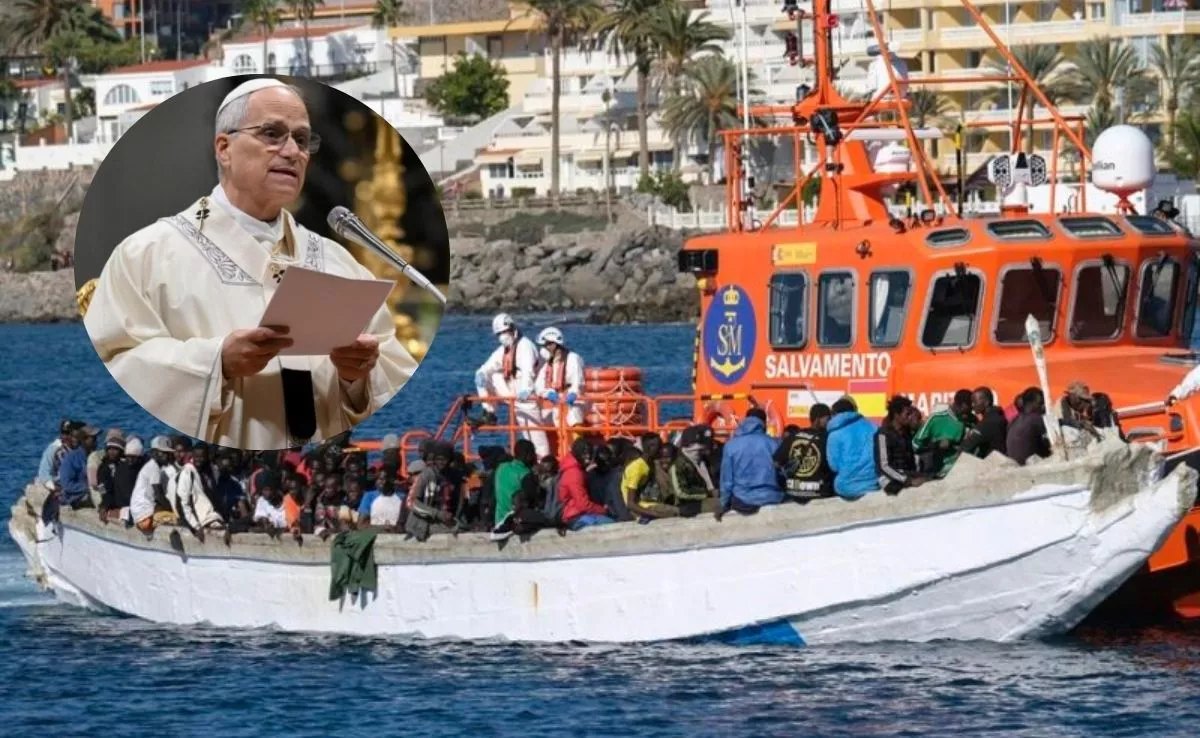
The Pope’s upcoming visit to the Canary Islands will highlight one of the most pressing issues faced by the Archipelago in recent years: migration. As part of his agenda, the Pontiff plans to visit the Arguineguín dock in Gran Canaria, a site that has seen numerous arrivals of boats, as well as the Las Raíces centre in Tenerife.
### A Chance for Dialogue
For organisations such as Accem, CEAR, and the Cruz Blanca Foundation, which work directly with migrants in the Canary Islands, this visit represents an opportunity to bring the migration discourse back into public debate. Years of migration emergencies have, at times, led to a desensitisation of the situation.
### “Against Hate Speech”
Accem, the NGO managing the Las Raíces centre, views the Pope’s focus on migration positively. They highlight that the Pope, beyond being a head of state and religious leader, serves as a “moral reference for millions.” They believe it is crucial for him to address the vulnerabilities faced by migrants, as this gesture can combat “hate speech” and the negative narratives that stigmatise these individuals.
### Shared Responsibility
Additionally, Accem points out that the Pope’s message is not directed solely at Spain or the European Union. They interpret his words as a call to action for “everyone,” conveying a powerful message to other nations considering or enacting highly restrictive immigration measures. The organisation emphasises that “we all share a collective responsibility regarding this issue.”
### Need for Increased Resources and Coordination
Regarding the role of governmental bodies, Accem refrains from making direct political evaluations but acknowledges that the recent migration crisis has necessitated constant coordination between NGOs and public institutions. They report that between 2023 and 2025, there has been a coordinated response to the influx of tens of thousands of migrants. However, they admit that more resources can always be allocated for migrant support.
Several dozen migrants queue inside the Las Raíces reception centre in La Laguna, Tenerife.
### “Rights Are Non-Negotiable”
Juan Carlos Lorenzo, the territorial coordinator of CEAR in the Canary Islands, believes that the Pope’s visit marks “a significant milestone.” He hopes it will provide a clear affirmation of the defence of rights, concord, peace, respect, and dignity for all individuals, “regardless of their origin.”
For Lorenzo, the Pope’s emphasis on migration issues serves as a “warning to navigators.” “Rights are non-negotiable; they must be protected, defended, and exercised,” he underscores.
### Beyond a Symbolic Gesture
In this respect, CEAR hopes that the visit transcends mere symbolism, serving as a catalyst for “transformative public policies” regarding migration, prioritising integration, coexistence, and the maturity of society above all else.
### Raising Awareness Globally
From the Cruz Blanca Foundation, Brother Jahir also commends the Pope’s focus on the migration reality in the Canary Islands. The Foundation plans to attend the Arguineguín event with 250 participants from their support and reception centres. This represents “an opportunity to raise awareness before the rest of Spain and Europe about the challenges faced by thousands of migrants,” as well as the efforts of administrations, social entities, and citizens to provide dignified and humane reception.
### Greater Social Sensitisation
The spokesperson for the Foundation believes this visit can foster “greater social awareness” and ignite a conversation on the need for coordinated, solidarity-based responses that respect human dignity. For Cruz Blanca, the Pope’s presence in the Islands is not merely visual; it helps to “recognise and listen,” encouraging uninformed individuals to understand the situation better and work collaboratively, as we are stronger together.
### The Role of the Canarian Society
In this context, Brother Jahir emphasises the role that Canarian society has played in welcoming migrants. He notes that the archipelago has been a “home” and “family” for many who have arrived by boat. However, he reminds us that support doesn’t end in the Islands. “Many individuals often move to the mainland, meaning our work doesn’t stop here; it starts in the Canary Islands,” he explains.
The response to migration must continue to be built on a network of collaboration among institutions, social entities, and the community. For these organisations, the Pope’s visit could be an opportunity for the Canary Islands to confront a reality that remains evident at its docks, reception centres, and neighbourhoods.