The President of the Canary Islands anticipates a smoother relationship with the State regarding issues hindering the development of the islands
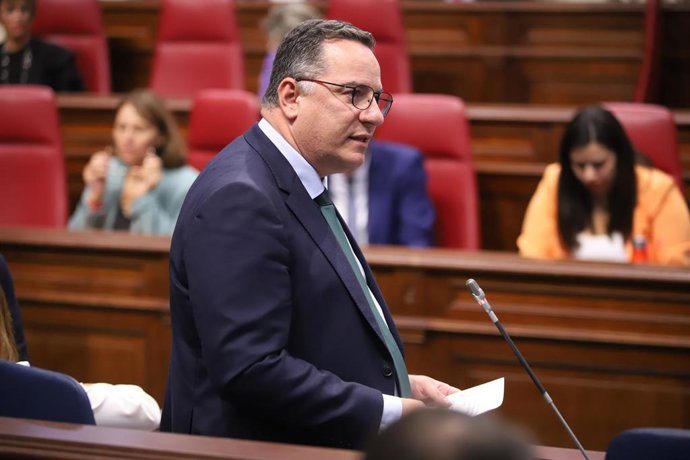
Fernando Clavijo, the President of the Canary Islands, has today expressed in the Parliament of the Canary Islands that “the European Migration and Asylum Pact will come into effect next Friday without the Canary Islands knowing how it will be implemented”.
“All indications suggest that the procedures regarding detention times for individuals will extend up to six months, testing both state and Canary resources, making it difficult for us to guarantee human rights,” he warned.
He emphasised the importance of human rights, referencing the upcoming visit of Pope Leo XIV to Spain, particularly to the Canary Islands, where he will witness first-hand the commitment, generosity, and solidarity of the people, who have set an example for the world that deserves recognition.
On this issue, and “in all matters conditioned by the relationship with the State”, the President expects a more fluid relationship, “as there are vital issues that, if not addressed, will hinder the development of this land”.
One such issue is the autonomous financing system, which Clavijo addressed, stressing the need for political unity. “In this path, we are alone, as the temptation to mix REF resources, which are our uniqueness, with financing is very high, and no autonomous community will defend us; we must do it ourselves,” he underlined.
At present, “there is still no official document, but I hope that the announced technical meeting will take place so we can work on this system, which, if it does not align with the Canary reality, will have consequences reaching beyond this government and impacting future generations”.
Regarding the Canary Islands-State relationship, Fernando Clavijo expressed doubts about the likelihood of the Pedro Sánchez government approving the budget announced last week, as “the necessary negotiating framework has not been established, and no issues proposed by the Executive have been approved in Congress in recent months”.
In light of this situation, Clavijo assured that the Canary Islands government will continue working to ensure compliance with the Canary Agenda and the approval of the Canary Decree, “where we can anchor the rights and needs of this land, preventing them from being subject to political fluctuations”.
Along these lines, the President explained how they are working to achieve truly equal islands, offering opportunities for all Canarians, regardless of location. “The inequality in population distribution across the islands causes issues of cohesion, mobility, social cohesion, and poverty; and population will only settle in territory if there is economic viability. Hence, we are engaged in a specific strategy for municipalities with fewer than 10,000 inhabitants.”
Simultaneously, support for self-employed individuals is being strengthened, along with measures for work-life balance, the promotion of early childhood education from ages 0 to 3, and improvements to educational centres and unitary schools.
In this context, Clavijo highlighted that the Canary Islands are in a better position now than when “we assumed government, a fact backed by data on average wages, productivity, employment, and wealth”. “Despite the financial strangulation from the State and the limitations of the expenditure rule, we have allocated an additional one billion euros to Health, 300 million more to Education, and have reduced waiting lists.”
In terms of housing, the head of the Executive raised the urgency to repeal the state housing law, which “has removed hundreds of thousands of homes from the rental market by failing to protect landlords, the majority of whom are not large property owners.” He also advocated for allowing administrative silence to be positive concerning construction licence applications, “a line the Government is pursuing by enabling professional associations to expedite the procedure”.