Icod de los Vinos Improves Public Lighting
The Icod de los Vinos Town Council has initiated a public lighting improvement project valued at €3.5 million, supported by the IDAE (Institute for Energy Diversification and Savings), which operates under the Ministry for Ecological Transition and the Demographic Challenge.
This initiative aims to renew 4,843 lighting points in the municipality, retaining only 26. The project adheres to current regulations to enhance energy efficiency, improve both pedestrian and vehicle traffic safety, and reduce electricity supply costs, along with maintenance and replacement expenses.
In addition to replacing luminaires with LED technology, the project will affect 74 command centres, which are the electrical cabinets that centralise the measurement, protection, control, and activation of lighting elements. They serve as the ‘brain’ or primary node that manages energy supply to street lamps.
Urgent Timeline for Execution
The expected execution period for the project is five months, with a deadline for submitting offers set for the 18th. The local government has categorised this tender as urgent in order to expedite the process and safeguard the public funding obtained at a national level. Within the bidding process, emphasis will be placed on extending the warranty period for the luminaires by five years and a minimum of one year for the installation.
Icod de los Vinos and Los Silos are the only municipalities in the Canary Islands included in this national call for projects.
Telemanagement as a Priority
Telemanagement is a crucial aspect of the contract. The platform installed to control public lighting must include programming, verification, and blocking of luminaires when necessary. It will also implement schedules for dimming or extinguishing luminaires as required by the Technical Office for the Protection of Sky Quality (OTPC) of the Institute of Astrophysics of the Canary Islands (IAC).
In this regard, the new contract must comply with levels of light pollution and the astronomical quality standards of the Archipelago. These are strict conditions aimed at protecting the integrity of the night sky.
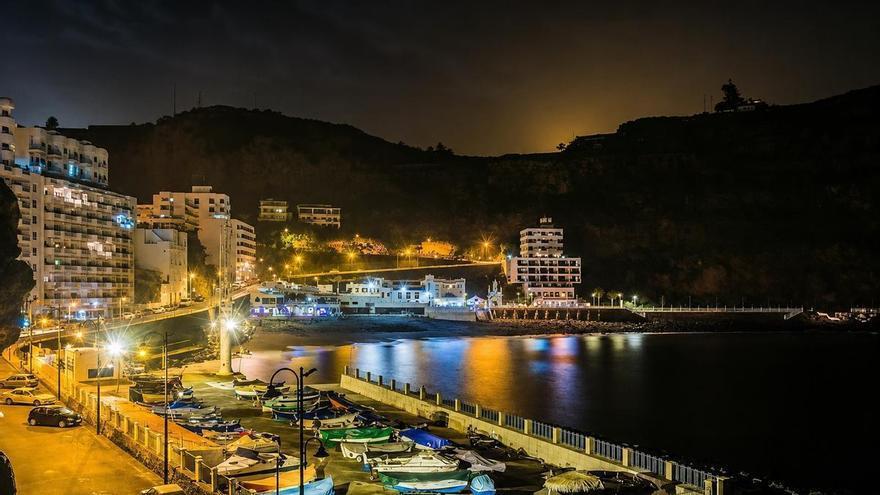
The contract specifies that, in general, the colour temperature of the lighting must not exceed 2,200 degrees Kelvin. This ensures a warm, orange-toned light, akin to that of a candle or sunset. Such temperature is appropriate for outdoor settings due to its low impact on light pollution and its negligible effect on the circadian rhythms of nocturnal wildlife. Direct emission above the horizon is also prohibited where regulations for sky quality need to be observed.
Streamlining Lighting Models
The current lighting system in the City of the Drago features “numerous models of luminaires”. This project aims to reduce that diversity, facilitating legal compliance while maintaining unique traceability in areas such as telemanagement, energy savings, and adherence to IDAE and IAC conditions.