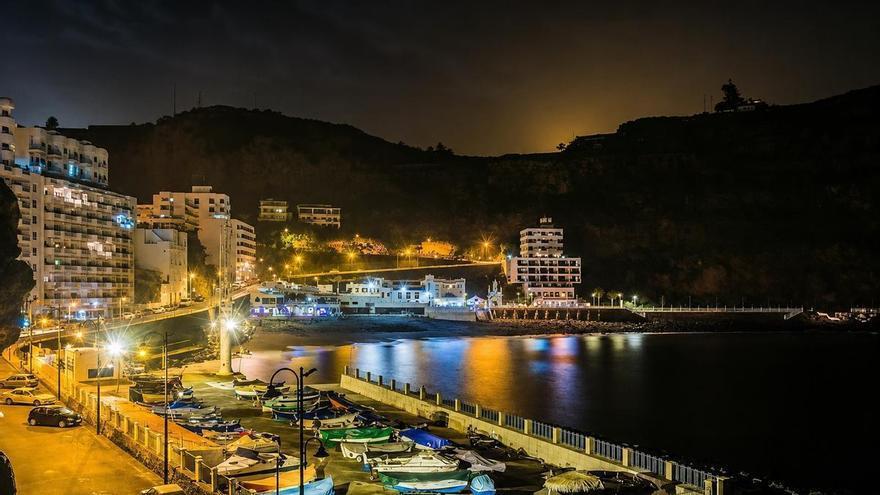
The Candelaria Town Council approved a plan for the inspection and regulation of all holiday homes in its jurisdiction during the session held on 28 May. The aim is to distinguish between those that comply with legal requirements and those that do not, exposing those operating outside the law. As stated by the Council, “the Town Hall will take action against those who break the law.”
According to the information provided, there are approximately “650 holiday homes with responsible declarations” registered in the municipality. A detailed legal analysis will be created for each property, which will be documented in a report within a transitional period of five years. During this time, property owners with registered properties can solidify their activities, provided they comply with urban planning and activity regulations.
Reinaldo Triviño, the Councillor for Housing, emphasised that the Council now “has a plan to ensure effective management of the holiday home situation.”
Census and Reporting
The central tool will be a municipal census of holiday homes, which the technical services will compile based on an Excel file provided by the Canary Islands’ Ministry of Tourism. This will include details for each property such as its name, registration number or responsible declaration, address, number of bedrooms, occupancy capacity, cadastral reference, and associated urban planning and legal compliance files. This data cross-referencing will allow for a complete administrative history for each home.
Once compiled, the census will be presented to a monitoring committee, which will meet weekly to review and evaluate each property individually. From this analysis, a favourable or unfavourable report will be issued for each case.
Possible Scenarios
The municipal secretary detailed the various possible scenarios during the committee meetings. The first scenario, as seen in other municipalities, involves properties not listed by the Ministry, which are considered illegal and will receive negative reports.
Another category includes properties lacking necessary urban planning permits. In these instances, it must be verified if the property qualifies as a legal dwelling and has the appropriate building permits, first occupancy license, and habitation certificate, among others. If these cannot be proved, the report will also be negative. The plan introduces a revealing stipulation: a property with prescriptive urban violations, where the Council can no longer take action, will still be deemed illegal and will not receive approval.
For properties without a prior notification of classified activity, an opportunity to present their situation will be provided; failure to comply will result in a declaration of ineffectiveness. Lastly, those with existing complaints, inspections, or pending files will be subjected to a prior request to align with regulations before any report is issued.
Working Committee
A working and monitoring committee has been established to carry out the procedure, consisting of political, legal, and technical officials. This committee will include the mayor or the appointed councillor, the Urban Planning Councillor, general administration technicians, architects or surveyors responsible for reporting and inspecting properties, administrative staff collecting files, and a Local Police officer to handle reports and inspections regarding noise, disturbances, or breaches. The criteria outlined in the plan will also be reviewed by those acting as authorities.
This plan responds to the Law 6/2025, dated 10 December, concerning the Sustainable Regulation of the Tourist Use of Residential Properties, which requires Canary Island councils to approve and start implementing these controls within a maximum of eight months from its enactment. The plan will be valid for a maximum of four years. Once approved, a copy will be sent to the Tenerife Cabildo and the Ministry of Tourism, followed by the preparation of an evaluative report on the results obtained, which will also be forwarded to both administrations.