
– CABILDO DE TENERIFE
SANTA CRUZ DE TENERIFE, 8 Jun. (EUROPA PRESS) –
The Cabildo of Tenerife presented the Insular Campaign for the Prevention of Addictions on Monday. This initiative, driven by the Department of Education for Prevention, aims to raise awareness among the public about the risks associated with substance addiction as well as behavioural addictions. It promotes healthy lifestyle habits and reinforces prevention from a community and inter-institutional perspective.
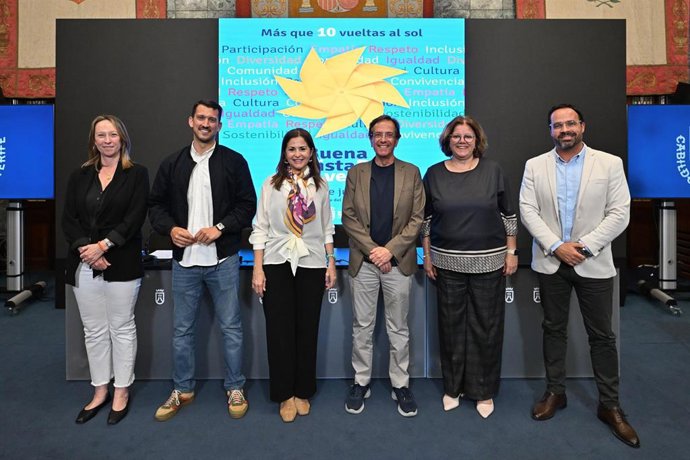
The campaign launch featured contributions from Juan Manuel Acosta Méndez, the Executive Councillor for Education for Prevention; Fernando Gómez-Pamo, the Director General for Mental Health and Addictions of the Government of the Canary Islands; Marianella Lorenzo, Director of Prevention at Proyecto Hombre, San Miguel Adicciones and ANTAD; Julio Brito, Manager of the General Foundation of the University of La Laguna; Pedro Javier Rodríguez, Vice-President of the Official College of Physicians of Santa Cruz de Tenerife; Rosa María García, Member of the Governing Board of the Official College of Nursing of Santa Cruz de Tenerife; Carmen Linares, Dean of the Official College of Psychology of Santa Cruz de Tenerife; and Miriam Rodríguez, representative from the Official College of Pharmacists of Santa Cruz de Tenerife.
This campaign marks the second major wave of preventive advertising actions developed by the Cabildo this year, following an initial phase focused on the prevention of mental health disorders.
This time, the institution directly addresses the increase in advertising related to alcohol consumption, gambling, and other potentially addictive behaviours through an unprecedented strategy: occupying the same spaces where messages that normalise consumption are usually found, to convey prevention, reflection, and health promotion messages.
Under the slogan ‘I don’t know, but it weighs’, the campaign focuses on the emotional burdens many individuals carry without fully identifying them.
AVOIDANCE BEHAVIOURS
Anxiety, loneliness, frustration, social pressure, stress, and emotional suffering are part of the daily lives of thousands and can sometimes lead to avoidance behaviours that result in addiction, according to a statement from the Cabildo.
Juan Acosta explained that this new addiction prevention campaign “addresses an urgent need” in a context of “sustained growth” in addictions.
“The number of institutions that have joined this initiative through our Department is itself an indicator of its relevance. Making addictions visible is more necessary than ever today, and to achieve this, we must occupy public spaces with preventive messages. The first wave of this campaign exceeded 6.5 million impacts, reaching 77% of the population of Tenerife and involving over 758,000 individuals,” he commented.
Fernando Gómez Pamo congratulated the Cabildo of Tenerife and its Executive Department for Prevention on this initiative, conveying his “full support” from the Directorate General for this campaign.
He stated, “Addictions are chronic diseases that need to be made visible and addressed from a community perspective. It is essential to restore collective dialogue around them, and this campaign represents a decisive step in that direction.”
Marianella Lorenzo expressed gratitude to the Cabildo of Tenerife for this initiative, affirming their participation with “full conviction”. “It is crucial to make addictions visible in all their dimensions: not only those related to substances but also behavioural addictions. The third sector plays an active and committed role in this campaign because we know that community prevention is the most effective tool at our disposal,” she indicated.
SUPPORT FROM ULL
Julio Brito highlighted that the University and its General Foundation, through the FARO Project, have a direct link to such campaigns.
Javier Rodríguez pointed out that “the data is unequivocal: behavioural addictions are significantly increasing, especially among the young population. This campaign serves an essential function by making these situations visible, normalising the social conversation around them and enabling those affected to recognise and identify themselves. The College of Physicians’ support for this initiative is unconditional.”
Rosa María García stressed that nursing plays a “fundamental role” in prevention, and their profession joins this campaign with “full commitment”.
“Nurses are on the front line in serving the public, and we leverage that proximity to support the preventive objectives of this initiative. We are at the Cabildo’s disposal to contribute actively to anything required,” she affirmed.
Carmen Linares emphasised that “the slogan of this campaign addresses painful realities that exist on the island: self-harm that is hidden out of fear, unspoken suffering. Therefore, making these issues visible and raising awareness is more urgent than ever. It is not about judgement but about building a society capable of discussing addictions without stigma. It is vital to remember that a significant part of addictions is closely linked to mental health issues and addressing them requires understanding, not condemnation.”
Miriam Rodríguez stated that pharmacists are joining this campaign as a frontline health service.
“We are prepared and committed to actively participating in the dissemination of preventive messages. Pharmacies in Tenerife will serve as a channel to share this campaign, bringing its contents directly to the public at the most accessible point of the healthcare system,” she highlighted.
‘I LOVE TO DISCONNECT TO NOT LISTEN TO MYSELF’
The creativity of the campaign is articulated through recognisable messages like ‘I love to disconnect to not listen to myself’, a phrase that directly addresses a reality increasingly present in society: the use of alcohol, gambling, screens, social media, and other compulsive behaviours as mechanisms to avoid emotional discomfort.
To maximise its impact and effectiveness, the campaign has been designed from a segmented communication strategy that tailors messages and channels to different population profiles.
For adolescents and young people, the campaign will feature on Instagram, TikTok, Spotify, and YouTube, in addition to physical supports such as Titsa vehicles, tram shelters, and dynamic screens located in hospitals and specialised care centres.
Families will receive preventive messages through Facebook, local radio stations, outdoor advertising, health centres, pharmacies, Titsa vehicles, and digital screens installed in hospitals and specialised centres.
For the adult population, the strategy includes specific actions on social media, SEM and Display campaigns, outdoor advertising, and local media.