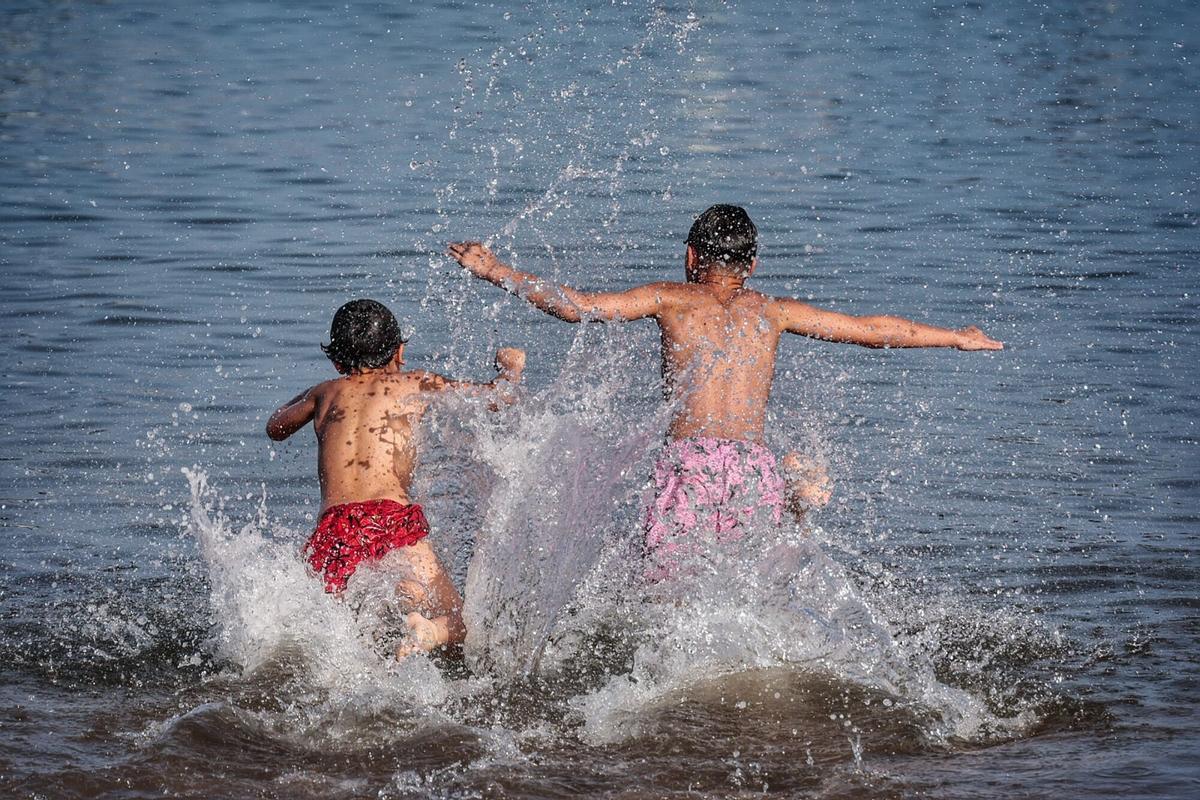
The Fundación Renovables, in collaboration with the Ministry for the Ecological Transition and the Demographic Challenge (Miteco), has published a diagnosis of water consumption in tourist areas, particularly on islands, due to their vulnerability to the effects of climate change and increasing pressure on marine and coastal ecosystems.
The relentless influx of visitors—Spain has established itself as the second most important tourist destination in the world, nearing 100 million travellers annually—poses environmental and social challenges. Among these are unsustainable practices regarding water resources, which are becoming increasingly scarce. The report provides tools for raising awareness to reduce this consumption.
Tourist water consumption per capita can be three to six times higher than that of a resident, thereby intensifying the pressure on ecosystems and compromising the water supply for local populations. While a resident in Spain uses between 127 and 140 litres of water daily, a tourist may consume between 300 and 1,000 litres per day, depending on the season, location, and type of activity.
The greatest demand linked to tourism is occurring in arid regions, islands, and coastal destinations with limited supplies of renewable freshwater. Areas with the highest tourist influx, such as the Mediterranean coastline and archipelagos, coincide with regions already facing water vulnerabilities.
Approximately 80% of the total water consumption associated with tourism is indirect, occurring within the value chain. The percentage of direct water consumption has remained consistent over recent years, at around 18-19% of the total.
In addition to overconsumption, tourism also contributes to the pollution of existing water resources through wastewater, inadequately treated discharges, and the intensive use of chemicals in swimming pools, golf courses, or hotel facilities.
In this context, climate change acts as a multiplier of water pressure. Islands, which already have limited rainfall, are experiencing an increase in the frequency and intensity of droughts, as well as heightened evaporation in reservoirs and swimming pools due to rising temperatures.
In summary, the combination of tourism growth, natural water scarcity, overexploitation—particularly in agriculture—and climate change creates a scenario of structural water stress that threatens the sustainability of the island tourism model.
The Situation in Tenerife, Lanzarote, and El Hierro
Given the structural water stress, it is imperative to specifically analyse how tourism interacts with water supply systems on the different islands. For this reason, a second report examines the cases of three islands in the Canary archipelago: Tenerife, Lanzarote, and El Hierro.
The Canary archipelago is one of the leading tourist destinations in Europe and serves as a natural laboratory for analysing the relationship between water and tourism in island environments. The combination of a dry climate, scarce and irregular rainfall, insularity, and the volcanic nature of the geological substrate, coupled with a high volume of tourists year-round, creates a situation of structural water scarcity. In this context, water has historically been a limiting factor for economic and territorial development, rather than an abundantly available resource.
The report addresses the current state of local water infrastructure and its resilience in the face of increasing tourist demand and the short- to medium-term impacts of climate change. Additionally, it reviews successful experiences both internationally and locally in the use of unconventional water sources, with particular attention to water capture, desalination, and the reuse of regenerated water, aiming to extract transferable lessons.