Canary Islands Struggle with Effective Social Media Communication
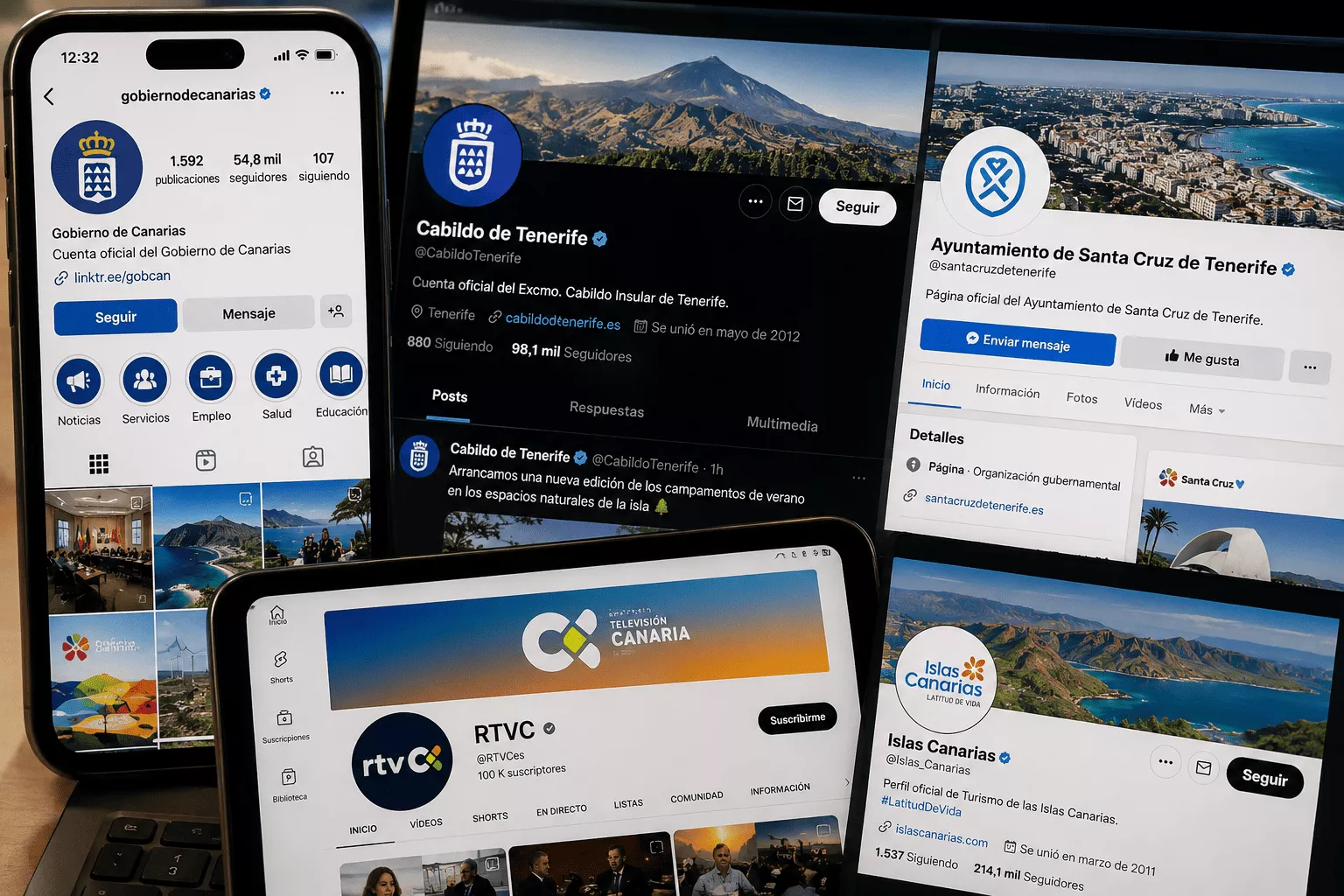
The first Public Social Media Observatory in the Canary Islands, created by the agency Dígito, reveals that local administrations have a significant issue. While there’s a strong presence on social media, they struggle to turn this presence into effective communication that serves the public.
The study analysed 933 official profiles from 449 public bodies across different administrative levels, including the Canary Islands Government, councils, and local councils. It concluded that although the region communicates extensively, it lacks a coherent strategy.
The growth of public bodies on social media has surged in the last decade, yet it has often been random and uncoordinated. The report indicates that 39% of these bodies are only active on one platform, and the average presence across institutions is just two networks. This limited coverage fails to meet the diverse information consumption needs of the public.
Instagram has emerged as the primary platform, with 72% of bodies active there, followed by Facebook at 67%. However, there’s only a 2.9% presence on TikTok and only 19% on YouTube, indicating a reluctance to engage effectively with younger audiences.
The report highlights a troubling trend of inactive accounts, with 71 of 249 assessed profiles not posting for over six months. This raises concerns about misinformation and the risk of identity fraud, as abandoned accounts can mislead the public.
Interestingly, some inactive accounts continue to pay for verification on X (formerly Twitter), even though they have not engaged in years. This waste of resources underscores the disconnect between presence and meaningful communication.
Verification policies are also inconsistent. Despite many government accounts being verified on X, only three public institutions in the Canary Islands are verified on Instagram, leaving significant regional bodies without that status.
The study further demonstrates an imbalance in communication focus. Cultural entities dominate social media, while essential services such as social work, education, and equality receive much less attention. This preference highlights a tendency to promote cultural activities over addressing pressing social issues.
Despite these challenges, the report notes that when there’s a clear strategy, success can follow. The region’s public broadcaster, RTVC, boasts over 900,000 followers across various platforms. However, another tourism-related account remains inactive despite its successful engagement elsewhere, illustrating the mixed results of institutional communication.
Overall, the Observatory’s findings call for a shift from merely showing up on social media to engaging in genuine public dialogue. It indicates that the Canary Islands must evolve the way they communicate to meet public expectations for transparency and responsiveness in the digital age.