The story of life during the visit of Pope Leon XIV to Spain, which began on Saturday, June 6, at a cloistered convent where fifty-seven Poor Sisters of Santa Clara live, in the Monastery of the Sacred Heart in Cantalapiedra (Salamanca), in the heart of the emptied Spain, actually started even before Robert Prevost had envisioned his apostolic journey. He wasn’t even Pope at that time.
Out of honesty to the reader, let me first issue a warning: this information is not impartial and somewhat breaks the journalism tenets that state the communicator is not the protagonist, as there is a significant emotional load from the signatory.
On 4 October 2020, Ana entered the convent just a few days before turning 22. She had gone to complete her studies in Hispanic Philology, and coinciding with the festive centenary acts of the convent, she got to know the community where she first excelled academically, then formed bonds with the nuns, and ultimately discovered her religious vocation. Behind bars. Enjoying the monastic life with the same joy as one who meets a singing star; only that fervour has not been fleeting. At least not yet.
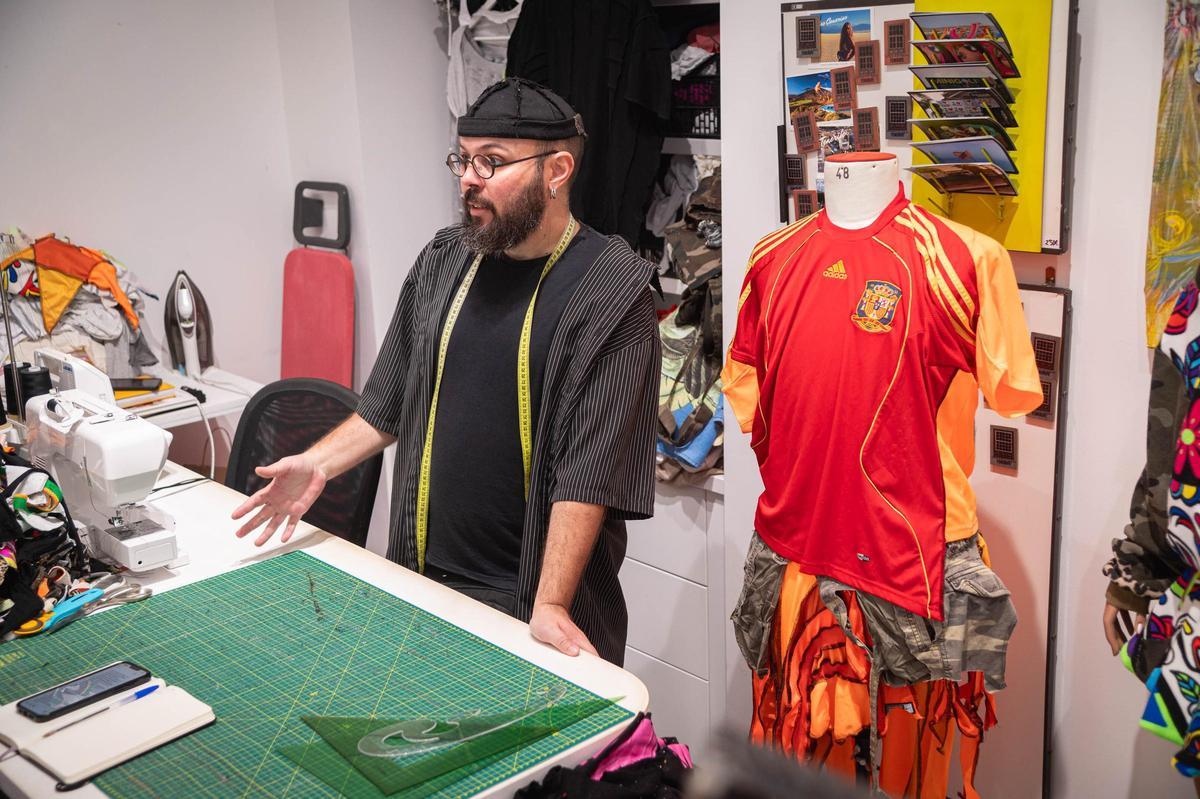
Paradoxes of life: she, a cloistered nun; and her father, a “letter-joiner” who passionately covers the Carnival of Santa Cruz de Tenerife. Life’s twists.
An Unexpected Journey
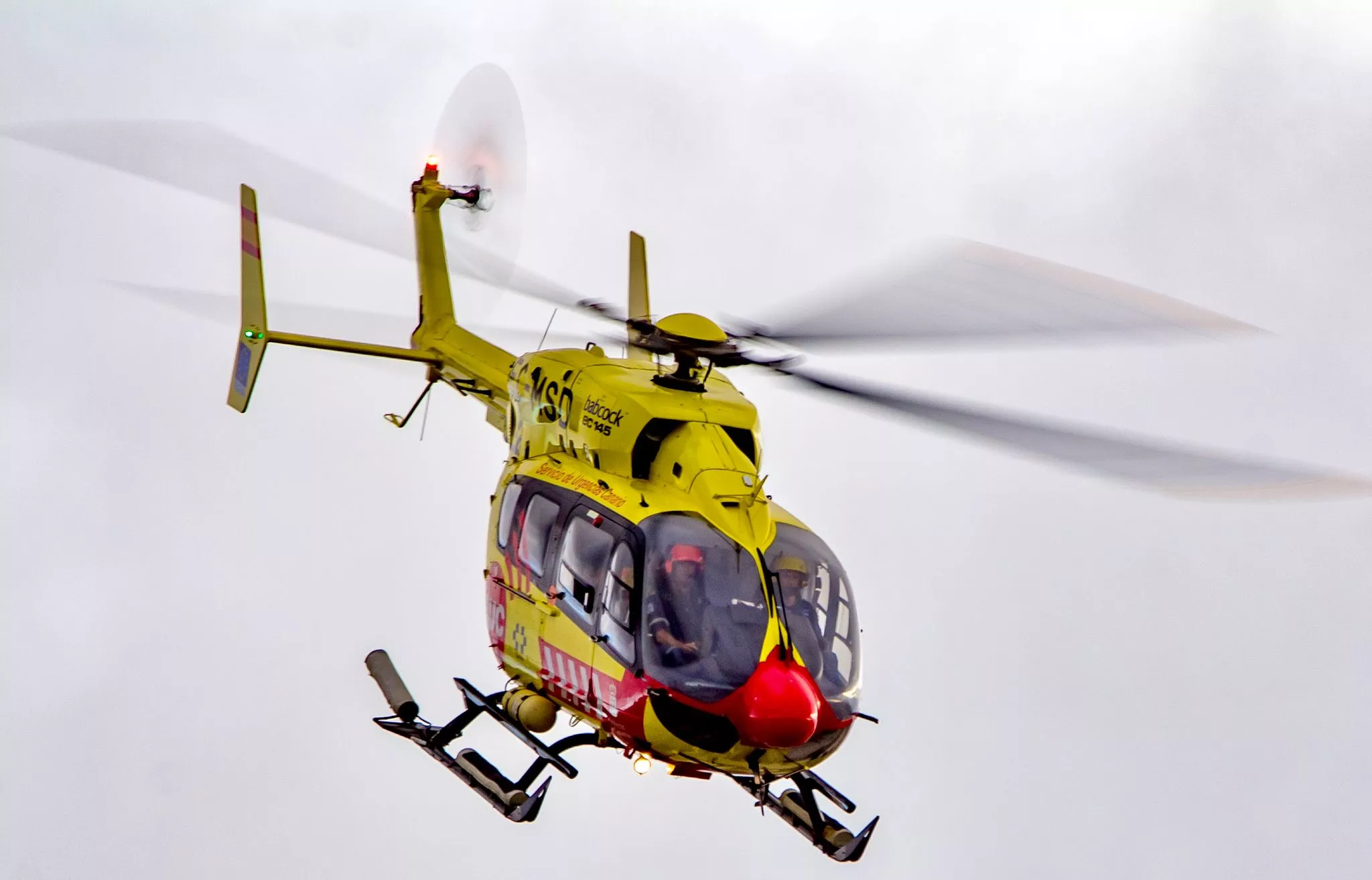
Years later, now due to the Pope’s visit to Spain, the undersigned proposed to the director of this newspaper the possibility of covering the historic event from a Canary perspective. What seemed impossible turned into a gift.
—“Didn’t you have a girl in a monastery over there?” —He asked.
To the positive response, combined with a fear of flying, the offer was irresistible.
—“Go, see her, and then continue with the Pope’s events.”
And so these daring lines were born, which also serve as a gesture of gratitude to the director of the publication: to be able to convey how the Pope’s visit is experienced from within the cloister. Next to Paseo de la Estación, where the convent is located, which has enjoyed the status of a monastery since last year, away from the hustle and bustle of La Castellana, Plaza de Lima or Cibeles.
The Corazonada
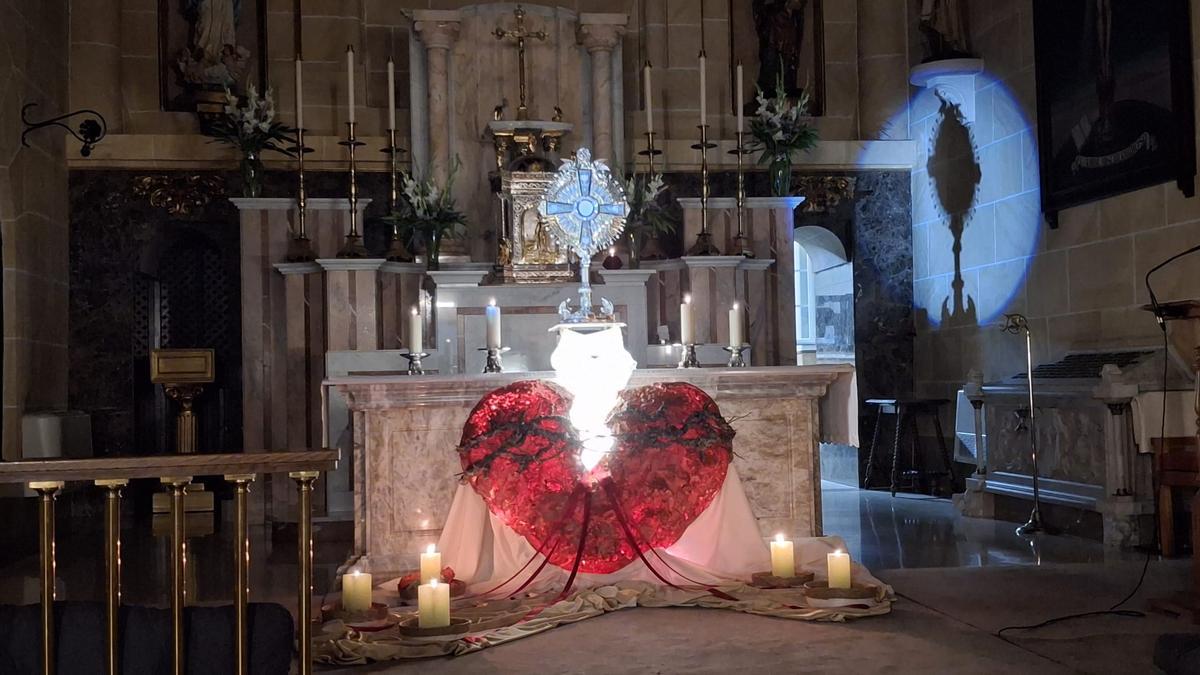
The Pope’s visit to Spain coincides with the celebration of the Corazonada organised by these Clarisas nuns, a sort of open-door day that, without breaking the cloister, allows neighbours and visitors to savour the silence, transcend, and enjoy the river of grace that flows from the Heart of Jesus, according to the creed of the convent’s founder, Mother María Amparo, over a century ago.
Silence Against Noise
During the Corazonada, which begins at 10 p.m. with adoration of the Blessed Sacrament and finishes with an Eucharist the next day, Mother Abbess, Sister María Aleluya, warns of the current evil that besieges all mortals in their efforts to “make a living.” This is how she defines original sin, a lack of trust in God, to delve into the three issues that, in her view, anaesthetise the soul: superficiality, noise, and suffering.
To illustrate, she mentions what happened to their founder, Saint Francis of Assisi, whom the superior dares to nickname: “The Restless.”
This catechesis is accompanied by the words of Presbyter Don Alfredo, with a radio-like voice, who summarises for a dozen children how to understand the consecration to the Sacred Heart through a simple story between a grandfather and his grandson. A straightforward explanation for a profound idea: love makes pain bearable.
A Flourishing Convent
Alongside these Corazonadas, celebrated on the first Fridays of each month from September to June, the Clarisas live their daily lives attending to various duties, including Betania —the infirmary where they care for the elderly nuns—, the work of the convent, and the training of twelve novices.
As remarked by Luis Argüello, the president of the Spanish Episcopal Conference and Archbishop of Valladolid during a recent visit to Tenerife, it is a “flourishing” convent of vocations.
This Saturday, after the Corazonada, the monastery committed to live in communion during the Pope’s vigil. In the monastery’s choir, which they consider the heart of the Church. They did not need a television. They celebrated the vigil through prayer and testimonies from nuns whose lives were marked by previous encounters with other pontiffs.
The Call of a WYD
This is the case of a cloistered nun who attributes her religious vocation to a phrase heard during the World Youth Day in Paris in 1997, presided over by Saint John Paul II.
Before travelling to France, some words from the Polish Pope profoundly impressed her: “Any apostolic activity that is not grounded in prayer is doomed to sterility.” However, she claims that it was during the vigil of that WYD when she experienced her decisive moment.
A nun attributes her vocation to a message heard from John Paul II at the WYD in Paris in 1997
Among thousands of young people gathered with John Paul II, she felt that the trust the Pope and the Church placed in them was directed personally at her.
—“I could not betray the Lord, the Church, and the Pope.”
That experience ultimately marked the path that led her years later to join a cloistered convent.
The nun also recalls the impact Benedict XVI and Francis had on her. She highlights the former’s steadfastness during the storm of the vigil in Madrid; from the latter she learned a fundamental teaching: that the Eucharist “is not a reward for the perfect but the food for the weak.”
Now, at the start of Pope Leon XIV‘s visit, she hopes that other young people can experience something similar.
—“I found the Church, I found the Pope, and I found Jesus.”
The Medicine for the Soul
As believers would say, God continues to call. A testament to this is the story of a young woman who was on her way to becoming a doctor and, in her fifth year of study, found the medicine for her soul at the Monastery of the Sacred Heart.
At just 25, she took the habit and explains her decision as the discovery of a calling rather than a personal choice.
She was studying medicine and in her fifth year when she discovered her vocation: now she lives in a cloister
—“Vocation is not something one chooses but an invitation that is discovered.”
She experiences the visit of Pope Leon XIV with particular excitement, although she will not be able to see him physically. Far from perceiving it as a renunciation, she assures that the religious sisters feel the arrival of the Pontiff from their place within the Church.
—“The Pope comes, and he makes us feel like the Church.”
From the cloister, they will accompany the visit through prayer, convinced that they also share in the spiritual graces that may arise from the apostolic journey.
The young woman maintains that her mission consists precisely in remaining “in the heart of the Church,” supporting the pastoral work that takes place outside the convent’s walls from the silence and contemplation.
—“We are very much looking forward to it.”
An enthusiasm lived far from the crowds and the spotlight yet very close to prayer.
The Voice of a Canary Novice
Next is the testimony of a novice from the Canary Islands, native of Candelaria, where the sanctuary of the Patroness General of the Canary Islands can be found.
At 27 years old and with five and a half years of religious life, she sees the impending visit of Leon XIV as much more than an institutional or ecclesial event. Before entering the monastery, she studied Hispanic Philology and now views the Pontiff’s arrival as an opportunity to delve deeper into her faith.
A young Canary Islander left Philology and found her vocation in a cloistered monastery in an emptied Spain
—“The first thing I feel is a huge sense of gratitude because the Pope is coming, and because we are the Church.”
In the days leading up to the visit, the nun confirms that she has reflected on the spiritual significance of this event. From the contemplative life, she maintains that every significant occurrence constitutes an invitation to ask what God is conveying through it.
For this reason, she encourages the Canarians and, in general, all Spaniards, to consider what message the Holy Father’s presence may bring.
“Jesus is alive”: the reflection of a Canarian novice in light of Leon XIV’s visit to the country
In her case, the response has been clear:
—“What the Lord is telling me is that Jesus is alive.”
For this young novice, the papal visit represents proof that the Church remains a living reality and that the Holy Spirit continues to act in the world.
—“If the Pope is here today, it is because God continues to reach out to people.”
The novice from Candelaria believes that the arrival of Leon XIV is also an invitation to accept that presence from the particular reality of each believer.
—“The Lord has a great desire to meet with us.”
From the cloister, where she will continue the visit through prayer, she hopes that this event leaves a profound mark on those who participate in the planned acts during the Pontiff’s stay in Spain, without forgetting her native Canary Islands.
Betania, DNA of the Monastery of the Sacred Heart
Among the 57 Clarisas nuns of Cantalapiedra, the Monastery of the Sacred Heart stands out for the testimonies of the senior members, who at over eighty and ninety years have spent a life of cloister in intimacy with God. Has it been a suffering for them? What has their experience been?
“I was born on May 13, 1939, and I entered the convent at 24 years old. For nine years I was in Valsaín, and my entire life has unfolded under the shelter of religious life. Today, as an elderly woman, I live from a wheelchair and hardly retain my sight. My legs no longer support me and my strength is little, but I have something much greater: the Heart of Jesus, where I find my joy and my rest,” recounts one of the nuns of Cantalapiedra.
“The visit of Pope Leon XIV is a tremendous source of happiness for me. I experience it with excitement and, above all, as an opportunity to pray a lot for him. I ask the Lord to grant him strength to carry out his mission at the head of the Church and to accompany so many souls that have been entrusted to him.”
“From my reality, marked by illness and limitation, I also feel I can help. All the sacrifices, pains, and difficulties that the Lord allows in my life, I offer for the Pope, that he may never lack strength, hope, and the grace of God in his ministry.”
Three Clarisas nuns, some with as many years as the foundation of their convent, share their enthusiasm and vocation, ending with one wish: “Long live the Pope!”
Another Clarisas sister also shares her experience. “I am 94 years old and have been in the convent for so long that I have lost count of when I entered. I have seen many things pass throughout my life, but I live the visit of Pope Leon XIV with a special joy, because I feel the Church is breathing a little deeper and renewing its hope.”
“I receive it with great faith and, above all, with much prayer. I can no longer walk or run like before, but I can open my heart wide to embrace the words of the Holy Father and accompany him from the cloister. That is now my mission: to pray for him and for the whole Church.”
“From this monastery in Cantalapiedra, I ask the Lord to increase faith in Spain and to abundantly bless the Pope in the task entrusted to him. Long live the Pope! Long live! Long live the Pope!” she concludes.
Finally, a nearly centenarian nun, with just a few fewer years than the foundation of her convent. “I am 99 years old, although I like to say with a smile that it is very few. I have spent over eight decades in the monastery, for I entered in 1942, and since then, I have tried to live each day trusting in the Lord.”
“I am living the visit of Pope Leon XIV to Spain with great simplicity, doing what I do best now: to pray. I pray a lot for him, that God gives him strength and wisdom in the mission entrusted to him at the head of the Church.”
“I also pray for all Spaniards, that they may respond to the grace of God and welcome with open hearts the spiritual fruits of this visit. It is my way to accompany the Pope from the cloister.” And like any prayer, it concludes with one word: amen.