Venezuela’s Earthquakes: Death Toll and Geological Context
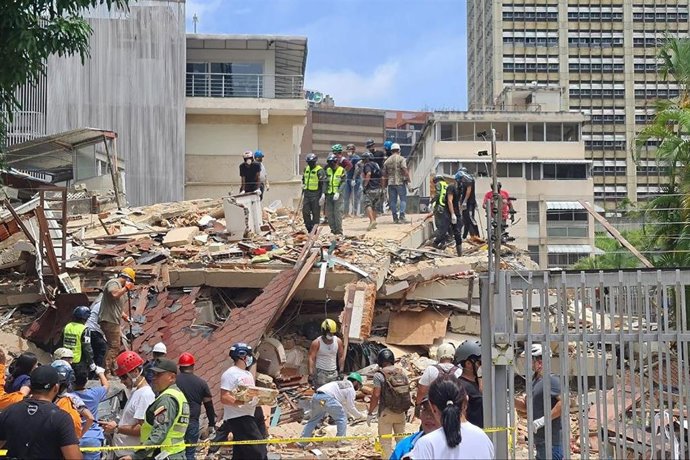
A series of powerful earthquakes struck Venezuela on 24 June, resulting in 235 deaths and over 4,300 injuries, according to Carlos Alvarado, the Health Minister. The highest magnitudes were recorded above seven, primarily affecting the states of Yaracuy, Carabobo, Aragua, La Guaira, Miranda, and the Capital District.
The Canary Islands Volcanological Institute (Involcan) has reported that these earthquakes occurred in a highly seismic area located between the Caribbean and South American tectonic plates. The Caribbean plate shifts eastward at around two centimetres per year, gradually building up pressure along geological faults. Once this pressure exceeds the rocks’ resistance, it is released abruptly, generating seismic waves and causing earthquakes.
Historically, this region has faced similar seismic events, including a major quake in 1812 estimated at 7.7 magnitude, notably affecting the same areas.
Involcan explained that earthquakes can be complex events comprised of multiple rupture episodes, meaning what feels like a single quake may actually include several shocks occurring seconds apart. This is common in areas where faults are fragmented. A single rupture can increase stress on nearby faults, potentially triggering further earthquakes, sometimes referred to as a “seismic storm.”
Involcan highlighted that earthquakes should not be imagined as “point explosions.” Instead, they initiate at a hypocentre, with seismic waves propagating along the fault, which can stretch hundreds of kilometres. The major quake’s hypocentre was near San Felipe, and the rupture extended eastwards towards Caracas and La Guaira.
The institute also discussed “seismic directivity,” where areas in the direction of a rupture experience more intense shaking. Furthermore, soft sediments in the ground can amplify seismic waves, leading to greater damage—similar to events during the 1985 Mexico earthquake.
Following the initial tremors, Involcan advised that aftershocks are normal, with the largest recorded aftershock measuring 4.5, occurring around 20 minutes post-main quake. Although other active faults exist, predicting when they might cause another quake remains impossible.
While the likelihood of another significant quake soon is low, the severity of damage is influenced by the earthquake’s magnitude, building vulnerabilities, and societal preparedness. In contrast to Japan’s 2011 earthquake, where stringent building regulations mitigated damage, Venezuela’s infrastructure may not be as resilient.
Regarding the Canary Islands, Involcan reassured residents that the archipelago sits securely within the African tectonic plate, far from active fault systems, though it is not completely immune to seismic activity. Although large quakes are rare, occasional smaller tremors occur, and volcanic earthquakes, even of moderate size and shallow depth, can cause localized damage.