Spain’s Technical Commission Identifies 63 Victims of Human Rights Violations
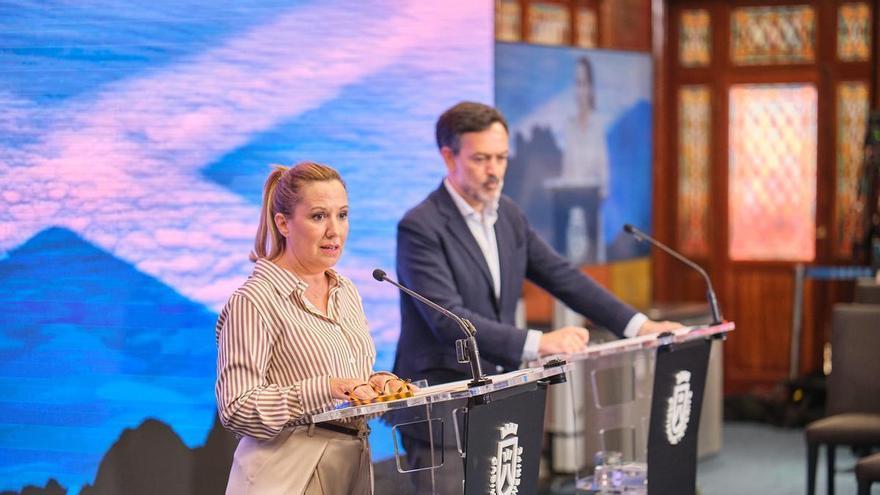
A Technical Commission established by the Spanish Government under the Democratic Memory Law has identified and detailed in a report published this Thursday, 63 fatalities resulting from human rights violations that occurred between the enactment of the Spanish Constitution on 29 December 1978 and 31 December 1983. The report, produced by a group of historians, lawyers, and human rights specialists, examines the political violence of that era and proposes measures for recognition and reparation for the victims of state abuse.
A Violent Transition
The document starts from the premise that the transition was not a period devoid of violence, as has seemingly become entrenched in collective memory over the years. Experts describe a scenario where terrorism from various organisations coexisted, along with actions from far-right groups and illegal violence perpetrated by state agents. “There is a need to discuss a specific context of violence during the transition from dictatorship to democracy in Spain,” concludes the commission.
According to the report, this context was marked by the activities of ETA, GRAPO, far-right organisations, and also by the existence of “other ethnonationalist groups in Catalonia, Galicia, and the Canary Islands.”
The MPAIAC
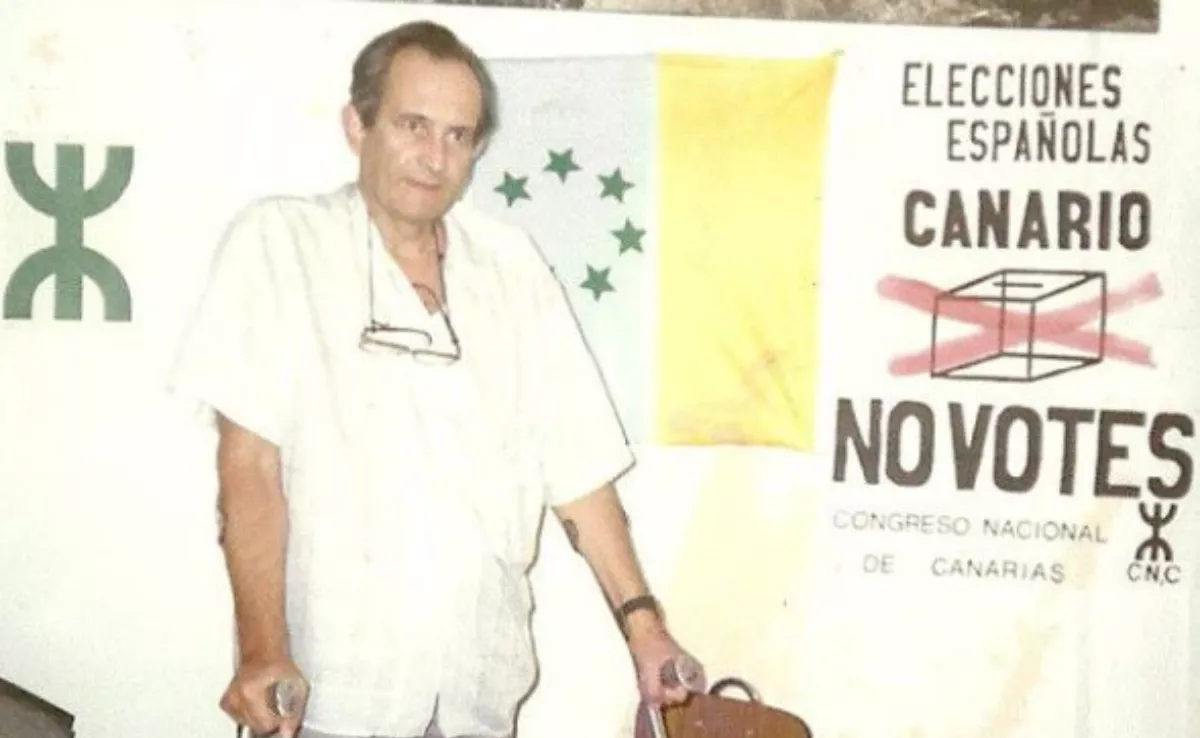
The mention of the Canary Islands may be brief, but it is crucial for understanding the landscape of escalating violence in a country undergoing a transition from an authoritarian regime to the parliamentary and constitutional system we live in today. Although the report does not elaborate on the Canary Islands, it alludes to the Movement for the Self-determination and Independence of the Canary Islands (MPAIAC), an organisation led by Antonio Cubillo that gained prominence during the later years of the Franco regime and the early Transition period, with the Fuerzas Armadas Guanches serving as its armed wing.
Founded in exile and primarily based in Algeria, the MPAIAC advocated for the independence of the Canary Islands and sought to bring international attention to the Canary issue. During the 1970s, it succeeded in getting the Organisation of African Unity to debate the archipelago and carried out a political campaign accompanied by violent actions. Between 1976 and 1978, the organisation claimed responsibility for various bombings and threats against tourist facilities, public buildings, and other targets linked to the Spanish state. Its activities garnered significant media attention at a particularly delicate time for the political transition.
A Revolutionary Surge in the Canary Islands
In fact, the independentist activity in the Canary Islands was identified in the early 1980s as a latent threat in which foreign interests could intervene. In March 1981, a biannual report by the CSID (now CNI), recently declassified along with a hundred documents from the attempted coup of 23F, investigated “internal threats” in Spain, analysing internal risks in the context of separatist, revolutionary, regressive, and terrorist actions. The CSID report stated: “The armed group MPAIAC is currently in a state of almost complete inactivity, with minimal membership. However, external interests relating to the strategic significance of the archipelago could, at any given moment, lead to foreign powers supporting the Canary revolutionary movements, potentially causing a separatist problem of much greater magnitude than the current one.”
Decline of the Terrorist Group
The best-known incident involving the MPAIAC occurred on 27 March 1977. A bomb threat attributed to the terrorist group forced the temporary closure of Gran Canaria airport and resulted in numerous flights being diverted to Los Rodeos in Tenerife. Hours later, a collision between two Boeing 747s belonging to KLM and PanAm caused 583 fatalities, becoming the largest tragedy in civil aviation history. Official investigations concluded that the accident resulted from a chain of human and operational errors, although the prior closure of Gran Canaria airport was among the circumstances preceding the disaster.
The MPAIAC’s activities diminished in the late 1970s, as noted in the 1981 CSID report. An assassination attempt on Cubillo in Algiers in 1978, which led to convictions of several individuals linked to Spanish security services years later, marked one of the most controversial episodes of that era.
The Commission’s Recognised Victims
The report published by the Democratic Memory initiative does not mention the attack on Cubillo but does recognise 63 victims of human rights violations that occurred within the context of political violence until 1983 in other parts of Spain. The commission maintains that the approval of the Constitution did not immediately eliminate certain practices inherited from the dictatorship. The document highlights that actions incompatible with democratic standards persisted, including police excesses, disproportionate use of force, torture, mistreatment, and actions by far-right groups that, in some instances, enjoyed impunity or institutional tolerance.
Outside the Recognition Process
Experts believe many of these victims have been excluded from recognition processes that have taken place over recent decades. For this reason, they recommend measures of moral reparation, institutional tributes, inclusion in public registers, and the creation of mechanisms to allow for the incorporation of new cases in the future. The list compiled by the commission includes 63 individuals who died between 1979 and 1983. Among them are well-known names such as student Yolanda González, environmental activist Gladys del Estal, and the three young men killed in the infamous Almería case: Juan Mañas Morales, Luis Montero García, and Luis Manuel Cobo Mier.