
– GOVERNMENT OF CANARY ISLANDS
SANTA CRUZ DE TENERIFE 16 Jun. (EUROPA PRESS) –
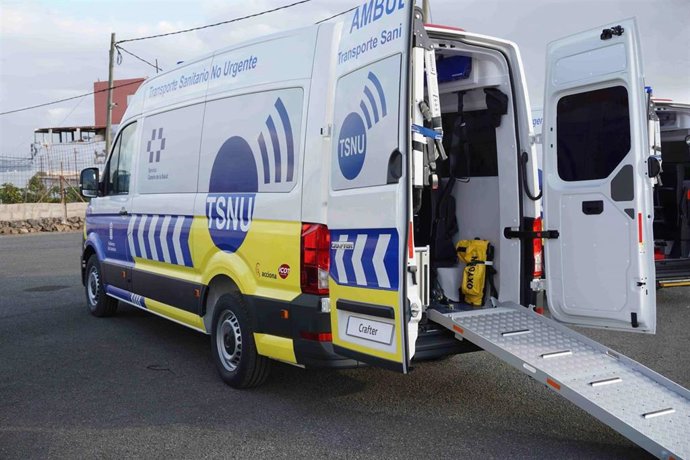
The Non-Urgent Medical Transport Committee, managed by the Canarian Emergency Services (SUC), under the Ministry of Health of the Government of the Canary Islands, has reported incidents at its transport base in the municipality of Los Realejos, Tenerife, over the past two days. These incidents have resulted in a restructuring of routes and the loss of non-vital treatments.
On Monday, the first incidents at the TSNU base in northern Tenerife were reported, which prevented staff from accessing the facility early in the morning. By 06:00, 12 transport units were rendered inoperative, with an additional two not operational until 08:00.
This led to a critical reorganisation of the service, with the suspension of non-vital treatments to ensure that haemodialysis could be provided, as noted by the Ministry in a statement.
As a result, patients have been severely affected, with the guarantee of non-urgent transport not being available for their substitute treatments. This also impacts both the haemodialysis and rehabilitation centres, critically affecting their organisation and operations.
The incident caused 53 treatment cancellations, distributed between the northern and metropolitan areas, as resources were redirected to the north.
Upon reopening the facility, it was discovered that four units remained inoperable due to staff shortages.
This led to further treatment losses for patients, affecting a total of six individuals, bringing the total lost treatments to 59.
Additionally, two transport units based in Santa Cruz were affected by vandalism, suffering punctures within the facility. Fortunately, these issues were resolved quickly.
Early on Tuesday, a similar situation occurred with damage to the access road to the northern base, disabling 14 medical resources from beginning their scheduled shifts—12 at 06:00 and two at 08:00.
ROUTE ADAPTATION
This marks the second consecutive day of route adaptations, preventing non-vital transfers to ensure that vital patient treatments can be attended to.
As a result, 34 rehabilitation treatments were lost, with 28 of those at the contracted centre ICOT La Orotava, the University Hospital of the Canary Islands, and Hospiten Tamaragua.
Consequently, two units had to be dispatched from Santa Cruz to meet vital demand in the north and minimise damages.
This led to the cancellation of two rehabilitation treatments—one at the University Hospital Nuestra Señora de la Candelaria and another at Quirón Tenerife Hospital—and a delay in admitting a chemotherapy patient at the University Hospital Nuestra Señora de la Candelaria.
Furthermore, the contracted company reported that another four resources were inoperative due to either partial or complete staffing shortages.
This adversely affected 16 patients requiring rehabilitation treatment across four hospitals, as well as at the contracted Icot Santa Cruz centre.