
– DEPARTMENT OF HEALTH – Archive
SANTA CRUZ DE TENERIFE, 16 Jun. (EUROPA PRESS) –
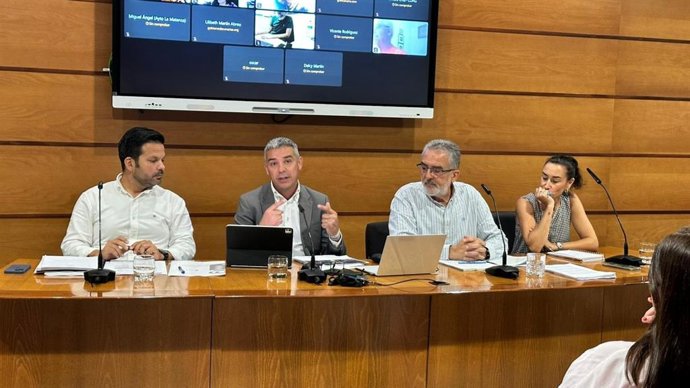
The Health Councillor of the Canary Islands Government, Esther Monzón, announced on Tuesday the hiring of five neurologists who have completed their training as residents in the islands. The positions will be based in hospitals in La Palma, La Candelaria, Doctor Negrín, and HUC.
Responding to a question from the Popular Group during a parliamentary committee, she highlighted that the neurological care provided to patients is “appropriate, advanced, and of high quality,” and noted that the departure of professionals from the SCS has been reduced to “isolated cases.”
She emphasised that the current workforce includes 112 neurologists and defended the importance of “integrated treatment of various pathologies,” including oxygen therapy for cluster headaches, updated strategies for neurodegenerative diseases, the stroke code, and biological therapy within treatment plans for conditions like multiple sclerosis, ALS, and Alzheimer’s.
Furthermore, Monzón stated that developments in artificial intelligence, telemedicine, and the incorporation of personalised therapy are underway. These advancements necessitate an expansion of the workforce—since 2024, the number of neurologists has increased by 24.
Last year, neurologists in the Canary Islands handled approximately 100,000 consultations, with nearly 34,000 in the first four months of this year, in addition to around 1,000 hospital discharges.
She also advocated for improvements in various hospitals, including a specific stroke unit, a rehabilitation programme for patients with neurological damage at HUC, acquisition of a new CT scanner and magnetic resonance imaging machines at both the Southern Hospital and La Candelaria, an acute ischaemic stroke care pathway at Doctor Negrín, and the establishment of new consultations at the Insular Maternal and Child Hospital, bolstered by the arrival of five new specialists since 2024.
The Maternal and Child Hospital has also acquired equipment such as high telemetry monitors for the stroke unit, a high-end ultrasound machine for transcranial studies, and polysomnography equipment with integrated artificial intelligence.
The Councillor mentioned the establishment of a psychoneurogeriatric unit with the addition of two neuropsychologists and two occupational therapists.
“EXHAUSTED,” WITH MORE THAN SIX SHIFTS A MONTH
Jacob Qadri (PP) recounted that neurologists in the Canary Islands feel “exhausted,” facing workweeks exceeding 60 hours and “six, seven, or even eight 24-hour shifts a month.” He described this as a “hard-to-sustain burden” compounded by consultations, hospitalisation, and emergencies.
He insisted there is a “lack of motivation” and “disillusionment regarding work,” citing the specific case of a professional leaving the health sector to begin teaching. “Something is not functioning well, or at least there are aspects that need improvement,” he added.
Qadri also raised concerns regarding “temporary contracts,” as “90%” of neurologists lack permanent positions, making it “difficult to retain and attract specialists under these conditions.” For example, the headache unit at the Maternal and Child Hospital has only one neurologist.
He noted that there are complaints about the absence of specialised nursing staff, lack of resources, and insufficient suitable spaces, resulting in “lack of motivation, physical and mental fatigue.”
In fact, he indicated that the burnout syndrome affected 49% of neurologists in 2019, and by last year, this figure had risen to 69%.
“We are talking about alarming figures; seven out of ten professionals experience significant work-related exhaustion, and we know, Councillor, that ultimately, patients also bear the consequences,” he asserted to Monzón.
The Popular Group representative also directed attention to the central government, emphasising that it “must understand” that the Canary Islands is a “scattered, distant territory, making it very challenging to retain or attract these professionals,” noting that currently there is no “level playing field” with other autonomous communities.
“If we do not act now, in a few years, the problem will be much graver,” he concluded.