Recognition for a Commitment to Wellbeing
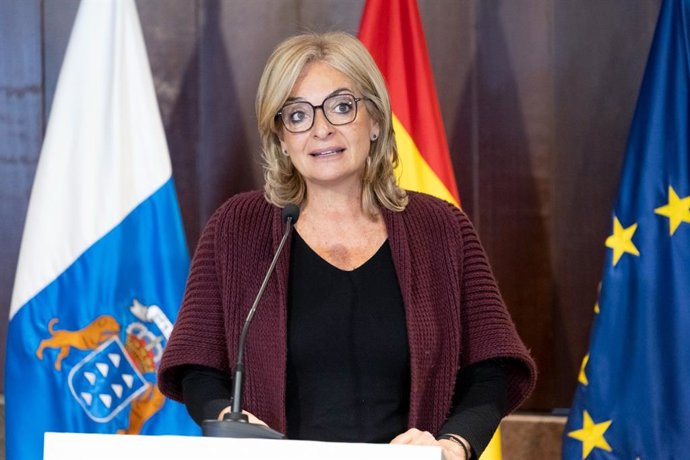
“We are not distinguished by being a centre without problems; on the contrary”. These are the words with which Esther Alonso, the headteacher of IES Benito Pérez Armas, describes her institution. At first glance, it is hard to imagine that a place like this has recently received an award from the Department of Education for its model of Coexistence, Wellbeing, and Protection. The team travelled to La Gomera on Tuesday to collect these Excellence Distinctions 2025, awarded to ten other centres in the Archipelago for the quality of their projects. However, this award is not the result of a miracle or a trick of magic. What truly sets this educational community apart from other institutes in the Archipelago is its commitment to student wellbeing.
“We have created a structure involving both organisation and resources that seeks to anticipate problems and support students facing such situations,” explains Alonso. It is precisely this support network that has earned them the trust of the students. Thanks to it, situations that previously went unreported now find a safe space to be heard and addressed. “In truth, we do face quite a few coexistence issues, instances of vulnerability, suffering, and personal problems, but each case is different, and that’s why we strive to provide personalised responses,” she notes. Ultimately, 620 students make up the student body of this centre.
Coordination: The Key to Success
In this regard, the centre does not wait for problems to escalate. Gradually, the team has developed an efficient system for early detection and referral of each case to the most suitable resource. Coordination has been a fundamental aspect of this approach. The centre consists of a structure made up of teachers from various backgrounds. All are well-versed in the resources available, both internal and external.
Moreover, each educational level has a reference teacher responsible for centralising information about the students. When a student shows signs of distress or experiences any difficulties, any member of the educational community—be they peers, teachers, families, or non-teaching staff—can activate the protocol through a referral form. Subsequently, the case is analysed collectively to determine which resources and support are most appropriate for their needs.
Resources Available at the Centre
As for the internal resources of the institute, there are numerous roles that contribute to this substantial supporting framework. Firstly, there are effective tutors—those teachers who undertake individual follow-ups with certain students that go beyond ordinary tutoring. Additionally, there is an individual tutor for students with specific needs. Furthermore, the centre has various programmes that allow teachers to allocate specific hours for these tasks.
Another distinctive feature of the centre is its active breaks, which consist of organised activities during breaks to encourage participation and reduce conflicts. Moreover, several NGOs collaborate with the institute, providing psychological support during school hours. Some, such as Children’s Villages, have become so involved that they have developed joint work between their social educators and this educational community. Through Educating Talent, these professionals intervene with groups facing conflicts and follow up on students referred by the centre. Notably, they also support students who have been sanctioned or temporarily expelled, ensuring they do not fall behind academically and helping them overcome coexistence issues.
The Guardian Angels of Benito Pérez Armas
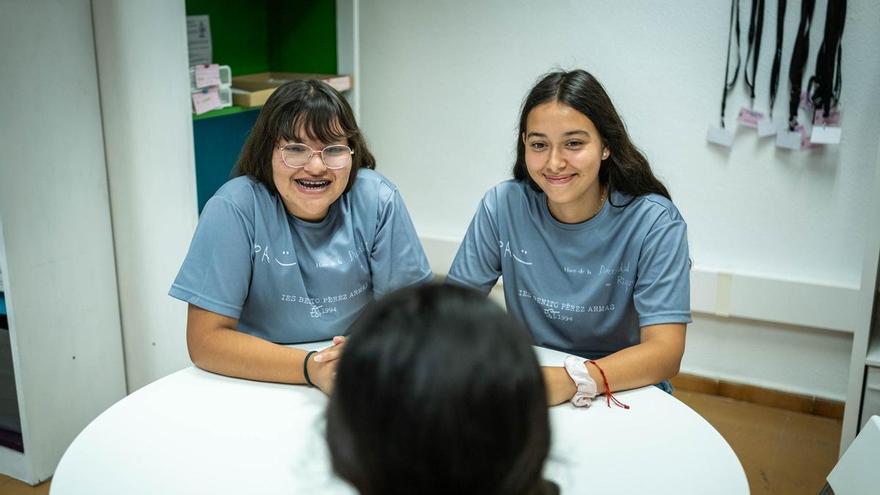
But let’s save the best for last. In general, the premises are filled with listening spaces that serve both younger students and those who are not so young to connect with their guardian angels: the student helpers. They are the star figures of the entire centre and are easily recognised in the hallways or on the playgrounds of the institute. They either display their distinctive identification cards, which indicate their role as protectors, or wear uniforms featuring grey t-shirts that make them identifiable from a distance.
Three of them are Erika González, Natacha Abreu, and Tiziana Nicola, all in their fourth year of secondary education. Although it has only been a year since this initiative began, they already have a solid reputation; everyone knows them at the centre. Their listening role extends beyond coexistence issues; they also academically support those in need. “When we cannot manage a situation because it is serious, we ensure it is referred to the guidance counsellor,” details González. Recognising that no one is born knowledgeable, these three students receive quarterly training to enhance their skills and abilities.
Nearly Thirty Students Willing to Help
However, they are not alone. In reality, 27 students are engaged in this admirable task. The success of this role has been so notable that a large queue of students is eager to join the team next year. As Abreu describes it, it is no surprise that everyone wants to be part of this club. “In the end, you gain a sense of wellbeing within yourself; you don’t just come to fulfil your study function but also to help those in need,” she confesses.
All this would not be possible without the coordinator of Wellbeing at the centre, Ruth Rodríguez. “I oversee monitoring or accompanying cases of bullying, activating protocols for suicide prevention, and supporting students with issues they present, particularly those related to wellbeing and coexistence,” she mentions. This team of professionals has managed to establish a culture of listening and care for students. “Previously, teachers were unaware of the issues at hand, and when they did hear them, they were unsure how to respond,” she explains. But now they know for certain that there will be a response and a team ready to support them.