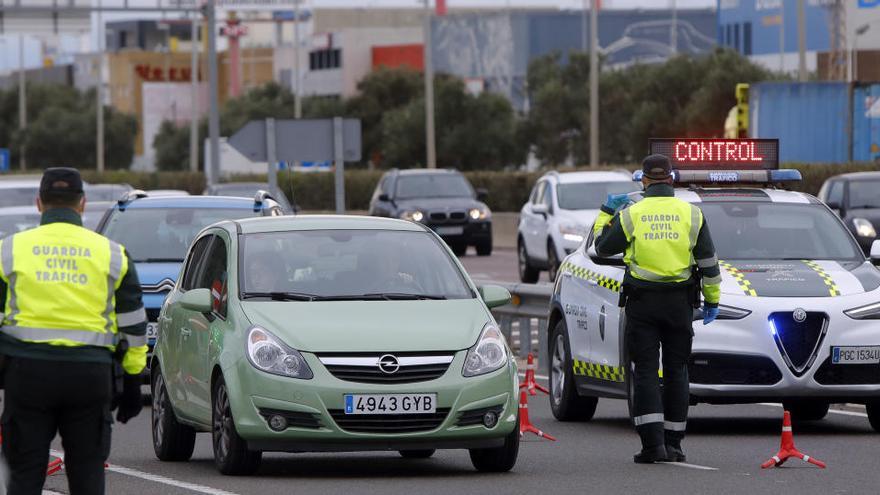
The Directorate General of Traffic (DGT) is responsible for ensuring the road safety of drivers in the Canary Islands and throughout Spain. To achieve this, it conducts a series of safety campaigns at various times of the year, introduces new signs, and modifies existing ones to adapt to evolving mobility needs.
Understanding the meaning of the new S-991g sign is crucial, as it plays a significant role on the roads.
“Drones are intended for detecting reckless driving behaviours and monitoring traffic in high-risk accident areas, particularly where there is a greater presence of vulnerable users, such as cyclists, motorcyclists, and pedestrians,” explains the DGT.
What does the S-991g sign indicate?
According to the General Traffic Regulations, this sign “indicates the possible presence of aerial speed controls in the area, such as helicopters or drones. If such controls are focused on a specific type of vehicle, the sign may include only the pictogram of that vehicle.”
The S-991g consists of a rectangular yellow sign, featuring a drawing of a helicopter, drone, car, truck, and motorcycle, accompanied by a radar icon. It may also indicate the kilometers in which aerial monitoring by the DGT occurs.
How aerial monitoring by the DGT issues fines
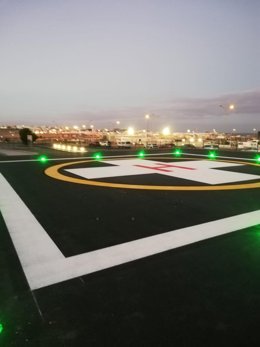
The process that helicopters and radar systems use to catch traffic violations on Spanish roads is as follows:
- The helicopter is operated by a pilot and a camera and radar operator.
- The aerial unit is equipped with two high-definition cameras and a radar.
- It identifies dangerous behaviours and collects evidence, such as the vehicle’s position and speed.
- Information is sent in real-time to traffic control centres.
- The helicopter lands, the recordings are downloaded, and the fine is processed and notified to the driver.
“Each DGT helicopter patrol based in A Coruña, Zaragoza, Valladolid, Sevilla, Málaga, and Valencia will have two drones for local missions and surrounding areas (bordering communities). The central base in Madrid will have 15 aircraft that, in addition to monitoring the roads of the Community of Madrid and Castilla la Mancha, will support other provinces in the national territory as needed. Meanwhile, Cantabria, Asturias, and Extremadura will have two drones each; the Balearic and Canary Islands will have three units each,” clarifies the DGT.
What behaviours can be detected?
- Speeding: Depending on the speed, fines range from €100 to €600, plus a loss of 2 to 6 points.
- Using a mobile phone while driving: this incurs a fine of €200 and six points.
- Not wearing a seatbelt: failing to do so results in a €200 fine and a loss of 4 points.
- Throwing objects from the window: this is considered a very serious offence, with a penalty of €500 and a loss of 6 points.
- Improper overtaking: such manoeuvres can result in fines of €200 and a loss of up to 4 points.
Recent Developments
The Directorate General of Traffic continues to implement regulatory changes aimed at enhancing safety on roads across Spain. Notable updates include the requirement for motorcyclists to wear full-face or modular helmets and approved gloves on intercity roads. Another measure has been the abolition of the 20 km/h leeway for overtaking on conventional roads.
Safety officers have also reminded that on intercity roads, vehicles must always use the right-hand lane, with the others reserved exclusively for overtaking.