Santa Cruz de Tenerife to Launch Largest Road Surfacing Programme
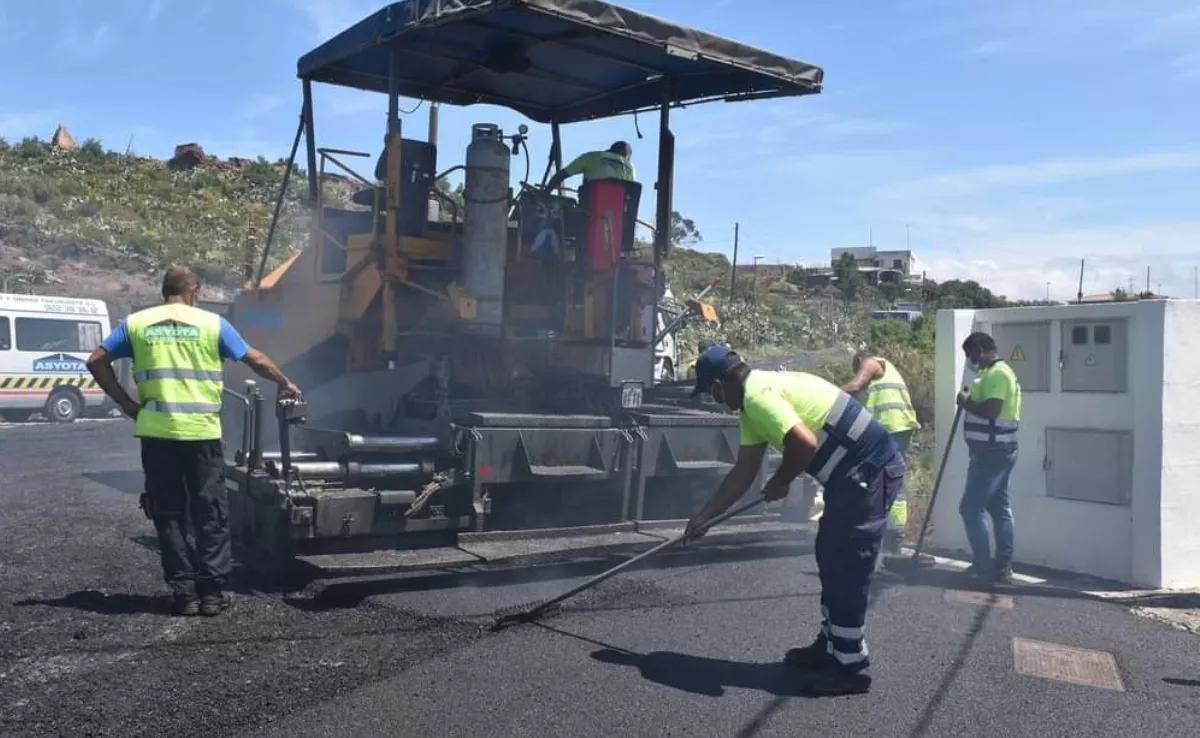
A little under a year before the elections, references to road surfacing tend to raise public suspicion. This is particularly true as it is an initiative that often recurs in almost all municipalities every four years. However, Santa Cruz de Tenerife appears to be an exception. According to Carlos Tarife, the Councillor for Public Services and Maintenance, the municipality is set to implement its largest road surfacing plan in the coming months.
A €130 Million Contract
“This is not about the elections,” he emphasises, reminding residents that even after May 23, 2027, “in June, July and August, road surfacing will continue at a much faster pace than before.” The contract, which will be unveiled soon, is set to last five years — four plus one additional year as an extension — and will mobilise a total of €130 million, an amount that Tarife describes as “a necessity for the city.”
Neglected Since 1988
Many roads in the municipality currently show signs of neglect, and numerous residents struggle to recall the last time their street was adequately surfaced. Tarife admits that on more than one occasion, residents’ responses date back to as far as 1988. This highlights the scale of the new road surfacing plan being prepared.
€11 Million Initial Investment
The municipal official reveals that in the coming days, a significant package of measures will be presented, with an initial investment of “around €11 million” as part of a much broader framework. This framework agreement, promoted by Public Services, will facilitate coordinated action with the districts, the Infrastructure and Mobility departments, and the council itself.
Streamlining Processes
The key element of this new system lies in the timeframe. Previously, the completion of road surfacing could take “almost two years” from when a need was identified. With the framework agreement, the aim is to reduce this timeframe to “two or three months” from the moment a resident reports an issue, provided that technical assessments consider it a priority.
The change represents not only an increase in investment but also greater agility. Various municipal services will be able to commission resurfacing work without initiating a complete process each time, theoretically allowing for a more rapid response to potholes, sinkholes, and worn surfaces that are prevalent across almost all streets.