Urgent Housing Needs in Santa Cruz de Tenerife
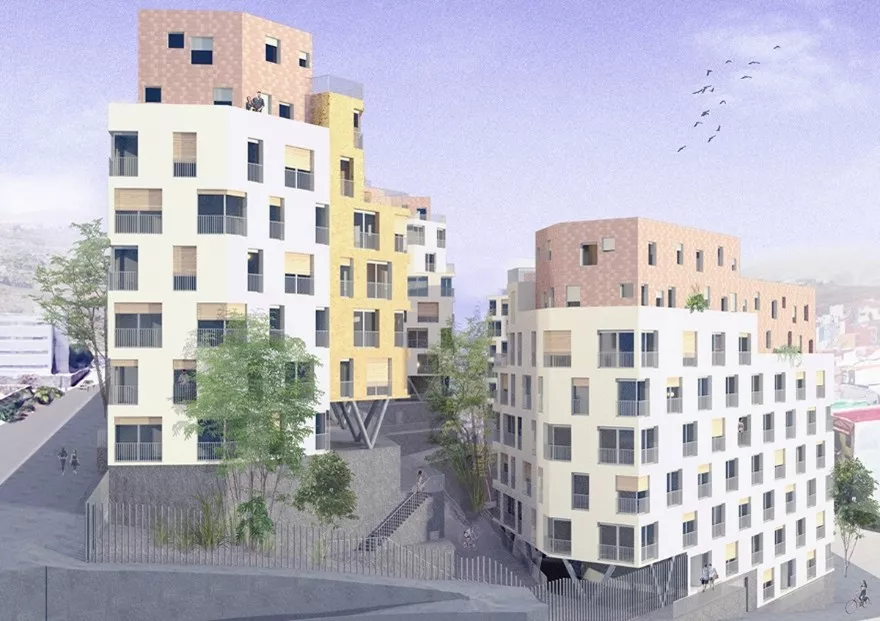
Housing has become one of the major urgencies across the country, and Santa Cruz de Tenerife is no exception. This situation has led the city council to expedite housing projects. As Mayor José Manuel Bermúdez has pointed out, “the municipality already accounts for more than half of the public housing being constructed in the Canary Islands,” with particular emphasis on three specific projects: Las Mesetas, Los Lirios, and Los Moriscos.
Addressing the Housing Crisis
“Santa Cruz is aware of the magnitude of the problem,” Bermúdez reiterated during his address at the forum titled Santa Cruz: Present and Future through its Strategic Projects. He defended the need to increase housing supply and speed up administrative processes.
The mayor also noted that simply discussing prices or regulations is not enough; “we need land, permits, and the real capacity to build.”
The Moriscos Project
Among the significant initiatives, the mayor highlighted the Special Plan for Los Moriscos, which is one of the major residential expansions planned for the southwest district. He explained that the initiative reserves 120,000 square metres for residential use, allowing for approximately 500 homes, along with green spaces and public areas.
Bermúdez stressed that this is not just another development. With a total area of 400,000 square metres, Los Moriscos is a key component in facilitating urban growth in the capital and easing pressure on the housing market. He presented it as part of a broader strategy to create “new spaces for growth” in Santa Cruz.
Advancements in Las Mesetas and Los Lirios
In addition to Los Moriscos, two other developments, which the council considers strategic, are advancing. In the Centro-Ifara district, specifically in the area of Las Mesetas, the mayor indicated that the project has made progress towards urbanisation and could begin development as soon as next year.
In contrast, the situation in Los Lirios, located in the Anaga district, appears more immediate, with initial approval of the partial plan anticipated this summer, as the mayor mentioned that the documentation is nearly complete.
The mayor has emphasised that the council is working to shorten the processing times for permits. He mentioned an average waiting period of five to six months for approvals and asserted that this efficiency is crucial to prevent both private and public developments from getting stalled.
Public Housing Initiatives
Bermúdez has also referenced public housing data to highlight Santa Cruz’s significance within the context of the Canary Islands. He mentioned ongoing developments, such as the 37 homes in María Jiménez and the 226 in Cuevas Blancas, along with other planned initiatives in the southwest.
Furthermore, he recalled the purchase of 25 privately developed homes in Valleseco to be allocated for social rental, as well as the 100 units by Visocan set to be delivered by the end of the year.
The mayor argued that the housing issue, both in general and specifically for the capital municipality, cannot be resolved solely through caps or restrictions; it requires an increase in the available supply.
A Growing City
Housing thus emerges as one of the most visible aspects of Santa Cruz’s transformation, forming part of its strategic development plan. In the same discourse where he addressed mobility, sustainability, and major urban projects, Bermúdez placed access to adequate housing as one of the most significant factors influencing the city’s immediate future.
He also highlighted the necessity of controlling population growth, noting an increase of 435,000 new registrations over the past 20 years. “Either we limit growth, or it becomes impossible to provide all the necessary services at the rate the island is growing,” he remarked, reminding all present that these individuals add to the long lists of housing applicants.