
– Eloísa Pérez / ACFI / Europa Press / Pool – Europa
LA LAGUNA (TENERIFE), 12 (EUROPA PRESS)
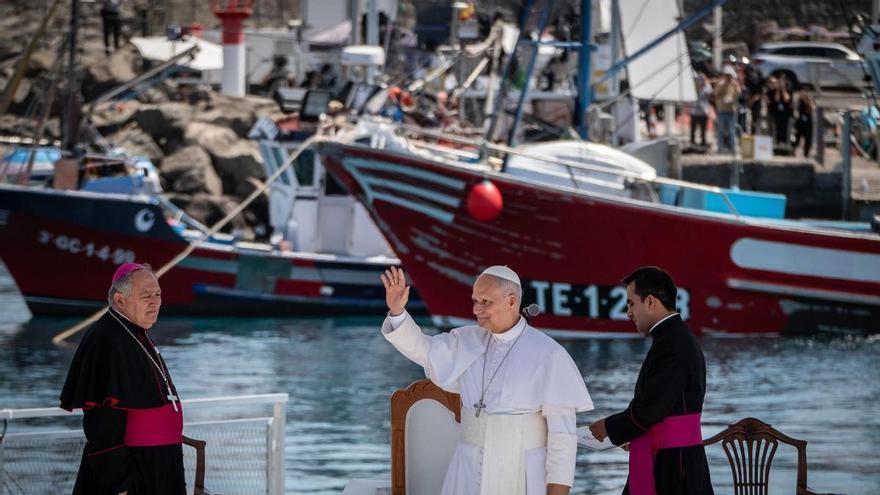
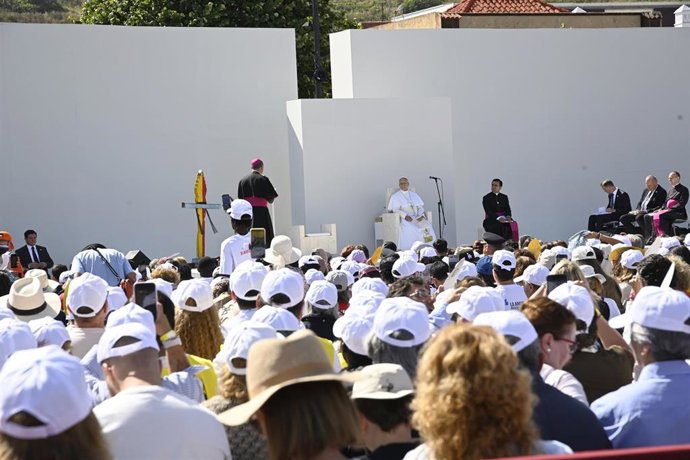
Mbacke Ndiaye, a 20-year-old Senegalese man who arrived in the Canary Islands by boat in September 2024, thanked Pope Leo XIV on Friday for not “turning a blind eye” to migrants and for striving to defend their dignity and societal acceptance.
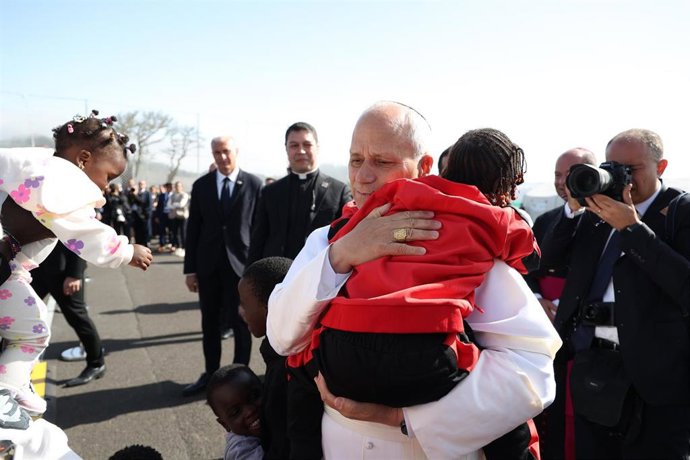
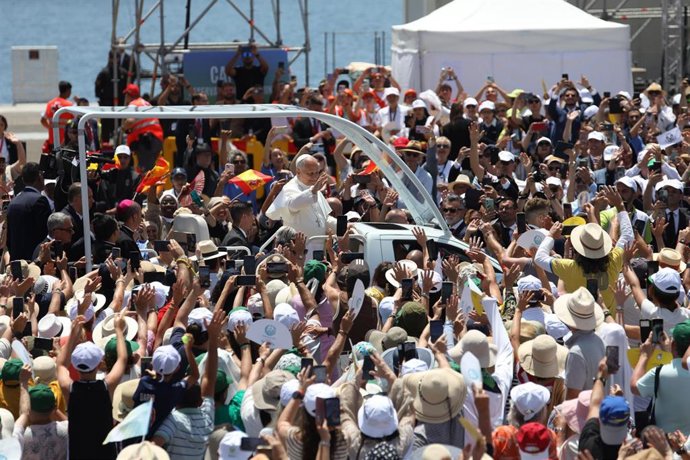
“Keep reminding the world that behind every immigrant there is a dream, a mother praying, and a person deserving of a chance,” he commented during a meeting with migrants in the Plaza del Cristo de La Laguna, where he managed to engage Pope Leo XIV in the viral ‘six-seven’ dance and gifted him a T-shirt.
He explained that he is just one of many young people who migrate “alone” in search of “an opportunity.” He particularly praised the work of the Buen Samaritano Foundation, where he found more than just “shelter and food” but also “respect, patience,” and people who told him, “you are worth it; you can do it.”
The foundation provided him with opportunities to learn Spanish, cooking, agriculture, carpentry, repairs, and sewing, making him feel that he has “a place and a family.” “Tenerife has taught me that brotherhood exists beyond blood,” he added.
Now, he is focused on “giving back” what he has received and “working honestly and studying hard” to support his family. He recited a poem highlighting how faith “raises” them in difficult times.
“We carry pain; walls rise, but there is determination. The land belongs to everyone; there is no division. And even though we may be seen as strangers, we know the world is for sharing. We bring culture, we bring value; we are seeds of a better world,” he explained.
Khalid Allad, a 24-year-old Moroccan, recounted his arrival on the Canary Islands in 2020, “seeking an opportunity to build a future” through a perilous boat trip that “was not easy at all.”
In fact, he attempted the journey twice; during his first attempt, 20 people died, and when he returned home, his father “embraced him in tears” as he had dreamed that Khalid’s boat capsized. “That tragedy left a deep scar in my life,” he said.
Although his father forbade him from trying again due to his fears, Khalid decided to venture out without permission and reached Tenerife. When he was close to ending up “on the streets,” he encountered the Don Bosco Foundation, which became a “second family” to him.
He obtained his first job and began to feel he was building his future “with his own hands,” later taking other jobs in the fields and in the kitchen of a restaurant.
“Today I feel especially happy,” he highlighted, as he now works at the Salesian School as part of the maintenance team and as a supervisor in the school dining area. “I enjoy working with them; every morning, when I leave my house, I go to work happily,” he noted.
Khalid remarked that the experience with the Don Bosco Foundation and the Salesian community has been a “gift from God,” teaching him the “value” of solidarity, coexistence in sports, and caring for nature.
“Holy Father, when I look back, I remember the pain of the hardships along the way, but I also give thanks for all the people who helped me. Today I feel that in the Canary Islands, I have not only found a place to work and contribute but also a community where I can live with dignity,” he explained.
FROM HOMELESS TO HAVING A HOME
Thalía, a Colombian migrant, recalled arriving in the Canary Islands three years ago, leaving her family and child behind, filled with “hope, dreams, and anticipation,” although “the reality was different.”
Initially, she lived with a brother, but “circumstances changed” and they found themselves “suddenly without a roof over their heads,” a fate common among many migrants.
Amidst this situation, she accessed services from Caritas, who provided them with “a roof” but also “an opportunity to be welcomed, to hope,” helping them to “gradually” achieve independence and restore their “dignity.”
Thalía also praised the Church for being a “driving force” that helped her integrate on the island. Alongside the Don Bosco Foundation, she began her training process to acquire basic skills for employment.
“My journey does not end with my independence and stability. I continue on the path of repaying the love and support that I was given,” she said, becoming a volunteer with Caritas.
“Thank you, Holy Father, for using your voice to remind the world of those of us walking these lands, and that every life is an opportunity for connection,” she commented.