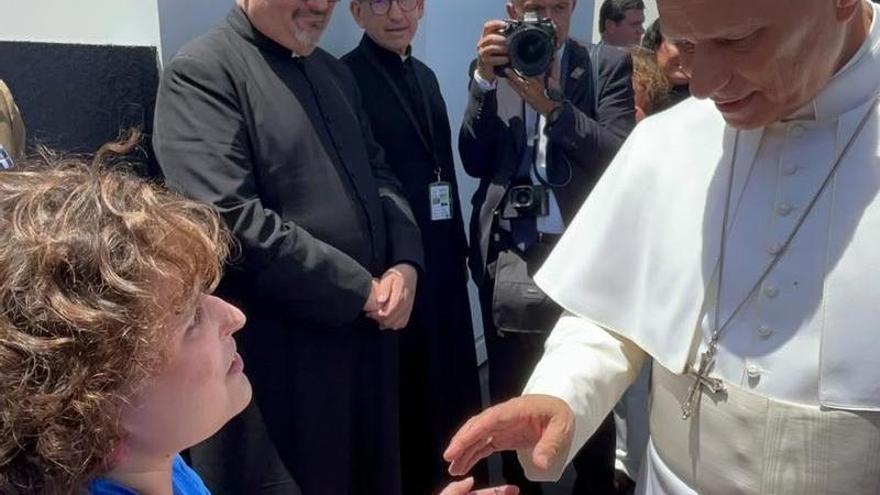
June 12 will forever be marked in the life of Mariám Falcón as the day she met Pope León XIV. After ten months of suffering from a life-threatening illness that left her with physical impairments, she experienced a joy she could never have imagined: meeting the pontiff in person, the same pope she had sought out a year prior during the jubilee year in Rome. “Last year you went to see him, and now he is here to see you,” she remarks casually, as if the pope were just another member of her large family.
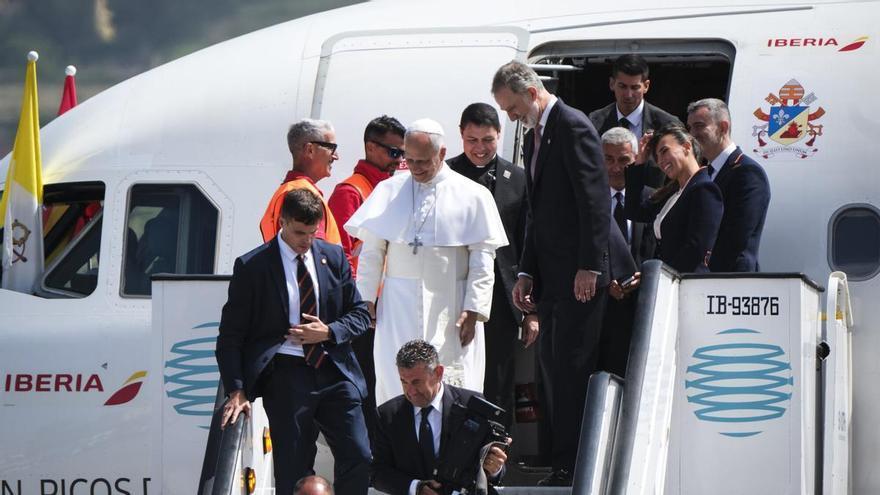
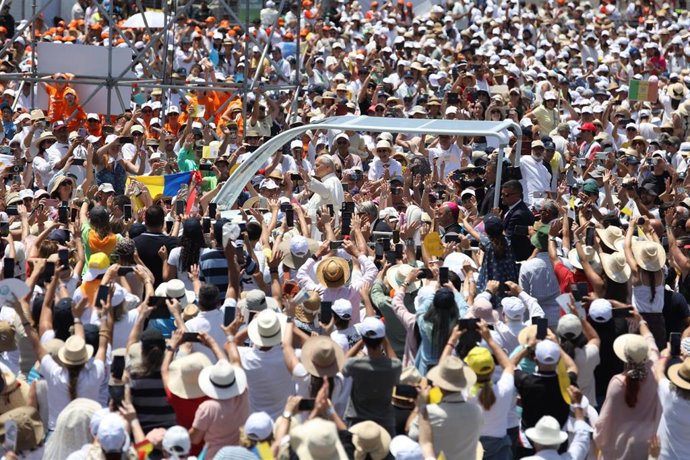
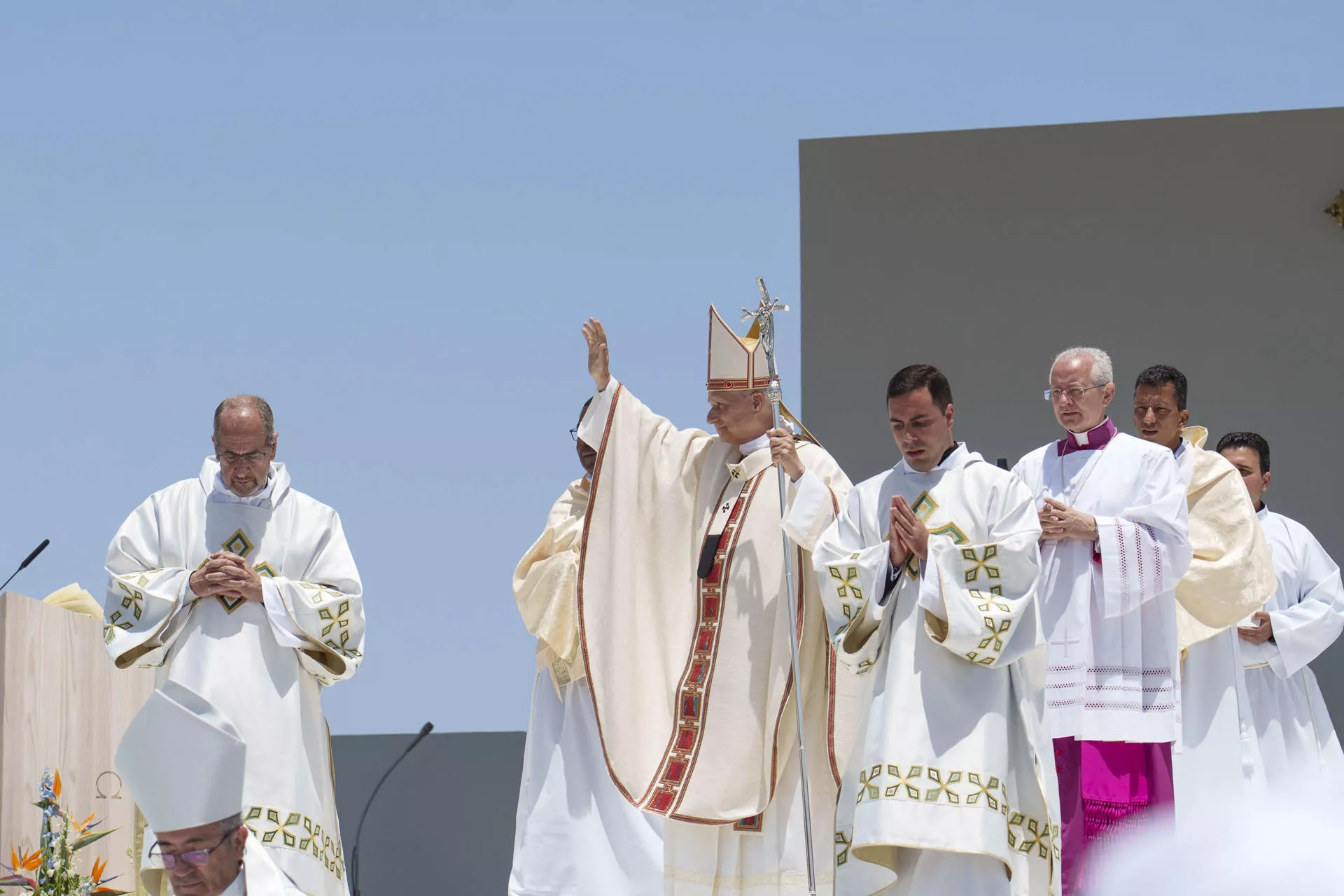
“I looked at him, shook his hand and I don’t even know what to say. I have no words,” she confessed, still emotional after the meeting she had behind the scenes at the venue where Pope León XIV celebrated the closing mass of his apostolic visit to Spain.
Beneath this seemingly storybook moment lies a tale of pain, resilience, and a faith that, as she herself admits, was the only thing that kept her afloat when her life changed radically; all thanks to the support received from her family, community, and friends when the world around her seemed to tremble.
This sums up her life experience over the past ten months: “I hold onto that phrase, ‘lift your gaze,’ which even before being chosen as the motto for the Pope’s visit to Spain, was my daily mantra: to lift my gaze to look at the Lord and not let myself be overwhelmed by suffering.”
A Young Woman Like Any Other
Mariam is 23 years old. Born, raised, and residing in Santa Cruz de Tenerife, she is the third of seven siblings in a family where faith has always been an integral part of daily life. Her parents met in church, and she grew up seeing celebrations, community, and prayer as something natural.
She was studying Administration and Finance and living a typical life for someone her age. Her relationship with the Church was also marked by international experiences. She attended the World Youth Day in Kraków in 2016, reconnected with thousands of young Catholics in Lisbon, and, during the last jubilee year, made a pilgrimage to Rome. Upon returning home from that trip, she could not have suspected that she was about to begin the most challenging chapter of her life.
A Return That Changed Her Destiny
She returned from Rome on a Friday. The next day, symptoms began to arise: vomiting, dizziness, a severe headache, and general malaise that initially seemed like a passing illness. By Monday, she fainted at home. The medical personnel who responded thought it might be dehydration or heat stroke, as her blood pressure was very low. She was taken to the emergency room, where her situation dramatically deteriorated within hours.
The spots that began appearing on her skin indicated that something much more severe was happening. The diagnosis was not very promising: bacterial meningitis that had led to severe sepsis. The infection compromised blood circulation in her extremities and caused necrosis in much of her tissue.
Mariam remembers that during the initial days she was hardly aware of the gravity of the situation. When she woke up, she thought she had only slept for one night. In reality, four days had passed. From that moment on, a months-long battle between life and death commenced.
The Learning through Suffering
The young woman remained in hospital from August until December. During that time, she faced news that no one is prepared to receive. Doctors even discussed possible amputations above the knees and the potential loss of one of her arms.
The emotional impact was enormous. “Why me? What have I done to deserve this?” she admits was a question that repeated itself time and again in her darkest moments.
However, amidst that darkness, a phrase emerged that would change her perspective on what had happened. Her family, community members, and those who provided spiritual support encouraged her to change the question. Instead of asking “why,” ask “for what purpose.”
This was not about denying the pain or making the illness easy to accept. There were days filled with tears, anger, and exhaustion. Days when the young woman who once walked, lived her life with total independence, and could help anyone, now needed support even for the most basic daily tasks. Accepting this new reality became one of her toughest battles.
A Battle Supported by Others
In her most difficult moments, she was never alone. Her parents visited her in hospital every day. When she could barely speak, they prayed by her bedside, offered their blessings, and remained silently by her side. Her siblings, friends, and community members formed a constant support network.
One of the fondest memories she holds occurred while she was still in the Intensive Care Unit. That day, she received some bad medical news and her spirits were at an all-time low. Suddenly, she heard voices, singing, and shouting from outside the hospital. It was her community, gathered beneath her window with banners and songs to remind her that she was not alone. “That day, I completely forgot about the bad news. I remember they came to see me,” she recalled.
Over time, a second medical assessment and specialised treatment allowed her to save much of her limbs. Ultimately, the amputations were performed below the knees, enhancing her chances of regaining mobility with prosthetics. She also retained her arms and hands.
Today, she continues rehabilitation, strengthening her body and preparing for the next stage of her recovery.
“The Lord Prepared My Way”
When Mariam looks back, she sees in many details a sequence of events that, from her faith perspective, she interprets as signs of a presence that accompanied her even before the illness began.
For example, she remembers praying to God for months that her father would find a job. That job eventually came at the hospital where she would be treated by the specialists who managed to save her limbs. “He was preparing everything,” she humbly affirms.
This does not mean that suffering has vanished. Questions remain unanswered, visible scars persist, and a physical and emotional adjustment process continues day by day. But there is also a conviction that has grown stronger over time: the determination to move forward.
The Day the Pope Came to See Her
Therefore, the call she received days before Pope León XIV’s visit to Tenerife held a special significance.
The Bishop of Tenerife wanted Mariam to be part of the group who could personally greet the Holy Father after the grand eucharistic celebration. The morning of the celebration, she arrived in a wheelchair, accompanied by her sister Paula, with whom her illness had strengthened a bond previously affected by the differences typical between two closely-aged sisters.
After the mass, the anticipated moment arrived: the encounter with the pope, who invited her to lift her gaze, encouraging her with the words: “I hope to see you at the World Youth Day in Korea in 2027.”