
– ULL
SANTA CRUZ DE TENERIFE, 17 Jun. (EUROPA PRESS) –
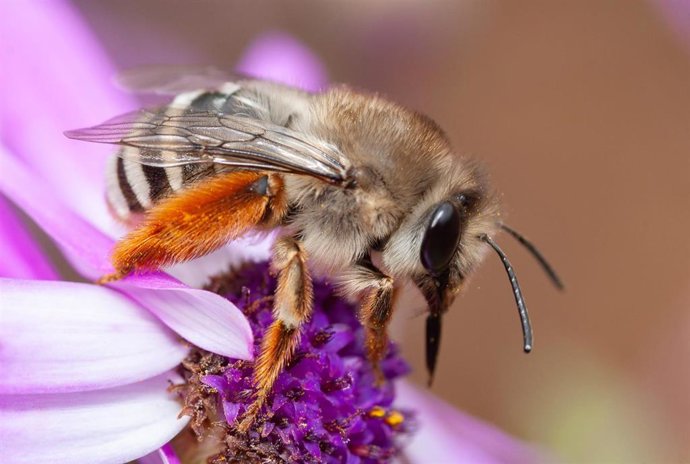
Researchers from the University of La Laguna and the University of Murcia have compiled an updated catalogue of wild bees in the Canary Islands.
The study also includes an analysis of their biogeographical patterns, based on over 8,000 citizen science records.
This work provides a comprehensive new list of this group of pollinators, as detailed by ULL in a statement.
The first major catalogue published in the 1990s included 122 species and 46 endemics, while the results of this new study indicate a significant increase in the number of known species in the archipelago, now totalling 146 species, of which 60 species and 42 subspecies are endemic.
The findings, published in the scientific journal ‘Zootaxa’, also introduce 63 new distribution records and document the presence of three previously unknown species in the Canary Islands: Lasioglossum medinai (Vachal, 1895), Seladonia gemmea (Dours, 1872), and Sphecodes rubripes (Spinola, 1838).
The results affirm the uniqueness of the archipelago’s wild bee fauna, characterised by a high proportion of endemic and threatened species compared to nearby continental regions.
The authors illustrate through their biogeographical analysis that there are even differences in bee community composition among the various islands and islets.
This allows for the identification of three major groups primarily associated with the eastern (arid and ancient), central (extensive and with greater habitat heterogeneity), and western (recent and more humid) islands.
Overall, approximately 20% of the species present on each island have affinities with the Palearctic region (Western Europe).
Specifically, these are native species that inhabit both the Canary Islands and continental Europe.
However, there are also elements of the fauna that exhibit affinities with the African continent.
These species primarily inhabit the eastern islands but can also be found in North Africa.
To compile this update, the research team, including David Lugo, Daniel Suárez, Gustavo Peña, Francisco La Roche, and Carlos Ruiz from the University of La Laguna, alongside Pilar de la Rúa from Murcia, integrated information from scientific publications, biological collections, and citizen science platforms.
Among the consulted sources are the archives of the Nature and Archaeology Museum (MUNA), which house specimens collected over decades, allowing for the recovery of historical records and completion of the known distribution of numerous species.
Additionally, over 8,000 records from citizen science platforms such as iNaturalist were reviewed and validated by specialists.
The work also incorporates taxonomic revisions published in recent years, reflecting advancements in the understanding of wild bees in the Canary Islands.
THREAT RISK
Furthermore, the study highlights the significant risk of threat faced by some Canary species, according to the evaluation criteria of the International Union for Conservation of Nature (IUCN).
Among them are two species that have not been observed in over 40 years.
The wild bees of the Canary Islands have garnered interest from scientists, researchers, and naturalists for decades due to their diversity and uniqueness.
However, the available knowledge had become partially outdated after more than thirty years without a comprehensive review.
This study updates information on the taxonomy, distribution, and biogeographical origins of these species in the archipelago.
Additionally, it reinforces the role of citizen science as a tool to enhance knowledge and monitoring of island biodiversity.
In doing so, the work establishes a solid foundation for future research and the development of conservation strategies in response to the increasing threats faced by these essential pollinators.