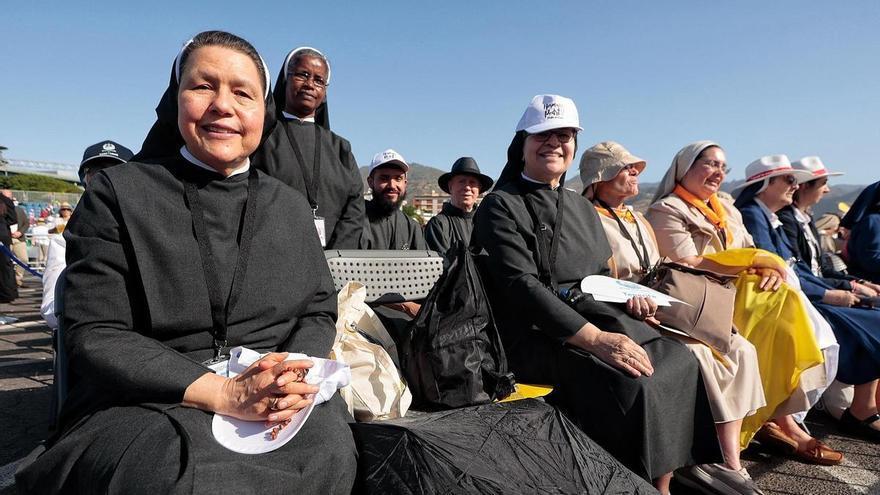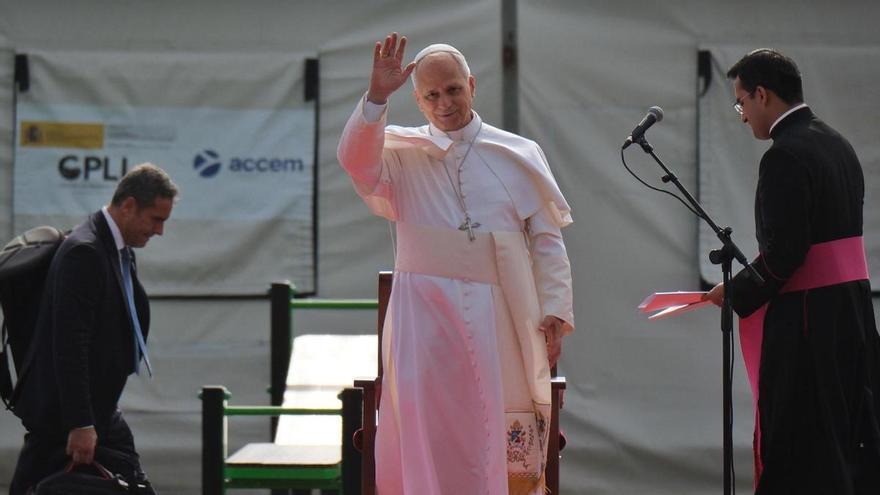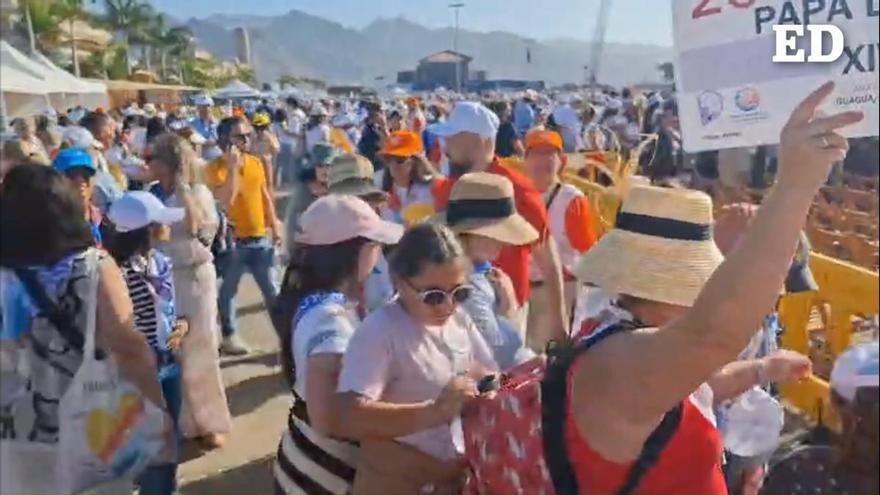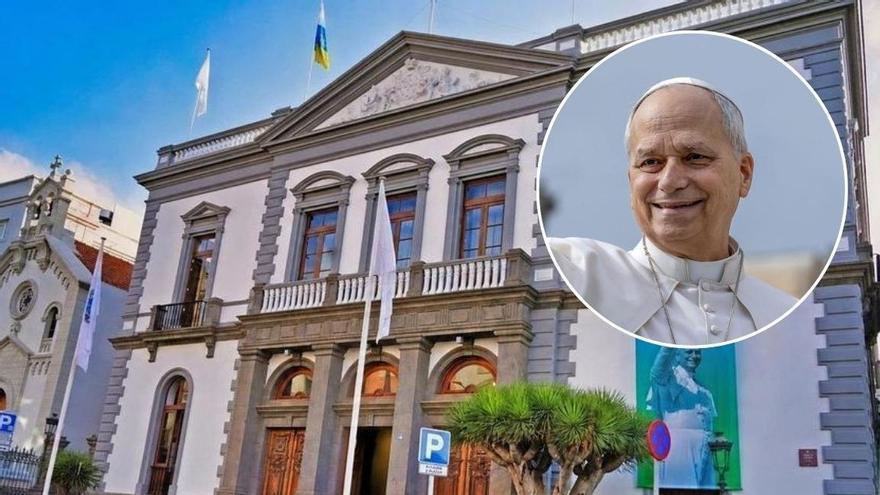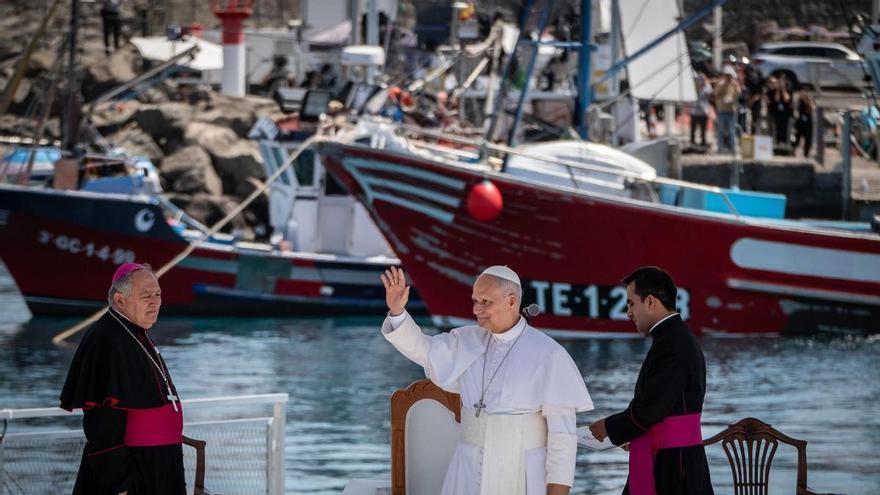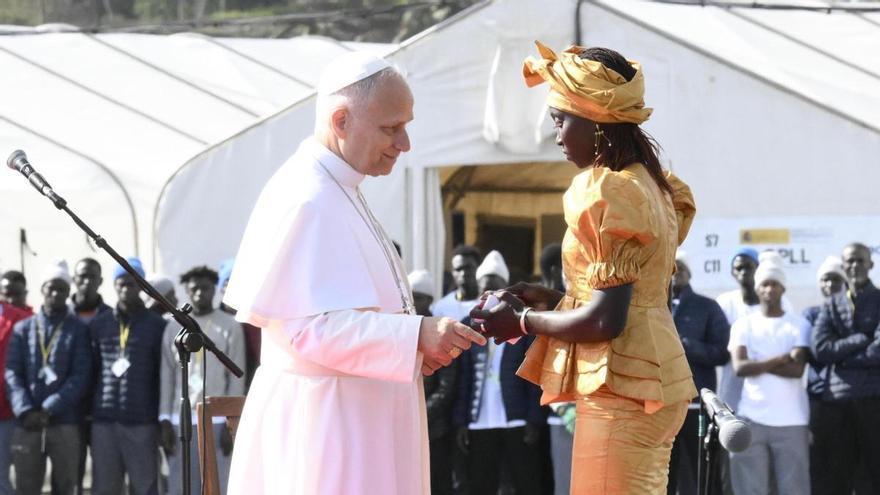
Pope León XIV visited the Las Raíces Emergency Humanitarian Reception Centre in Canary Islands on Friday to meet with migrants and understand the daily work of the staff providing their care. Since its opening in 2021, the state-run centre, managed by the Accem association, has assisted over 54,000 people.
This meeting brought Canary Islands back into the humanitarian and social debate surrounding migration routes. Addressing those present, the Holy Father spoke in French, the mother tongue of many of the migrants, and remembered Pope Francis, “who longed to be with you”.
The legacy of Pope Francis during León XIV’s address
León XIV used the imagery of roots, linking it to Francis‘ legacy and the need to maintain personal and spiritual connections. “Whoever trusts in the Lord is like a tree planted by the waters, whose roots reach into the stream,” he expressed during his speech.
The Pope urged this imagery to help migrants remain “firmly grounded in the Lord” so that “no storm” would divert them from a presence that, in his words, “strengthens and gives life”.
His discourse connected the migratory experience with faith, but also with the notion of resilience in the face of loss, family separation, and uncertainty.
“We are all new somewhere at some point in life; we all need someone to extend a hand”
The event was introduced by Monsignor Eloy Santiago, who stated that the islands welcomed the Pontiff “with open and grateful hearts”, expressing his eagerness to hear his “illuminating and hopeful words”. The Minister of Inclusion, Social Security and Migration, Elma Saiz, also spoke, highlighting the shared nature of the migratory experience.
“We are all new somewhere at some point in life; we all need someone to extend a hand,” remarked Saiz, referencing the “millions of Spaniards” who left the country in different historical periods. Her intervention situated reception within a broader context, linked to both Spanish migratory memory and current institutional responses.
Over 54,000 individuals welcomed since 2021
The director of the centre described Las Raíces as “a space where complex life trajectories converge”, offering “a first opportunity from both institutional and human perspectives”.
He also viewed the Pope’s visit as a recognition of those arriving in search of a future, as well as of the administrations and professionals that uphold the system.
The centre is part of the emergency humanitarian response network established to assist migrants arriving in the Canary Islands. Since 2021, with more than 54,000 people received, its activities highlight the importance of these resources in a community facing constant migratory pressures, combining immediate assistance, accommodation, and basic support.
The testimonies of Theodor and Bousso
During the event, two migrants from Sub-Saharan Africa spoke. Theodor expressed gratitude to the Pope for his presence, stating that his visit served to “remind the world that we are all people.” “Today we want to say, with great respect, that we pray for you and thank you for your compassionate heart,” he added.
Bousso explained that many migrants come from countries where “poverty, violence, war, persecution, and lack of opportunities” push them to leave.
“No one leaves their land, their family, and their roots by choice,” he said, before thanking the Holy Father for a visit that, in his words, “represents a light for those of us who often lack a voice”.
“Hearts wounded by so many difficulties”
León XIV connected the visit with the solemnity of the Sacred Heart of Jesus, defining it as an expression of “God’s merciful and infinite love for every human being”. In this context, he emphasised that the meeting allowed us to “see each other” and recognise that “the love of God knows no borders, makes no distinctions, is given to all, and unites us in unity”.
The Pope addressed migrants directly, speaking of “hearts wounded by so many difficulties” and also “consoled by the love received” from open and compassionate individuals. He maintained a pastoral tone but delivered a clear social message: that hospitality is a human response to paths marked by suffering.
Brother Pedro and Saint Joseph of Anchieta
In his speech, León XIV cited Brother Pedro and Saint Joseph of Anchieta, two Canary saints who departed for America “motivated by that love of God” to deliver the Gospel.
He also presented them as migrants who journeyed into the unknown with faith, hope, and charity as their main baggage.
From this reference, he invited those received at Las Raíces to offer the Islands “the treasure of humanity, dreams, and culture” that they brought with them, and to remain open to receiving what is offered in return. For the Pontiff, migration can become a means of encounter and mutual enrichment between peoples.
“In some way, we are all migrants. We are all pilgrims on our journey to the heavenly homeland”
“In some way, we are all migrants. We are all pilgrims on our journey to the heavenly homeland,” asserted León XIV towards the end of his address. Based on this idea, he called for mutual assistance to make the human journey “a more humane place for all” and thanked the Government, institutions, and individuals who facilitate humanitarian aid.
After his remarks, the Pope greeted many attendees, toured the facilities, and visited the tents that are part of the system. Before saying goodbye, he left a message addressed to the migrants and their families: “I carry you in my heart and in the memory of my prayers. May God bless you, may He bless your families, and all those who do good to you.”