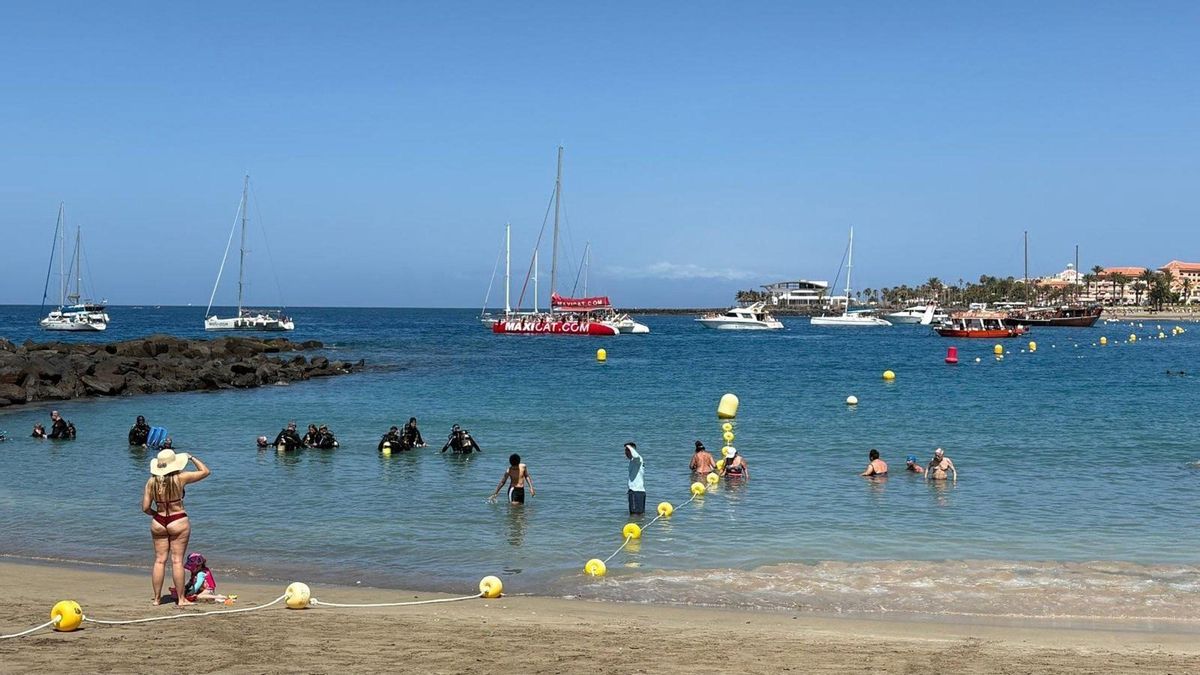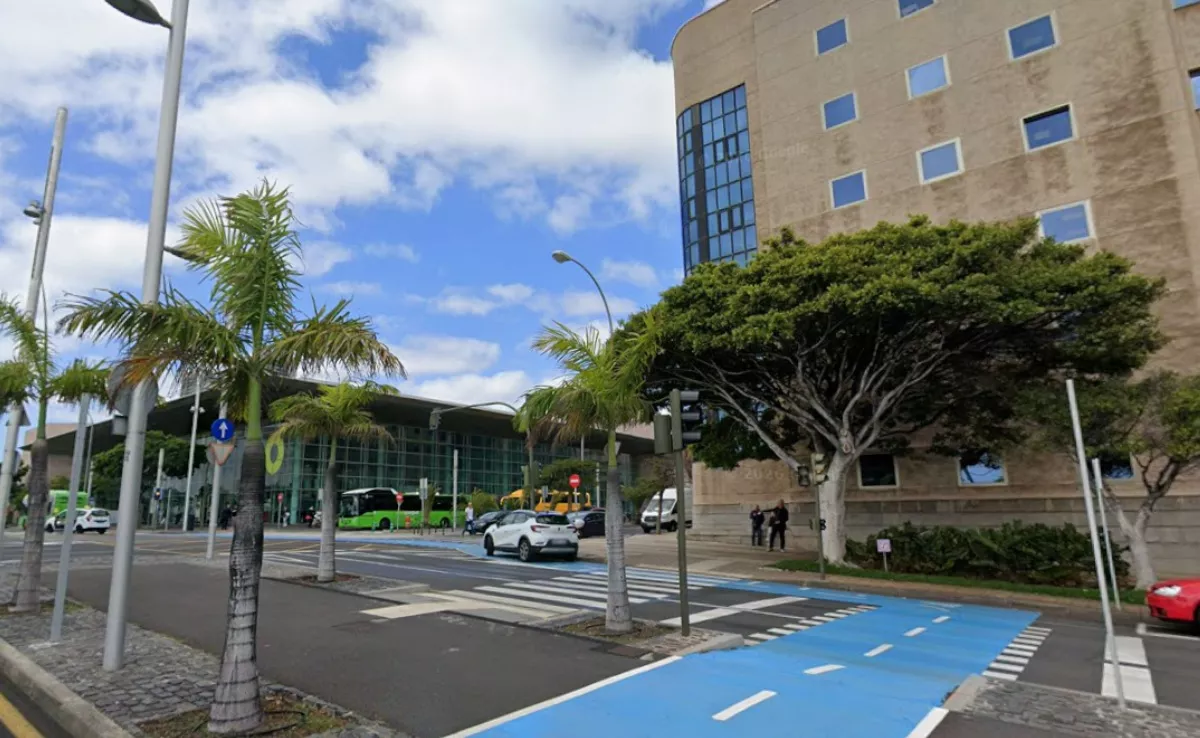
The Santa Cruz de Tenerife City Council will activate the bus lane to Las Teresitas beach during weekends coinciding with a high-temperature alert issued by the Government of the Canary Islands. This is the main beach in the municipality, which suffers significant traffic congestion at its access points. This congestion has worsened since the City Council, taking advantage of the pandemic, decided to eliminate a large part of the parking facilities in the area. Additionally, access to one of the lanes (known as lane zero, the closest to the sand) has been blocked, and the traffic flow on the San Andrés promenade has also been changed. As a result, when a vehicle tries to park, it stops in the only existing lane, leading to enormous queues, particularly on the busiest days. These queues even reach the San Andrés motorway and the fishing harbour.
Despite this, six years after the pandemic, the City Council has not restored that lane, which relieved traffic and provided hundreds of parking spaces.
The Mayor, José Manuel Bermúdez, explained on Thursday at a press conference that the bus lane initiative aims to prevent public transport from getting stuck in the queues that form when the Las Teresitas parking reaches full capacity.
He admitted that this measure will be implemented despite opposition from residents of San Andrés, who have expressed their disapproval of prioritising public transport by reserving a lane. This will effectively remove another lane for vehicle traffic.
He added that the protocol will allow testing the effectiveness of this initiative and assessing whether it could be extended beyond episodes of heat waves in the future.
He also highlighted the logistical difficulties involved in implementing the bus lane, as alerts from the Government of the Canary Islands are activated with little warning, requiring a swift deployment of signage and necessary safety measures.
When asked why it does not operate every weekend, he responded that the City Council has chosen to activate it only when significant delays are expected due to a heat alert, also considering objections from the residents of San Andrés.
He remarked that during extraordinary heat episodes, queues are guaranteed, while under normal conditions, the same traffic issues do not typically occur.
Tests conducted indicate that delays for private vehicles will continue to occur with one or two lanes open, but the Mayor defended the idea that public transport would benefit from increased speed and punctuality with an exclusive lane.
He also detailed that the City Council has expanded parking at the beachhead by 300 spaces, but acknowledged that this is not the solution to the mobility problem. However, he did not mention that the number of eliminated spaces is much greater, nor the impact of closing lane zero, which is now limited to emergency services, security vehicles, or people with reduced mobility.
In his view, the solution lies in promoting public transport use, which he believes requires guaranteeing its punctuality through an exclusive round-trip lane for buses.
Reinforcement of buses to the beach
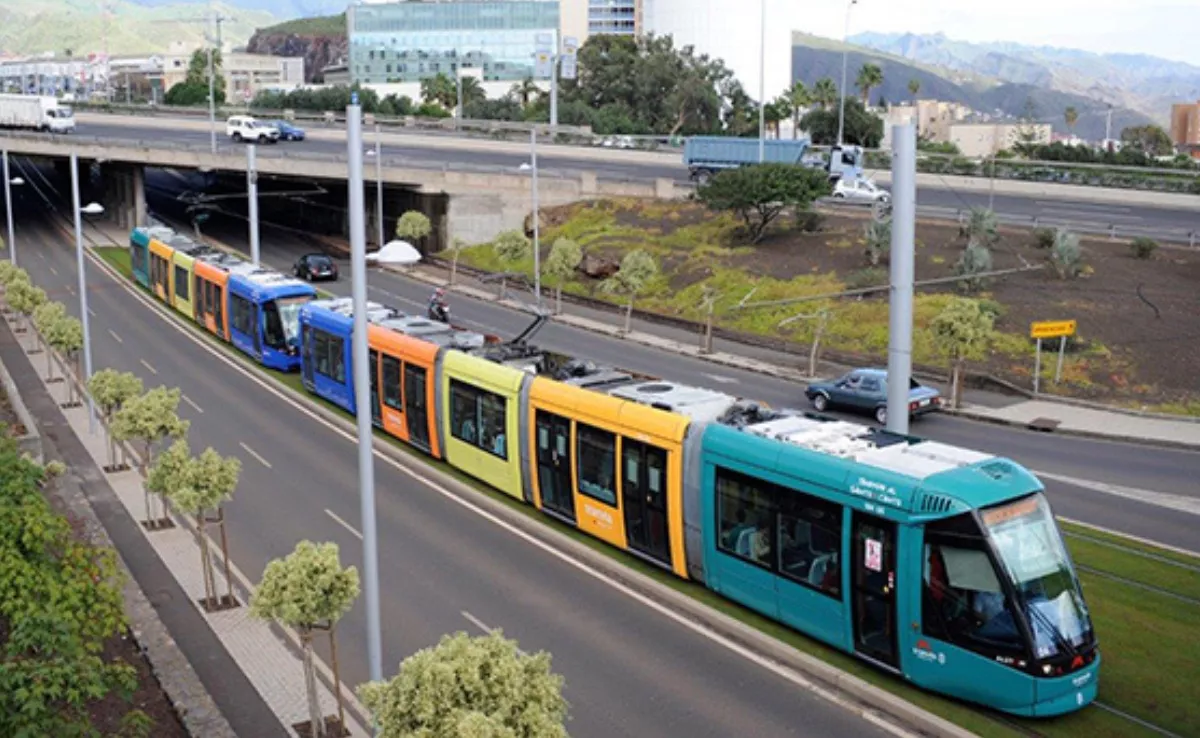
The Mayor has also announced that the City Council of Santa Cruz de Tenerife will allocate an additional 216,000 euros to enhance bus frequencies to the Anaga beaches during the summer and permanently improve service on several high-demand urban routes.
These summer improvements will benefit the routes connecting to Las Teresitas and other Anaga beaches, while the permanent changes will focus on line 904, serving Cuesta Piedra and La Salud; line 911, between Muelle Norte and Ofra; and line 944, serving the Southwest district.
With these initiatives, the City Council expects to attract approximately 41,000 more passengers on the three urban lines and an additional 85,000 users on the lines connecting to Anaga beaches.
Charges for street parking
During his address, the Mayor also noted that Santa Cruz de Tenerife has 175,000 registered vehicles for a population of around 200,000, resulting in over 800 vehicles per thousand inhabitants.
In this context, he advocated for the need to implement measures that organise mobility and allocate public space among cars, buses, trams, taxis, bicycles, and scooters.
Regarding planned actions, he informed that the City Council is working on an ordinance to regulate the establishment of blue and green zones.
The future green zone will give parking priority to residents of each street, and unlike other capitals, residents will not have to pay for parking in these spaces, he noted.
Concerning the blue zone, he assured that it cannot yet be imposed due to the lack of necessary regulations. However, he recalled that it is a widely adopted system in cities around the world for managing parking in high-traffic areas.