Canary Islands Tackle Housing Crisis with Industrialised Construction
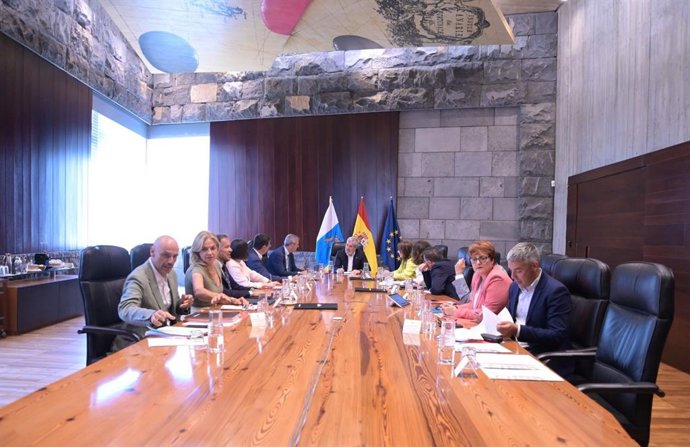
The housing access crisis continues to pose one of the primary challenges facing the Canary Islands. With rising prices and an insufficient supply to meet demand, the regional government and construction associations from both provinces have opted for a method that promises to expedite the creation of new homes: industrialised construction. On Monday, the regional Executive, together with industry business organisations, signed a collaboration protocol to promote this construction model across the islands. It is viewed as a key tool to enhance housing supply, reduce execution times, and improve sustainability in construction projects.
Creation of Technical Offices
The agreement includes the establishment of two Technical Offices for Industrialised Construction, one in Tenerife and another in Gran Canaria, with funding of €200,000 each. These offices will provide technical advice to companies, professionals, and public administrations. Additionally, they will develop specialised guides, promote technological innovation, and lead training initiatives aimed at the sector. Their responsibilities will also encompass monitoring pilot projects, compiling reports on best practices, and coordinating with public bodies and entities related to construction.
An Alternative for Housing
Olga Sanfiel, the president of the Provincial Federation of Construction Entities of Santa Cruz de Tenerife, stated that industrialised construction is a crucial part of the solutions needed to address the current housing emergency in the Canary Islands. This system involves manufacturing a significant portion of a home’s components in an industrial facility before transporting and assembling them at their final location, which substantially reduces execution timelines. Sanfiel highlighted that several Canary-based companies are already implementing projects using this methodology, reflecting a growing interest in this model.
On her part, María Salud Gil, president of the Association of Construction Entrepreneurs and Developers of Las Palmas, noted that the sector has undergone significant digital transformation in recent years, enabling it to face the challenge of industrialisation. She explained that this process has included specific plans for companies, technical offices for digitalisation, and innovation spaces aimed at attracting young talent and new technologies. Gil also emphasised the need for future state regulations on industrialised construction to consider the uniqueness of the archipelago and the logistical challenges stemming from its insular nature.
Pilot Projects in the Canary Islands
Manuel Domínguez, the Vice President and Minister of Economy, Industry, Trade, and Self-Employment for the Canary Islands, emphasised that the agreement falls within the government’s industrial strategy to accelerate the implementation of this model across the islands. Domínguez highlighted the importance of collaboration between administrations and enterprises to achieve this goal, asserting that digitalisation will be a fundamental tool for enhancing productivity and competitiveness in the sector. He also revealed that the government is already working on various pilot projects for industrialised housing in different municipalities of the archipelago, including Ingenio, in partnership with local administrations.
Increased Supply and Reduced Timelines
The Vice President argued that industrialisation would enable housing to be constructed more swiftly, with higher sustainability standards and a better response to the current needs of the Canary Islands. He also considered that this model could facilitate the emancipation of young people and assist economic sectors facing difficulties in finding workers due to housing access issues. For the regional Executive, the combination of industrialisation, digitalisation, and specialised training emerges as a key approach to modernising the construction sector and increasing residential supply in the archipelago in the coming years.